Skip to content

Educational purposes only. This column provides advice on personal safety habits and is not a substitute for professional security or legal services.

Ask Sensei: “Why did I feel unsafe for no reason?”

Sensei,

I was walking to my car last night and saw a man standing near the exit. I immediately felt a cold chill and my stomach tightened. I didn’t see a weapon and he wasn’t doing anything wrong, so I told myself I was being silly and kept walking. As soon as I got close, he started asking me strange questions and wouldn’t let me pass. I eventually got away, but I feel like I ignored a warning. Why did I feel that way before he even spoke?

— Trusting the Chill

The Hidden Speed of Safety

Dear Trusting,

You were not being silly. You were experiencing a rapid data-processing event. Most people think of intuition as a lucky guess, but it is actually your brain recognizing a pattern of danger before your conscious mind can find the words to describe it. Your body reacted to “red flags” like his posture, where he was standing, or the way he was watching the area.

That cold chill and tight stomach you felt are what we call “somatic markers.” These are physical alarms your body uses to get your attention. Because your survival systems work up to 100 times faster than your logical mind, you will often feel the danger in your gut long before you see it with your eyes. In your case, your brain saw the threat, sent the alarm to your stomach, and waited for you to act.

Deep Dive: Intuition

Learn how to identify and vet your body’s internal alarm system: The Intuition Glossary Page

The reason you kept walking is that we are taught to be polite and rational. We wait for “proof” before we allow ourselves to leave a situation. But in personal safety, waiting for proof often means waiting until it is too late. If your body generates a warning, it has already seen something that doesn’t fit the normal baseline of the environment.

Next time you feel that physical shift, don’t look for a logical reason to stay. Use that energy to change your path or leave the area immediately. You can always use logic later to figure out why you felt that way, but in the moment, your body’s alarm is your best tool for staying safe.
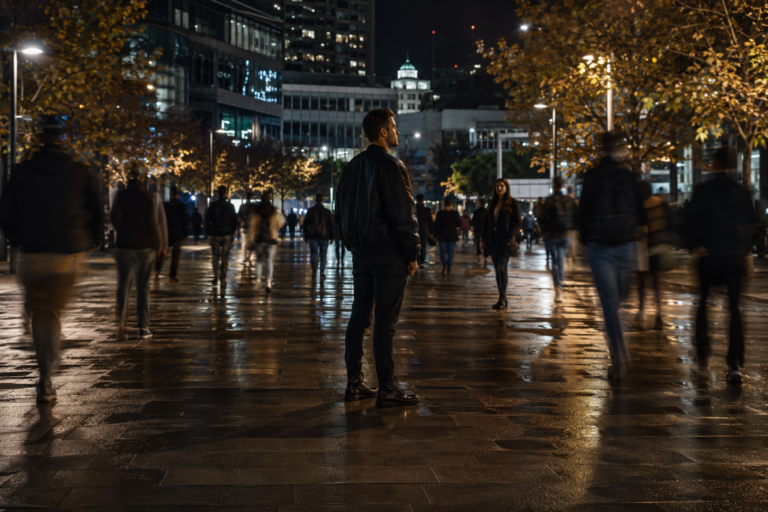
A man stands with straight, balanced posture in the center of a wet city street at night. He is wearing a dark jacket and boots, calmly looking out at his surroundings. The crowd of people walking past him is blurred by motion. Warm streetlights reflect off the damp pavement, with city buildings and trees under a dark sky in the background.

Target Hardening: 4 Simple Ways to Prevent Attacks on the Street

Predators look for easy targets. You can make yourself look like too much work by standing tall, paying attention, and keeping your balance. Learn the four simple physical changes that help you stay safe on the street.

A man stands with a balanced and upright posture in the center of a busy, blurred urban plaza at night. His calm presence creates a natural radius of clear space as the crowd flows around him. In the background, he monitors an individual moving erratically against the rhythm of the crowd, demonstrating active data collection and situational control.

How to Stop Being a Target: Mastering Situational Awareness

Situational awareness is a state of active data collection, not a reaction based on fear. Learn the 4 structural fixes to project presence, control your proximity, and map your exits effectively to ensure your own safety.

A man stands at a gas station at dusk, leaning with his back against a black car and his hand raised in a stop gesture. A fuel hose creates a physical barrier between him and another man approaching in the background. The man at the car looks away from the approaching figure, demonstrating calm awareness and control of the environment.

How Your Mind is Used Against You: 4 Simple Fixes

Aggressors use social pressure and confusion to control their targets. Learn how to make yourself structurally unavailable and break their script using 4 simple methods that require minimal effort in the moment.

A woman stands centered and calm in a bright room, looking directly forward with sharp focus. Around her, people are blurred in motion, representing a busy and confusing environment. Her stillness shows internal control and a clear grasp of her own reality while the world around her moves out of focus.

Am I Being Gaslit? The 3-Step Plan to Reclaim Your Reality

Gaslighting is an attempt to control your life by invalidating your reality. If you rely on someone else's truth to feel safe, you have lost control. At The Other Way, our philosophy is simple: If you do not control yourself, someone else will. This guide gives you a three-step plan to trust your own facts, stop the debate, and reclaim your reality. You are the final authority on your own experience. If you wait for agreement, they are still in control.

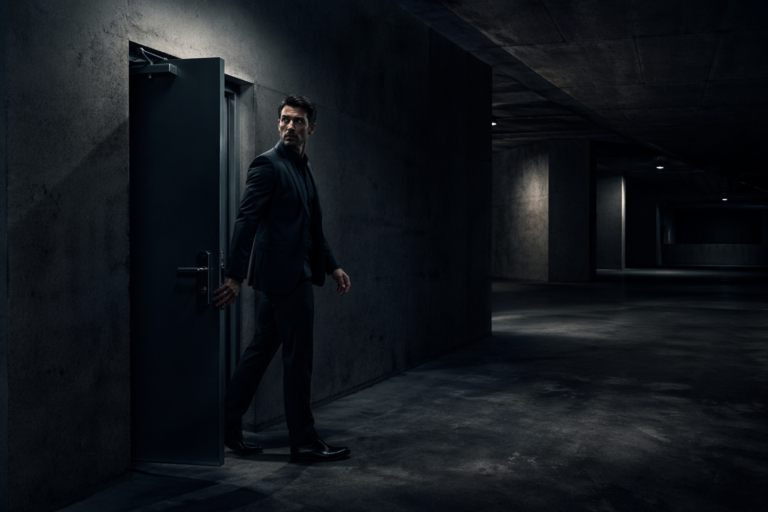
A man in a dark suit steps through an industrial door into a large, dimly lit concrete parking structure. He looks back over his shoulder with a sharp, alert expression, scanning the dark environment behind him.

Lingering Awareness: How to Be Safe After the Encounter Ends

Dropping your guard after a success is a strategic mistake. Discover how to maintain awareness and bridge the gap between actions to ensure your safety.

A delivery man in a white shirt and tan apron stands on a sunlit wooden dock, holding two bags of food. Behind him, a teenager in a grey hoodie reaches for a bag. A multi-passenger boat docks in the background on a lake surrounded by trees.

The Identity Bridge: Handling Rough Situations Caused By Someone Else

When aggression hits, most people either fight or fold. True control comes from a third option. By using the Identity Bridge, you can redirect momentum and offer others a path back to their better selves. Learn how to remain rooted when the world tries to move you.

A delivery man in a white shirt and tan apron stands on a sunlit wooden dock, holding two bags of food. Behind him, a teenager in a grey hoodie reaches for a bag. A multi-passenger boat docks in the background on a lake surrounded by trees.

Ask Sensei: How to Handle Aggressive People and Stay in Control

Most people react to aggression with more anger, but there is a better way. By labeling the behavior instead of the person and providing an exit, you can manage a situation without fighting. Learn how to stay steady and maintain your sovereignty even when things get tense.

A woman sitting at a table looking overwhelmed with her hand on her forehead, while multiple hands reach toward her in demanding gestures, representing the mental load of the politeness penalty and the pressure of setting boundaries.

Why do I feel like a bad person when I set boundaries?

Educational purposes only. This column provides advice on mindset and is not a substitute for professional medical services. Sensei Duncan, Every time I try to say no to someone—even when it is for something I really cannot do—I spend the next three hours feeling like a terrible person. It feels like I am physically hurting… 

A woman in a denim jacket holding her hand up in a firm stop gesture to refuse a document, illustrating the act of setting boundaries and overcoming the politeness penalty to reclaim social sovereignty.

The Politeness Penalty: Why You Feel Guilty Saying No

For many, the simple act of declining a request or setting a boundary feels like a moral failure. Research shows that 70% of individuals admit to ignoring red flags or personal discomfort specifically to avoid being rude. This article explains how to move from a state of social reactivity to one of personal sovereignty using the Voice Victory and biological resets. Stop paying the politeness penalty and protect your agency with logic and precision.