Paradoxical Teaching: The Logic of Confusion
An instructor commands: “Slow down. You are moving too fast.”
This is not a riddle. It is a physiological necessity. In personal safety training, the path to understanding is rarely linear. To learn, one must first be willing to question the instruction. This is the essence of paradoxical teaching—a core methodology in Kyo-Jitsu Ryu designed to dismantle assumptions and reveal the mechanics of conflict.
“The test of a first-rate intelligence is the ability to hold two opposing ideas in mind at the same time and still retain the ability to function.”
The Utility of Cognitive Dissonance

Paradoxical teaching utilizes statements that appear self-contradictory to provoke a deeper analysis. When a student is told, “Slow down to get fast,” the conscious mind flags the error. It creates mental friction.
This friction is cognitive dissonance. The brain demands resolution. It forces the student to stop operating on autopilot and analyze the mechanics of efficiency. Frantic movement is slow; deliberate movement is fast. The paradox forces the student to prove the truth to themselves.
“The instructors didn’t just show me what to do. They forced me to understand why it worked.” — M.T., Mentorship Graduate
See the Teaching Methodology →Common Paradoxes
These are not clever turns of phrase. They are tools to break rigid, linear thinking:

- “Strength has nothing to do with power.” We distinguish between muscular output (strength) and biomechanical alignment (power). A smaller individual can generate immense power through structure without possessing superior strength.
- “Look at nothing and see everything.” Tunnel vision is a liability. By fixating on a threat (e.g., a weapon), you lose context. By softening the gaze (“looking at nothing”), you perceive the entire environment (“seeing everything”).
Why We Don’t Spoon-Feed

The objective of Kyo-Jitsu Ryu is not to produce mimics who parrot techniques. The objective is to cultivate independent thinkers capable of making high-consequence decisions under pressure.
Paradoxical teaching bypasses rote memorization. By wrestling with the contradiction, the student internalizes the principle rather than just the technique. They learn the “Why” and the “When,” not just the “How.”
Embrace the Friction
For new students, this method can be disorienting. You may feel the instruction is riddles rather than training.
Confusion is not failure. It is the friction of a new neural pathway forming. It indicates your brain has ceased passive reception and begun active construction. The role of the instructor is not to provide the answer, but to guide the student through the confusion to the conclusion.
Case Study: Effortless Strength
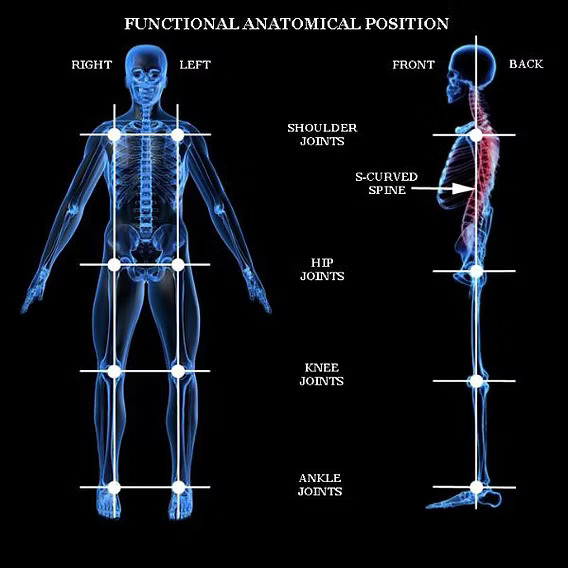
I once instructed a student on structural integrity. I aligned their skeleton and issued a command: “Relax completely, but do not change your position.”
I applied pressure, leaning my full weight against them. Their structure held. There was no muscular strain, only alignment. They were supporting a significant load with zero perceived effort.
I delivered the paradox to lock in the lesson: “Relax until your strength requires no effort.” That student never again confused tension with power.
Exercise: Deconstruct the Statement
This exercise illustrates the core concept. Consider the statement: “To control your opponent, you must first give them control.”
- Reaction: Logically, this implies surrender. Why does the mind reject it?
- Analysis: How can you lead momentum if there is no momentum to lead? How do you bait a reaction without offering an opening?
- Application: Apply this to negotiation. Can you let the other party feel in charge to guide them to your conclusion?
Common Questions
Direct instruction leads to mimicry. The paradox leads to ownership. In a high-stress environment, you cannot recall a list of steps; you can only rely on internalized principles.
Yes. Comfort is the enemy of growth. If you understand the concept immediately, you are likely relying on pre-existing assumptions rather than learning a new paradigm.
Violence is chaotic. A linear mind fails in chaos. A mind trained to resolve paradoxes is adaptable, fluid, and capable of finding order in the chaos.
Personal Safety Mentorship
This methodology is the foundation of our 10-week virtual curriculum.
Next Intake Limited to 10 Students.
Review the Curriculum