This is not a typical “workout.” This is a lesson in control. We teach a foundational set of martial arts exercises from our complete personal safety system, Kyo-Jitsu Ryu, designed to master your body and mind by understanding the “obvious” exercise and the “hidden” lesson.
The Method
The Kyo-Jitsu Ryu Foundational Martial Arts Exercises
This is a single, continuous process. This foundational method is a set of martial arts exercises you will flow through with no rest. The goal is not speed; it is control. We start from the ground up to build your foundation, connect your center, and finally, teach you to stand in your power.
The Push-Up: A Core Martial Arts Exercise
This first martial arts exercise is where we build your structure and learn to connect to the ground.
The Action (Jitsu):
- Start in a “plank” position, hands directly under shoulders.
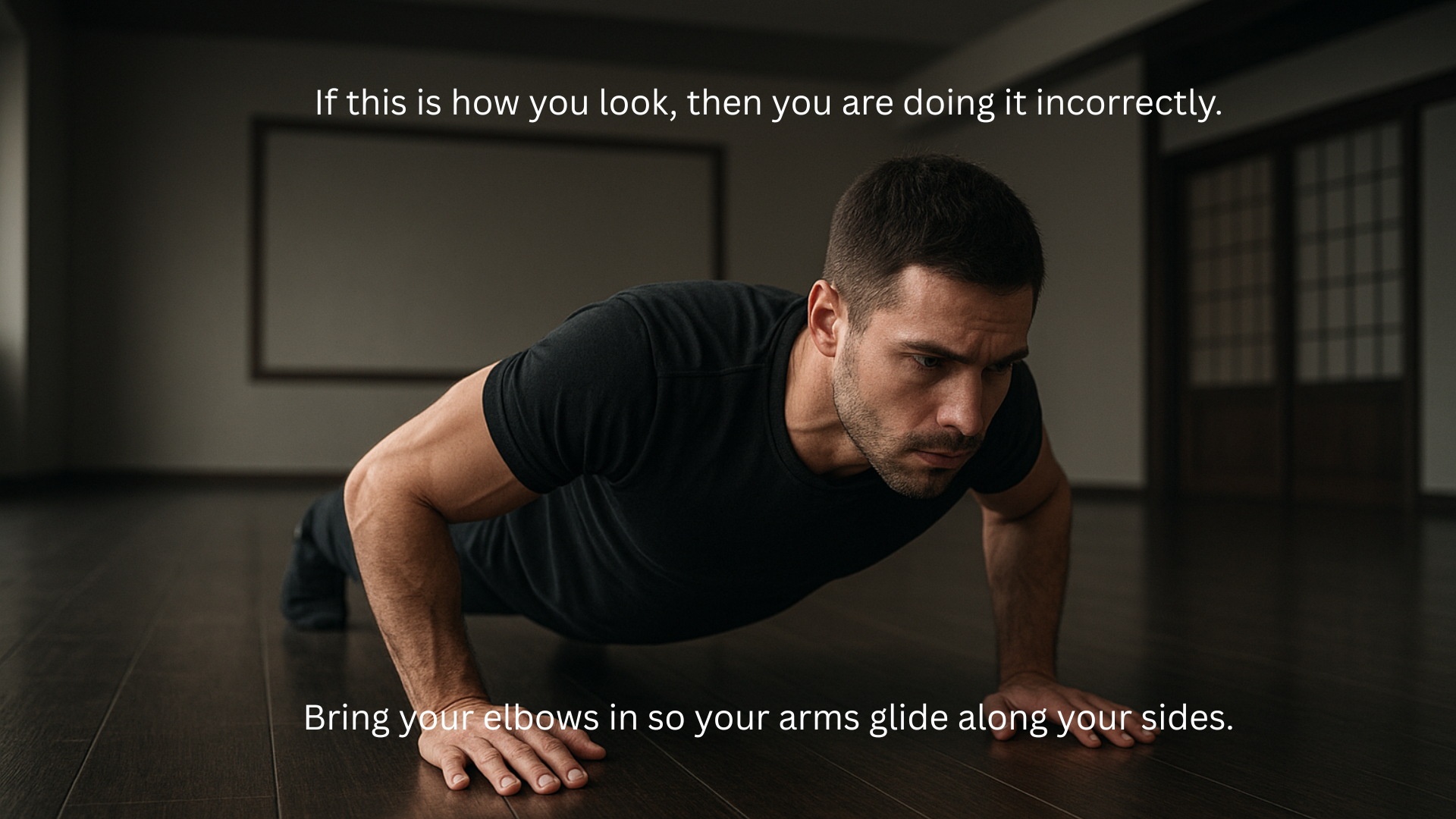
- Turn hands slightly so elbows slide along your body, not out.
- Tempo: 5 seconds down until your chest is 1/4 inch from the floor.
- No pause. Immediately begin rising.
- Tempo: 5 seconds up to full extension.
- Reps: 5 total.
The Lesson (Kyo):
This is a lesson in differential relaxation. Most people tense their whole body. Consciously relax your Achilles tendons. Feel your body shift. This is not about being rigid; it’s about being connected. Your goal is to find your “root,” relaxing the muscles you don’t need (legs, glutes) to isolate the muscles you do (triceps, chest, core).
Note the Image: This image shows a common incorrect form. The arms are flared out, which breaks the bio-mechanical support line of the wrist, elbow, and shoulder. The ‘Kyo’ is to bring the elbows in close to the body, with hands directly under the shoulders, to create a strong, stable structure.
The Sit-Up: A Martial Arts Exercise for the Core
This core-focused martial arts exercise connects us to our center and, most importantly, our breath.
The Action (Jitsu):
- Lay on your back, knees bent. NO foot support.
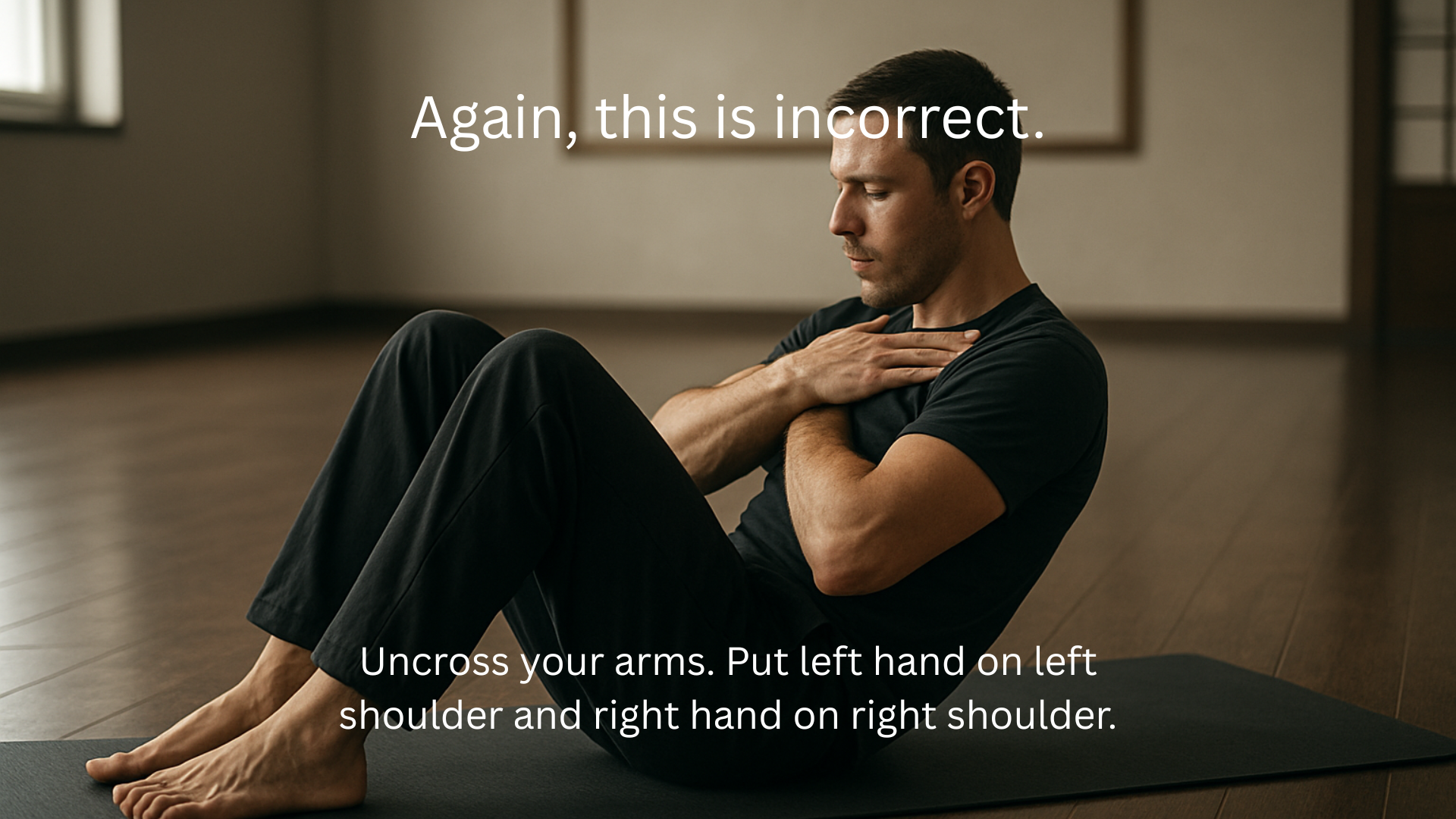
- Place your left hand on your left shoulder and your right hand on your right shoulder (not behind your head and do NOT cross your arms).
- Tempo: 5 seconds up, curling your spine until your abs are fully compressed.
- No pause. Immediately begin lowering.
- Tempo: 5 seconds down, uncurling your spine to the floor.
- Reps: 10 total.
The Lesson (Kyo):
If you flail, you’ve failed the lesson. This is not about your abs; it’s about your control. The only way to sit up without your feet lifting is to relax your lower body. Your legs become the counterbalance. This teaches you to be “hard” in your center and “soft” in your limbs. The 10-rep, 100-second set also makes chest breathing impossible. You will learn to breathe with your abdomen.
Note the Image: This image shows a common incorrect form. The arms are crossed. This crossed-arm position prevents a full range of motion because the forearms will catch on the thighs. Our method (left-hand-on-left-shoulder, right-on-right) opens up the chest and abdominal region, allowing for full, unhindered compression.
The Split Squat: A Martial Arts Exercise for Stance
Finally, this martial arts exercise teaches us to stand and root ourselves, moving from a place of power.
The Action (Jitsu):
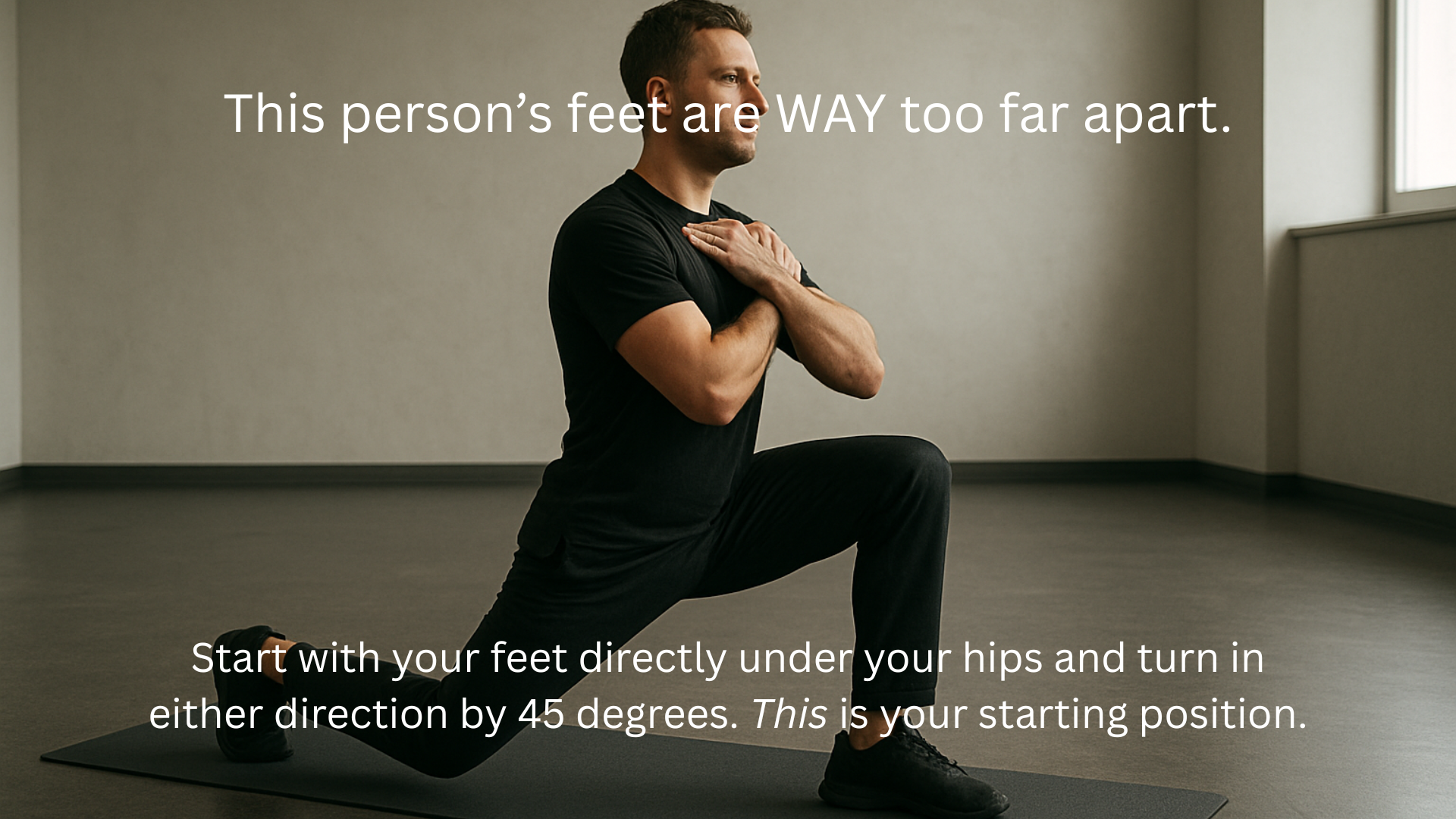
- Stand with feet hip-width apart. Pivot your body 45 degrees, one foot forward, one back.
- Your feet remain laterally hip-width apart for balance.
- Tempo: 5 seconds down, lowering vertically until your back knee gently touches the ground.
- No pause. Immediately begin rising.
- Tempo: 5 seconds up to the starting stance.
- Reps: 5 per leg. (Complete all 5, then switch legs).
The Lesson (Kyo):
You are fatigued from the first two exercises. Your core is tired, you’re breathing hard. This is the point. Can you maintain perfect, slow control and balance while under duress? The slow descent teaches you to “sink your weight.” The slow ascent teaches you to “drive from the earth.” This isn’t a leg exercise; it’s a stance drill.
Note the Image: This image shows an incorrect front-to-back stride length. A step too far forward severely limits your range of motion. The ‘Kyo’ is to establish the correct stance by starting with your feet hip-width apart and then pivoting 45 degrees, which allows for a full, vertical descent like an elevator, not forward like an escalator.
The Path: How to Progress Your Training
The path to mastery in these martial arts exercises is not through more reps. It is through more control. Once you can complete your reps with perfect form at the 5/0/5 tempo, you do not add reps. You add time.
5/0/5 → 10/0/10 → 15/0/15 → …
This is the truest test of mental fortitude.
The ‘Why’
Why These Foundational Martial Arts Exercises Work
This foundational set of martial arts exercises is not arbitrary. It is a synthesis of principles from multiple disciplines, designed for a single purpose: mastery.
As a Physical Therapist…
“The 5/0/5 tempo is a gold-standard for pre-habilitation. It builds immense strength in tendons and ligaments by eliminating momentum. The ‘untaught’ lessons on relaxation and body mechanics—especially removing the foot anchor on the sit-up—are actively retraining neuromuscular patterns, preventing common compensation injuries in the low back and shoulders. It’s ‘bulletproofing’ the joints.”
As a Psychologist…
“This is applied mindfulness. The true test is not physical; it’s the psychological battle against the ‘panic button.’ The student is forced to stay present and regulate their emotional response to physical stress. The sit-up ‘method’ is a masterclass in breath control, forcing a diaphragmatic response that down-regulates the sympathetic (fight-or-flight) nervous system while under load. This builds profound resilience.”
As a Physical Trainer…
“This is a specific, surgical tool. It’s not for general hypertrophy. It’s for building extreme muscular endurance and total control. The ‘no rest’ circuit is the key. By forcing the student to perform the most difficult balance drill (split squat) while fatigued and breathless, you are stress-inoculating them. This simulates a real-world event where control is required in a state of chaos.”
As a Martial Arts Instructor…
“This is a conditioning ‘method.’ The push-up teaches ‘root’ (connection to the ground). The sit-up teaches ‘hara’ (connection to the center and breath). The split squat teaches ‘dachi’ (stance and sinking weight). This is not just exercise. This is the practice of ‘fudoshin‘—the immovable mind—by training the body to be hard and soft at the same time, to be connected, and to remain calm and balanced under duress.”
Foundational Martial Arts Exercises: FAQ
1. Why only 5 reps? That seems too easy.
You are confusing “reps” with “work.” At a 5/0/5 tempo, one set of 5 push-ups takes 50 seconds. At 10/0/10, it’s 100 seconds of pure, continuous tension. We are training Time Under Tension (TUT) and control, not just counting. If these martial arts exercises feel “easy,” you are going too fast.
2. My feet lift off the ground on the sit-ups! What am I doing wrong?
You’re not “doing it wrong”; you’ve just discovered the lesson. Your feet are lifting because you are tensing your hip flexors and legs. The goal is to relax your lower body. Use its dead weight as an anchor. The flailing is feedback. Keep practicing the relaxation, even if you can only come up a few inches at first. That is the true martial arts exercise.
3. I’m shaking a lot when I go this slow. Is that bad?
No, that is a sign of success. That shaking is your nervous system learning. It’s firing new motor neurons that you’ve never used before. It’s building new pathways for control. Embrace the shake. As you get stronger and your control increases, the shaking will subside. It’s your body adapting to these advanced exercises.
4. Can I add weights to make it harder?
The progression is time. Can you do the 5/0/5 perfectly? Good. Now, can you do the 10/0/10? Adding weight is a different goal. Our goal is to prove you can master your own bodyweight for a sustained period. Master the time first. That said, the tools we recommend below can add resistance as a form of feedback to your martial arts training.
5. How often should I do this “method”?
This is an intense neuromuscular drill. We recommend 2-3 times per week, with at least one full day of rest in between. This is not a workout you “grind” every day. It’s a practice you perform with intention. Recovery is when the adaptation from your practice happens.
The Tools
Measure Your Mastery
You do not need these tools for this practice. But they provide what all serious students crave: measurable, honest feedback.
Affiliate Disclosure: To support this free resource, we may earn a small commission from the product links below, at no extra cost to you. We only recommend tools we believe in.
Disclaimer: Consult with a physician before starting this or any new exercise program. You are responsible for your own safety. Exercise at your own risk.
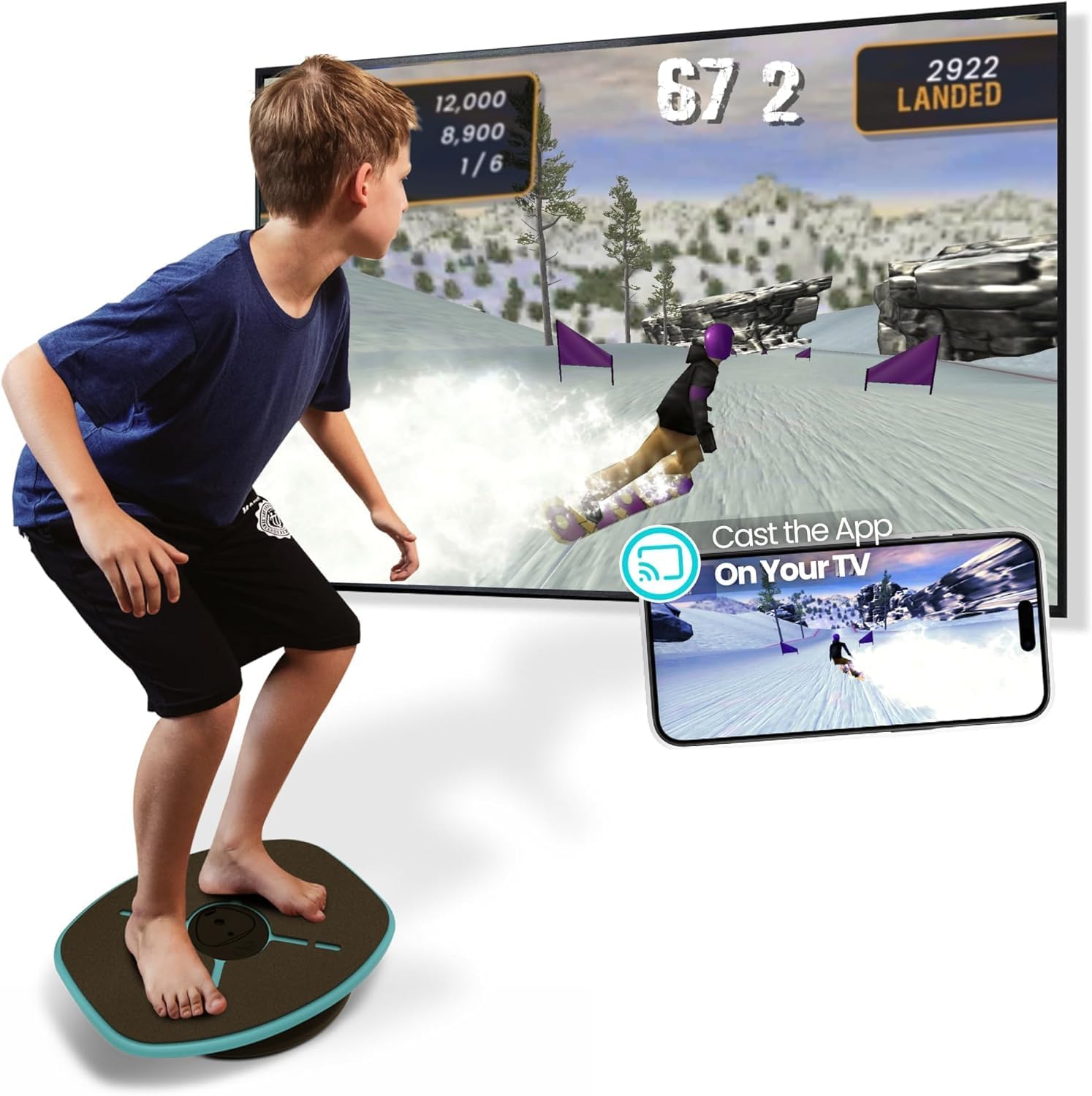
The Feedback: Wobble Board
The Jitsu (Obvious): It helps improve your balance.
The Kyo (Truth): This tool isn’t for performing the split squat on it. It’s a tool to test the structure you’ve built. Can you maintain your balance and structure when under a sudden load or when forced to react quickly? This board proves your connection to your center by testing your stability, not by becoming part of the exercise itself.
View Wobble Board
The Test: Resistance Bands
The Jitsu (Obvious): They make the exercise harder.
The Kyo (Truth): This is not about getting “bigger.” This is about proving your control. Can you still perform this martial arts exercise at a 10-second tempo when a band is actively trying to pull you down? This is measurable proof that your control—your mastery over your nerves and muscles—is increasing, not just your brute strength.
View Resistance Band SetTake the Next Step
The Other Way Martial Consulting is more than just these foundational exercises. It’s a way of thinking. Whether you’re a fellow student, a beginner, or just curious, we invite you to connect with us.
Join our newsletter for a weekly “Kyo-Jitsu” lesson, or schedule a one-on-one virtual consultation to refine your practice.