Master Control Under Pressure
Unlock effortless movement, enhance your personal safety, and boost your overall well-being by mastering your body’s true balance point. Learn to move with your core for unshakeable stability.
Welcome to Lesson 3! If you haven’t already, we highly recommend reviewing Lesson 1: Unshakeable Self-Control and Lesson 2: Control Under Pressure. These foundational lessons will make the concepts discussed here even clearer.
Your Body’s True Balance Point
Every single movement you make, from walking to lifting, revolves around an invisible sweet spot called your Center of Mass (COM). Think of it as your body’s personal “balance point.”
What is Your Center of Mass (COM)?
Your COM is the single point where your body’s entire weight is perfectly balanced. While it’s generally located near your lower spine, it constantly shifts with every tiny adjustment you make.
Your Base of Support (BOS)
Your BOS is the area on the ground covered by your points of contact (like your feet). You stay balanced as long as your Center of Mass remains directly above this area.
🏗️ MUSCLE FAILS. STRUCTURE PERSISTS.
You cannot out-muscle every problem. Eventually, you get tired. We teach you how to build a mental and physical structure that channels pressure into the ground, not into your nervous system.
➤ Build Your StructureEfficiency in Motion: Learn to Move with Your Core
Imagine trying to move a tall, vertical stick. If you tilt the top, the bottom has to quickly catch up. This is like moving by leaning—it uses extra effort and impacts your joints.
Inefficient Movement (Leaning)
Leaning from your shoulders to start moving can feel like a “controlled fall,” but it often causes extra effort and impact on your joints as your feet try to “catch” your balance.
Efficient Movement (From COM)
However, if you move with your core, the top and bottom parts naturally follow in a coordinated way. This distributes the effort throughout your entire body, reducing impact and making movement more natural.
How Your Body Recovers Balance
Your body is smart! It uses a sequence of strategies to keep you upright when you’re pushed off balance.
1. Ankle Strategy
For small wobbles, your ankles make tiny, quick adjustments.
2. Hip Strategy
For bigger nudges, your hips sway to move your COM back.
3. Stepping Strategy
If a push is too big, you take a step to catch yourself.
Mastering Movement in Martial Arts
In martial arts, true power comes not from brute force, but from intelligent movement. By mastering your own COM, you can move with your core for such efficiency that an opponent’s efforts become ineffective.
A defensive stance prioritizes stability. An offensive stance prioritizes mobility. Knowing when to switch is the art.
Smart Moves for Everyday Life
The same powerful principles apply to your daily tasks. Using your body efficiently reduces strain.
The Right Way to Lift
Stagger Your Feet
Create a wide, stable base with one foot slightly forward.
Move from Your Center
Shift weight from back to front foot, leading with your waist.
Keep Load Close
Holding an object close reduces strain on your spine.
The Mind-Body Connection
The principles of physical balance extend to your inner stability. Just as you have a physical Center of Mass, you have an emotional center.
When you learn to move with your core emotionally, you become less reactive. Practices like Tai Chi, a core practice in Kyo-Jitsu Ryu, teach that “the waist is the source of all movements.” This physical integration serves as a powerful way to achieve mental and emotional togetherness.
Explore this connection further in our lesson on the Unbreakable Mind-Body Connection.
48%
Reduction in Falls
Achieved through Reactive Balance Training (RBT).
🧠 STABLE BODY = STABLE MIND
When your body feels unstable, your brain triggers anxiety. Learn to ground your physical self so your mind stays clear, calm, and ready to make critical decisions.
➤ Ground Your MindWhy Master Your Center?
Physical Efficiency
Move with less effort and greater fluidity.
Personal Safety
Improve balance and reaction time.
Reduced Injury
Minimize strain on joints and muscles.
Frequently Asked Questions
Q: Is my Center of Mass always in the same spot?
A: No, it moves every time you change your posture or lift an arm.
Q: Can these principles really help me avoid falls?
A: Absolutely! Active training improves your ability to react to unexpected wobbles.
Q: How does physical balance relate to emotional balance?
A: A strong physical center makes you harder to unbalance emotionally.
Ready to Master Your Movement?
The best way to understand these principles is through practice. One excellent tool is a balance board.
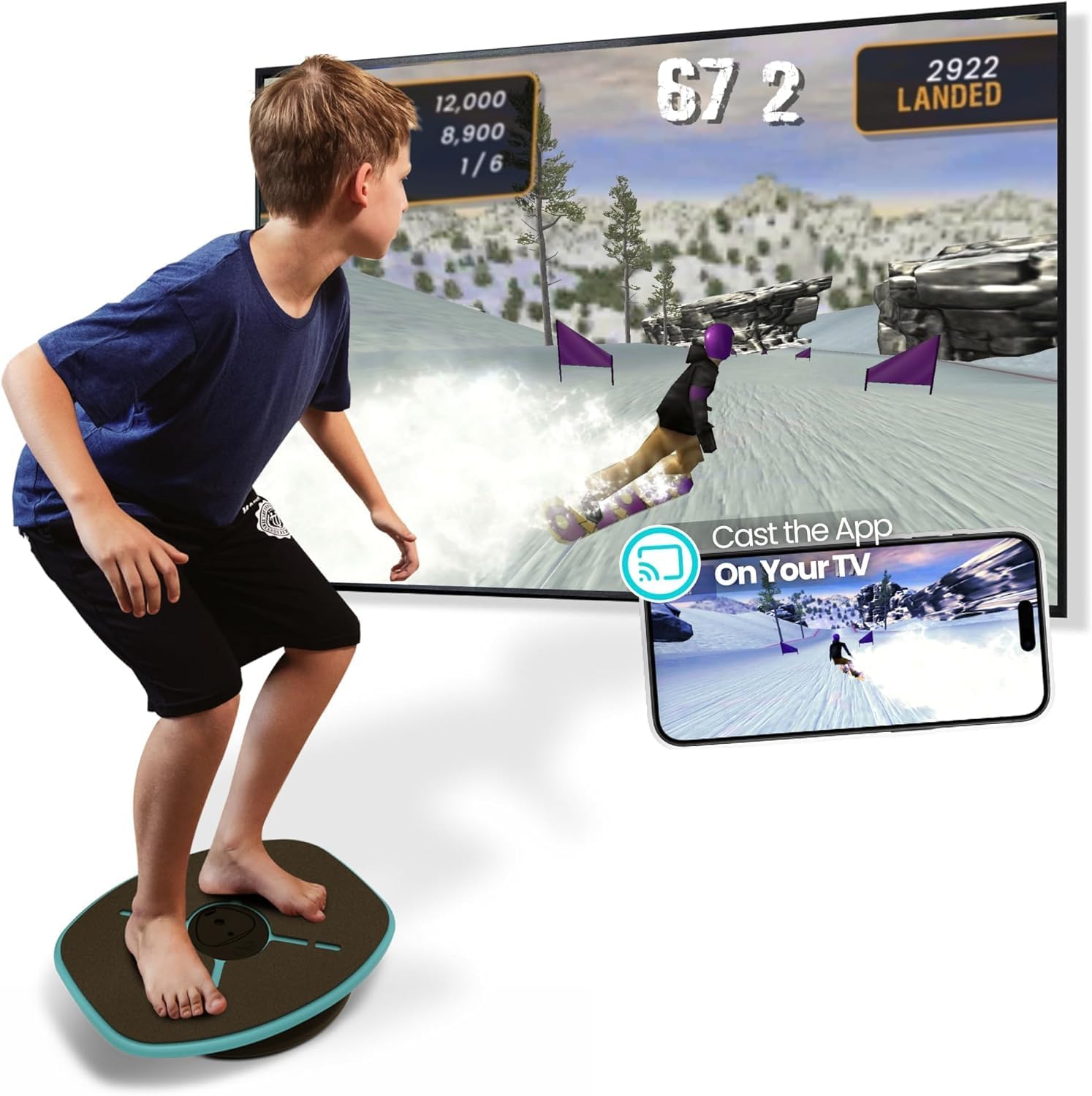
The GoBalance Board
Enhance your stability, strengthen your core, and improve your proprioception.
Get Your GoBalance Board on Amazon!