Master Control Under Pressure
Build unshakeable balance through superior structure and stay steady when it matters most.
Beyond Self-Control: Staying Strong When Pushed
In our first lesson, we covered mastering your inner world. But what happens when you face external force? How do you maintain control without exhausting your physical and mental energy?
This lesson is about mastering control when pressure hits. It’s about learning to be steady and strong, not by fighting harder, but by being structurally sound. Think of a skyscraper in the wind—it stands not by resisting, but by design.
Balance vs. Stability: A Critical Distinction
We often use “balance” and “stability” interchangeably, but under pressure, their differences are profound.
Balance: The Fragile State
Imagine standing perfectly still. You are in balance. But a small push can make you wobble or fall. This is a state of static equilibrium, easily disrupted and energy-intensive to maintain against external forces.
Stability: The Resilient Structure
Now, imagine a willow tree swaying in a storm. It yields but does not break. This is stability—the ability to absorb force, adapt, and return to a strong position. It’s about structural integrity, not rigid stillness.
🏗️ MUSCLE FAILS. STRUCTURE LASTS.
You can’t out-muscle every problem. Eventually, you get tired. We teach you how to build a mental and physical structure that channels pressure into the ground, not into your nervous system.
➤ Build Your StructureThe Energy Drain of Poor Structure
Without a stable structure, your body and mind waste massive amounts of energy just trying to stay upright. This mental and physical “wobble” leads to:
- Wasted Physical Energy: Burning strength just to stand still.
- Wasted Mental Energy: Brain works overtime to prevent falling.
- Slow Reactions: Brain is too busy balancing to react quickly.
- Rapid Fatigue: Body and mind tire faster, losing clarity.
The Mind-Body Connection
Trying to strategize while physically unstable is like solving a math problem on a tightrope. When your body is stable, your brain is freed from “survival mode” and can:
- Focus Clearly: Pay full attention to the situation.
- React Faster: Send quick, intelligent signals without delay.
- Stay Calm: Less physical stress equals less mental stress.
- Adapt Quickly: Change plans on the fly without losing your footing.
Training your body for stability isn’t just about physical strength; it’s about unlocking your full mental potential under pressure.
🧠 STABLE BODY = STABLE MIND
When your body feels unstable, your brain triggers anxiety. Learn to ground your physical self so your mind stays clear, calm, and ready to make critical decisions.
➤ Ground Your MindThe Solution: Train Smarter, Not Harder
The secret to power is a “structured” body that channels force into the ground. But how do you train this? Not with rigid poses, but with tools that provide real-time feedback and make learning engaging.
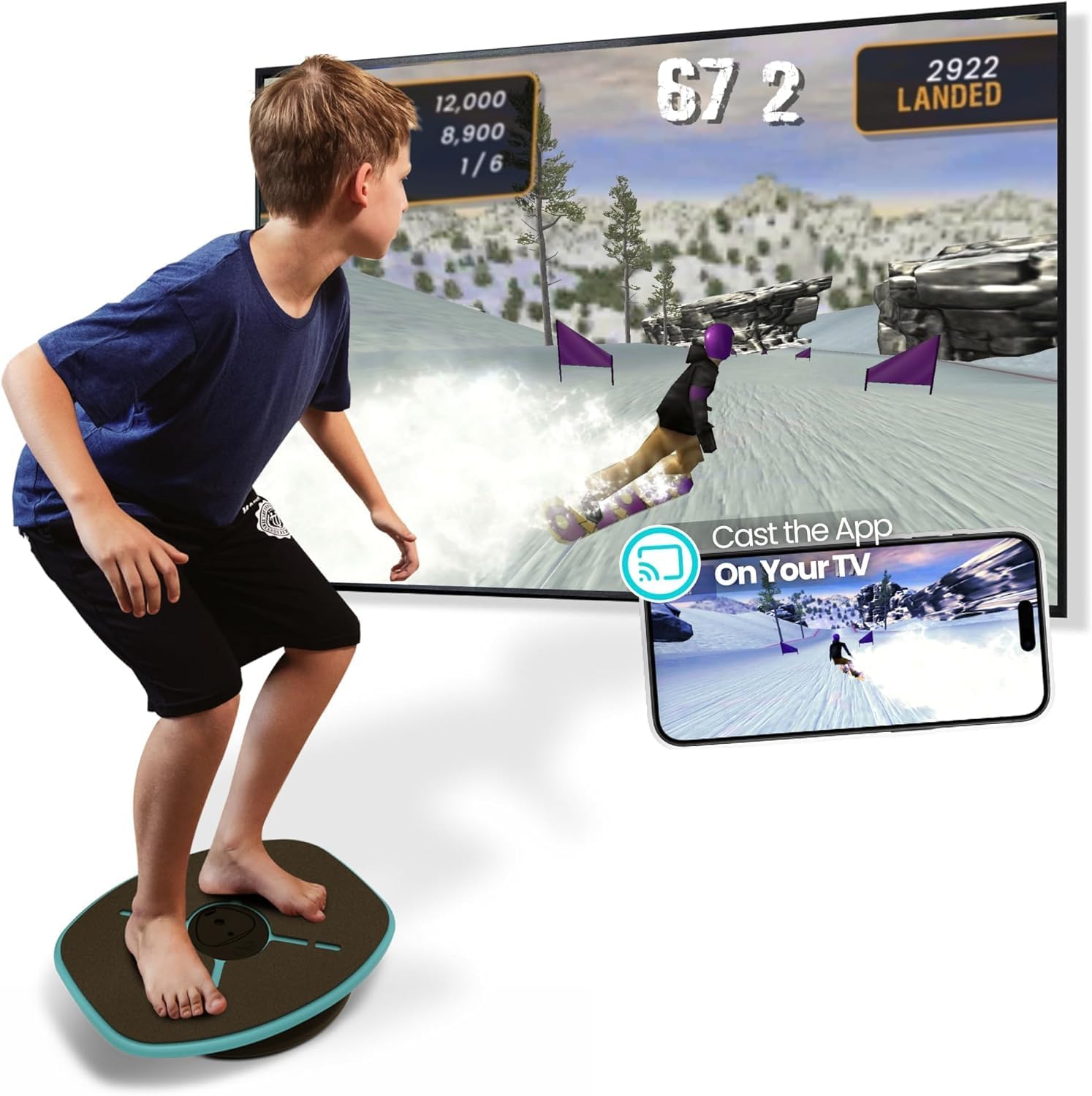
The GoBalance Board: Your Partner for Stability
The GoBalance Board is an app-enabled smart tool designed to build deep, effortless stability. With 12 free interactive games, it makes training fun and effective.
- Boost Coordination & Strength: Develop core stability for a solid foundation.
- Fun & Engaging: Games keep you motivated and make practice enjoyable.
- Home Gym Workout: Train effectively from your living room.
Ready to Master Your Stability?
Stop wasting energy. Start building true, unshakeable stability to perform at your best.
Get Your GoBalance Board Today!Frequently Asked Questions
1. How is this different from regular balance training?
Regular balance training often focuses on static holds or simple wobbles. The GoBalance board, with its interactive games, trains for dynamic stability. It teaches your body to react and restructure instantly to unpredictable movements, which is far more practical for real-world situations than just learning to stand still.
2. Do I need to be athletic to use the GoBalance Board?
Not at all. The GoBalance board is designed for all fitness levels, from beginners to advanced athletes. The games have adjustable difficulty levels, allowing you to start where you’re comfortable and progressively challenge yourself as your stability and confidence grow.
3. How long until I see results in my control under pressure?
Many users feel a noticeable improvement in their physical stability and focus within the first few weeks of consistent use (10-15 minutes a day). Translating this to high-pressure situations depends on practice, but the physical foundation you build makes the mental transfer much faster and more effective.
4. Can this help with mental pressure, not just physical?
Absolutely. That’s the core of the mind-body connection. By training your body to be stable, you reduce the “mental noise” and stress associated with physical instability. This frees up your cognitive resources, allowing you to think more clearly, stay calmer, and make better decisions during any stressful event, whether it’s a physical confrontation or a high-stakes presentation.
5. How do the app’s games translate to real-world skills?
The games are specifically designed to build functional skills. A game that requires you to shift your weight quickly to “catch” a virtual object trains your ability to recover from a sudden push. A game that demands precise control to navigate a maze hones the fine motor skills needed for controlled, deliberate movement. They turn abstract concepts like “stability” into tangible, repeatable skills.