How to Build an Emergency Kit
One Size Does NOT Fit All
Being ready for emergencies means having the right stuff for the right situation. A kit for your car is different from one for your home. Let’s explore how to build the perfect kit for your needs!
The Foundation: What Every Kit Needs
No matter the emergency, some things are always essential. Experts call these the “Core Four” of survival. They are the building blocks for every kit you make.
Water
1 gallon per person, per day.
Food
Non-spoiling and easy to make.
First Aid
Bandages, wipes, and medicine.
Light & Comms
Flashlight and a radio.
⚡ SUPPLIES RUN OUT. KNOWLEDGE DOESN’T.
A gallon of water lasts a day. Knowing how to find water lasts a lifetime. We teach you how to survive when the kit is empty.
➤ Learn Survival MindsetEveryday Carry (EDC): Ready On-the-Go
An EDC kit has small items you carry every day in your pocket or backpack. It helps you handle small problems, from a papercut to a power outage while you’re out.
Phone
Keys
Wallet
Multitool
Sanitizer
Pen
Your EDC should be light and personal, with tools and health items you might need unexpectedly.
Travel Kits: Road vs. Air
Traveling has its own risks. A car kit can hold bulky items for breakdowns, while an air travel kit must be compact and follow TSA rules.
Car Kit vs. Air Kit Contents
TSA Rules: Carry-On or Checked?
Packing for a Flight
Check for Sharp Objects
Large scissors or tools must go in your checked bag. Small scissors (<4 inches) might be okay in your carry-on.
Liquids Rule (3-1-1)
Liquids in your carry-on must be 3.4 oz (100ml) or less, in a 1-quart bag, 1 bag per person.
Medications
Keep medicines in original bottles. It’s best to have them in your carry-on, not checked luggage.
Home Kits: Shelter vs. Evacuate
At home, you need two types of kits: a large one to “shelter in place” for up to two weeks, and a smaller “Go-Bag” to grab for a quick evacuation.
Shelter-in-Place Kit
Your goal is to have enough supplies for your whole family for a long time without power or water.
“Go-Bag” for Evacuation
This backpack should be light and ready to go, with the most important items for 3 days.
Go-Bag Priority Items
When you have to leave fast, some items are more important than others. This chart ranks what you should pack first in your Go-Bag.
🎒 YOU HAVE THE BAG. DO YOU HAVE THE PLAN?
A Go-Bag is useless if you don’t know where to go or how to get there safely. We teach evacuation protocols and family safety planning so you aren’t just running blind.
➤ Create Your Safety PlanMake It Yours: Customization is Key
The best kits are personalized for your family and where you live. Think about who you’re packing for and the specific dangers in your area.
Adjusting for Local Hazards
Your kit’s focus should change based on whether you face tornadoes, floods, or wildfires. More warmth for storms, more masks for fire smoke.
Supplies Needed by Family Size
The more people in your family, the more water and food you’ll need over time. This chart shows how quickly supplies are used.
Stay Ready: The Preparedness Cycle
An emergency kit is never “done.” You have to check it regularly to replace expired food, water, and medicine, and to make sure it still fits your family’s needs.
Every 6 Months
Check all expiration dates on food, water, and medicine. Replace anything that is expired or will expire soon. A good time to do this is when you change your clocks for daylight saving time!
Check Batteries
Also every 6 months, test the batteries in your flashlights and radio. Replace them with fresh ones to make sure they work when you need them most.
Once a Year
Rethink your entire kit. Has your family grown? Have you moved? Do your kids need bigger clothes? Update the kit to match your life now.
Practice Your Plan
At least once a year, talk about your family emergency plan. Make sure everyone knows where the kits are and what to do if you have to leave home.
Questions You Might Have (FAQ)
Ready to Get Started? Your Perfect Kit Awaits!
Building an emergency kit can seem like a big job, but it doesn’t have to be! We’ve found an amazing starting point that has most of the important items you’ll need for any emergency kit.
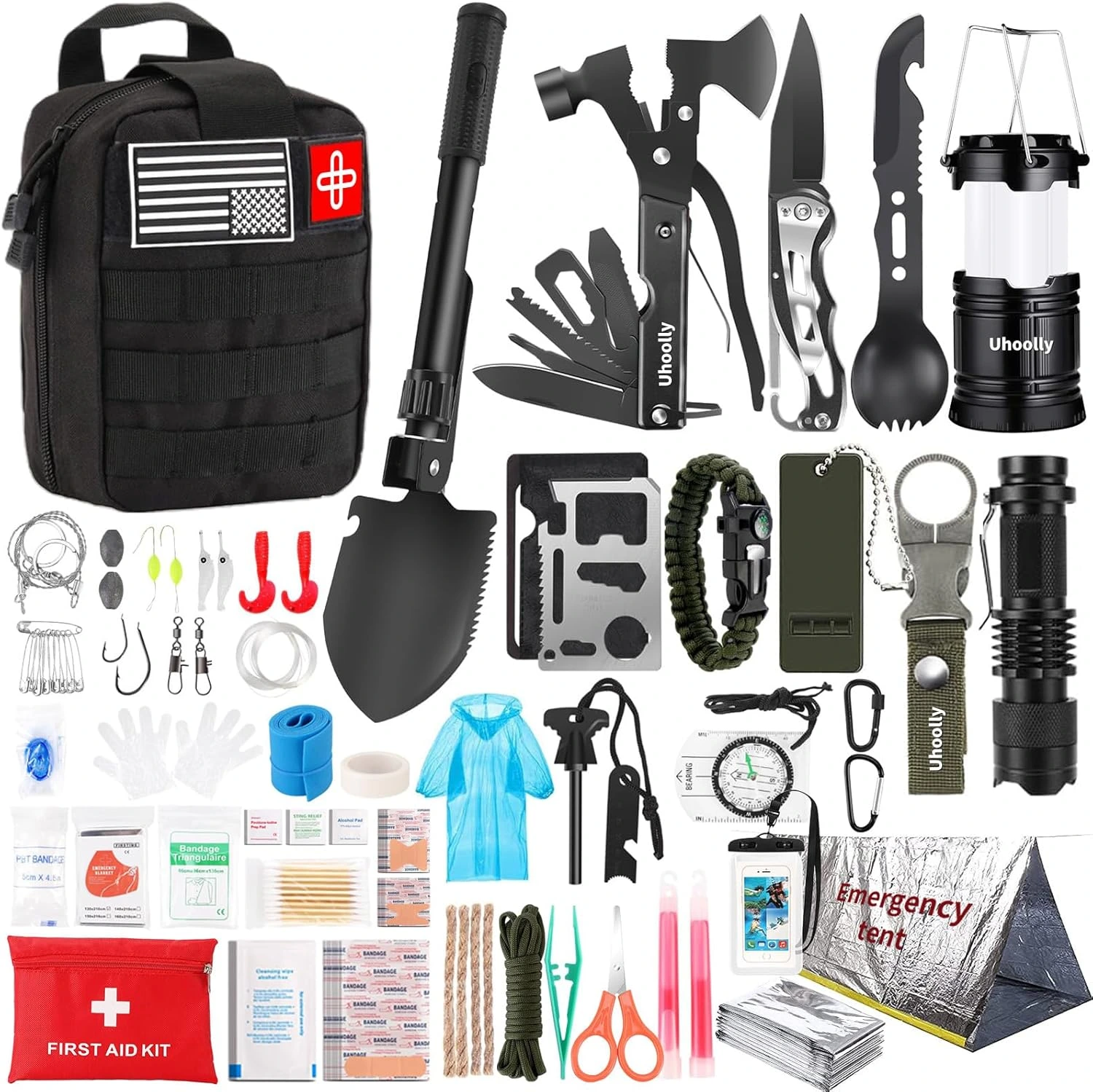
Introducing the ultimate 252-piece Survival Kit!
This 252-piece Survival Gear and Equipment Mini First Aid Kit is perfect for your car, home, or any outdoor adventure. It’s built with a Molle System, making it super easy to attach to other gear, and it’s ready for anything from an earthquake to car travel.
The neat thing about this kit is how versatile it is. You can even split it up to serve several different purposes! I, personally, have a full version of this kit in my car, but I’ve split up another of these kits for camping, EDC, home emergencies, and other uses. It’s a great way to get started with most of the non-perishable items you’d need.
Get Your Survival Kit on Amazon!
Why Being Ready Matters
People who take the time to build their emergency kits often share how much better they feel. Here are some of the great things they’ve found: