How to Build an Emergency Kit
One Size Does NOT Fit All
Being ready for emergencies means having the right stuff for the right situation. A kit for your car is different from one for your home. Let’s explore how to build the perfect kit for your needs!
The Foundation: What Every Kit Needs
No matter the emergency, some things are always essential. Experts call these the “Core Four” of survival. They are the building blocks for every kit you make.
Water
1 gallon per person, per day.
Food
Non-spoiling and easy to make.
First Aid
Bandages, wipes, and medicine.
Light & Comms
Flashlight and a radio.
⚡ SUPPLIES RUN OUT. KNOWLEDGE DOESN’T.
A gallon of water lasts a day. Knowing how to find water lasts a lifetime. We teach you how to survive when the kit is empty.
➤ Learn Survival MindsetEveryday Carry (EDC): Ready On-the-Go
An EDC kit has small items you carry every day in your pocket or backpack. It helps you handle small problems, from a papercut to a power outage while you’re out.
Phone
Keys
Wallet
Multitool
Sanitizer
Pen
Your EDC should be light and personal, with tools and health items you might need unexpectedly.
Travel Kits: Road vs. Air
Traveling has its own risks. A car kit can hold bulky items for breakdowns, while an air travel kit must be compact and follow TSA rules.
Car Kit vs. Air Kit Contents
TSA Rules: Carry-On or Checked?
Packing for a Flight
Check for Sharp Objects
Large scissors or tools must go in your checked bag. Small scissors (<4 inches) might be okay in your carry-on.
Liquids Rule (3-1-1)
Liquids in your carry-on must be 3.4 oz (100ml) or less, in a 1-quart bag, 1 bag per person.
Medications
Keep medicines in original bottles. It’s best to have them in your carry-on, not checked luggage.
Home Kits: Shelter vs. Evacuate
At home, you need two types of kits: a large one to “shelter in place” for up to two weeks, and a smaller “Go-Bag” to grab for a quick evacuation.
Shelter-in-Place Kit
Your goal is to have enough supplies for your whole family for a long time without power or water.
“Go-Bag” for Evacuation
This backpack should be light and ready to go, with the most important items for 3 days.
Go-Bag Priority Items
When you have to leave fast, some items are more important than others. This chart ranks what you should pack first in your Go-Bag.
🎒 YOU HAVE THE BAG. DO YOU HAVE THE PLAN?
A Go-Bag is useless if you don’t know where to go or how to get there safely. We teach evacuation protocols and family safety planning so you aren’t just running blind.
➤ Create Your Safety PlanMake It Yours: Customization is Key
The best kits are personalized for your family and where you live. Think about who you’re packing for and the specific dangers in your area.
Adjusting for Local Hazards
Your kit’s focus should change based on whether you face tornadoes, floods, or wildfires. More warmth for storms, more masks for fire smoke.
Supplies Needed by Family Size
The more people in your family, the more water and food you’ll need over time. This chart shows how quickly supplies are used.
Stay Ready: The Preparedness Cycle
An emergency kit is never “done.” You have to check it regularly to replace expired food, water, and medicine, and to make sure it still fits your family’s needs.
Every 6 Months
Check all expiration dates on food, water, and medicine. Replace anything that is expired or will expire soon. A good time to do this is when you change your clocks for daylight saving time!
Check Batteries
Also every 6 months, test the batteries in your flashlights and radio. Replace them with fresh ones to make sure they work when you need them most.
Once a Year
Rethink your entire kit. Has your family grown? Have you moved? Do your kids need bigger clothes? Update the kit to match your life now.
Practice Your Plan
At least once a year, talk about your family emergency plan. Make sure everyone knows where the kits are and what to do if you have to leave home.
Questions You Might Have (FAQ)
Ready to Get Started? Your Perfect Kit Awaits!
Building an emergency kit can seem like a big job, but it doesn’t have to be! We’ve found an amazing starting point that has most of the important items you’ll need for any emergency kit.
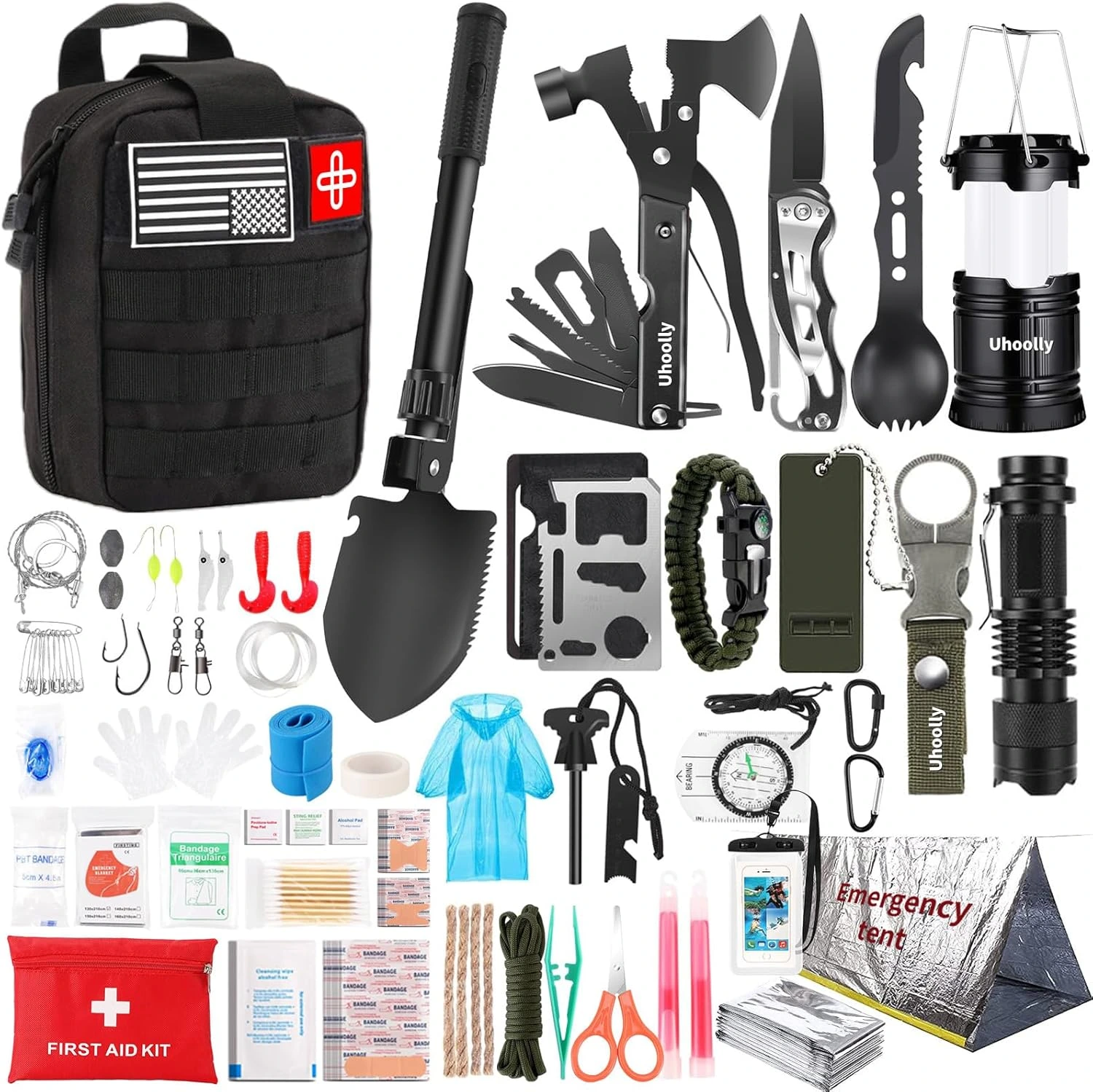
Introducing the ultimate 252-piece Survival Kit!
This 252-piece Survival Gear and Equipment Mini First Aid Kit is perfect for your car, home, or any outdoor adventure. It’s built with a Molle System, making it super easy to attach to other gear, and it’s ready for anything from an earthquake to car travel.
The neat thing about this kit is how versatile it is. You can even split it up to serve several different purposes! I, personally, have a full version of this kit in my car, but I’ve split up another of these kits for camping, EDC, home emergencies, and other uses. It’s a great way to get started with most of the non-perishable items you’d need.
Get Your Survival Kit on Amazon!At The Other Way Martial Consulting, we are dedicated to exploring methods of creating, maintaining, and re-establishing an acceptable level of safety for individuals and their loved ones. This post delves into how modern, discreet protective clothing can be a vital component of your personal safety strategy.
The Challenge: Navigating an Unpredictable World
In today’s complex society, concerns about personal safety are increasingly common. Whether it’s the inherent unpredictability of urban environments, the tragic reality of mass incidents, or risks in other dangerous situations, maintaining peace of mind can be a significant challenge. Many traditional security measures often come with trade-offs: they can be conspicuous, uncomfortable, or limit your freedom and style. This raises a crucial question: How can one genuinely enhance their protection without altering their lifestyle or drawing unwanted attention? This is where the concept of discreet protection becomes essential.
Urban Vulnerability
Navigating busy cities can bring unexpected risks, demanding a new level of preparedness.
Unforeseen Threats
The rise of mass incidents highlights the need for discreet, immediate personal defense.
Protecting Loved Ones
Ensuring the safety of family members, especially children, is a top priority for many.
The Solution: Integrating Discreet Protection into Your Safety Plan
Building an acceptable level of safety involves a multi-faceted approach, and modern discreet protective apparel has emerged as a crucial component. This innovative category of clothing empowers you to navigate daily life with enhanced confidence and discretion. It represents a revolution in personal protection, making advanced safety measures both invisible and accessible, directly addressing many of the concerns highlighted above.
Certified Protection
Advanced ballistic materials provide certified protection against various threats, offering peace of mind in any environment.
Seamless Style
Designed to look like regular clothing, these products offer discreet protection that complements your wardrobe, without drawing unwanted attention.
Everyday Comfort
Lightweight, flexible, and comfortable for all-day wear, ensuring you stay agile and unburdened, ready for anything.
🛡️ ARMOR PROTECTS THE BODY. AWARENESS PROTECTS THE LIFE.
Discreet protection is a powerful layer, but it shouldn’t be your only one. In the Mentorship, we teach you how to use geometry and awareness to avoid the threat before it ever touches you.
➤ Build Your Mental ArmorInnovations in Discreet Protection: What Makes It Stand Apart
Modern discreet protective clothing has evolved significantly, moving beyond bulky, tactical gear to offer sophisticated, wearable solutions. Here are some key innovations and features that define leading protective apparel today:
Pioneering Design
Leading products now offer integrated head protection and designs that are significantly lighter than traditional options, often featuring extended ballistic fabric lifespans.
Increased Accessibility
The cost of high-performance discreet protection has become more affordable, making it accessible for everyday civilians and families who previously couldn’t consider such options.
Commitment to Quality
Every product is 100% manufactured in the USA with ethical labor practices, ensuring superior quality control and supporting domestic supply chains.
Advanced Care
Featuring Kevlar or UHMWPE ballistic fabrics in waterproof casings, our stabproof line with SWX technology is even machine washable—a significant innovation for easy maintenance.
Community Initiatives
Beyond sales, some companies demonstrate a genuine commitment to community safety through programs like product donations to educators or trade-up programs for children’s items.
Uncompromised Discretion
A key feature is how seamlessly these garments blend into everyday attire, often passing unnoticed even in public spaces like airport security, providing protection without drawing attention.
Understanding Certified Discreet Protection
When considering discreet protective apparel, understanding its certification is paramount. Reputable products are rigorously tested by independent laboratories to meet established standards, ensuring reliability and performance.
NIJ Ballistic Standards
- Meets Level IIIA: Tested to protect against high-velocity handguns (.44 Magnum, .357 SIG) and knife threats.
- These products are designed to meet or exceed these critical performance benchmarks through independent lab testing.
Additional Certifications
- OEKO-TEX Standard 100: Ensures textiles are free from harmful substances.
- Extended Ballistic Lifespan: Advanced fabrics often offer extended durability, surpassing typical industry standards.
- Commitment to transparency and quality is evident in every detail.
“This protective gear provides true peace of mind. It’s my safety blanket, literally and figuratively.”
– Verified User Feedback
🧠 THE BEST PROTECTION IS INVISIBLE
Certified gear protects you when things go wrong. Certified skills ensure things go right. Learn the “The Other Way”—how to stop conflict before it starts.
➤ Train The OperatorConsider These Discreet Protective Apparel Options
To help you integrate discreet protection into your safety plan, here are some examples of innovative products available from Wonderhoodie, a leader in this field. Each offers a unique blend of style, comfort, and certified protection.
Discreet Hoodies
The world’s first bulletproof hoodie with integrated head protection. Offers NIJ Level IIIA ballistic and knife threat protection.
View ProductProtective Pants
Stay mobile and agile with our protective pants, offering NIJ-IIIA protection. They look and feel like average fabric.
View ProductStabproof Vests
Engineered for multi-threat protection, our stabproof line with SWX technology guards against cuts, slashes, punctures, and fire.
View ProductUtility Jacket
A versatile and durable utility jacket offering NIJ-IIIA ballistic protection. Designed for everyday wear without compromising style.
View Product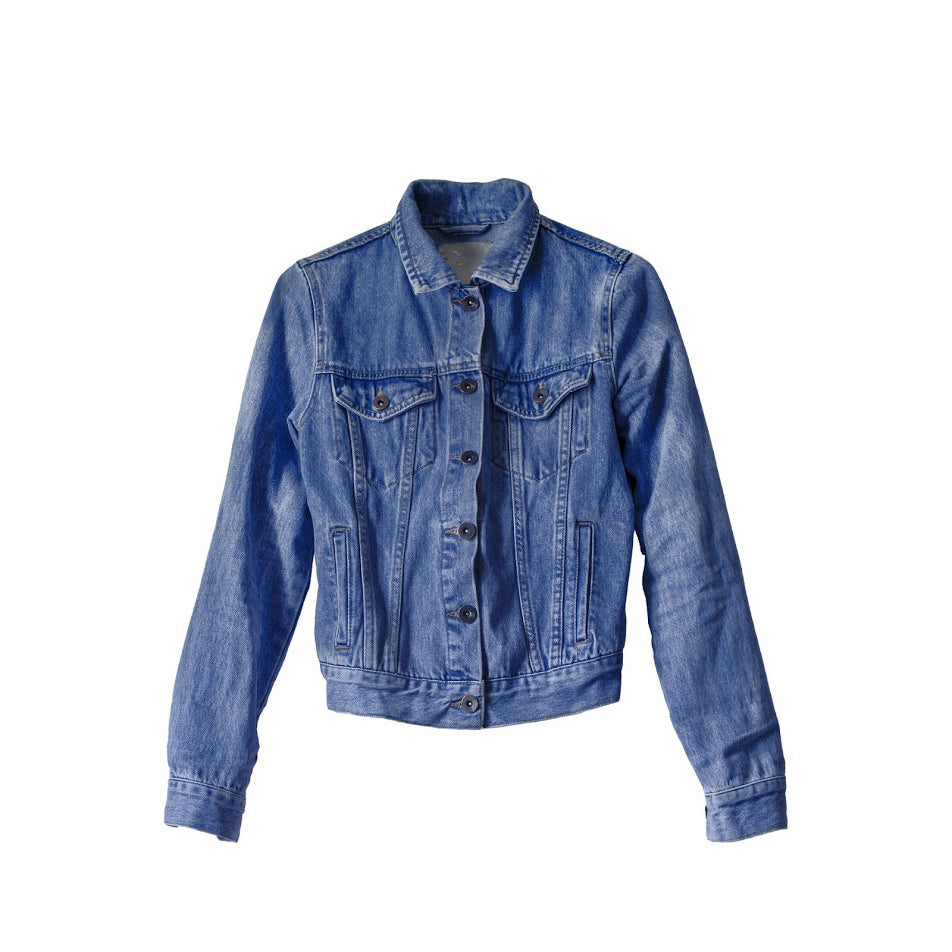
Denim Jacket
Classic style meets advanced protection. This denim jacket offers discreet ballistic resistance for casual wear.
View Product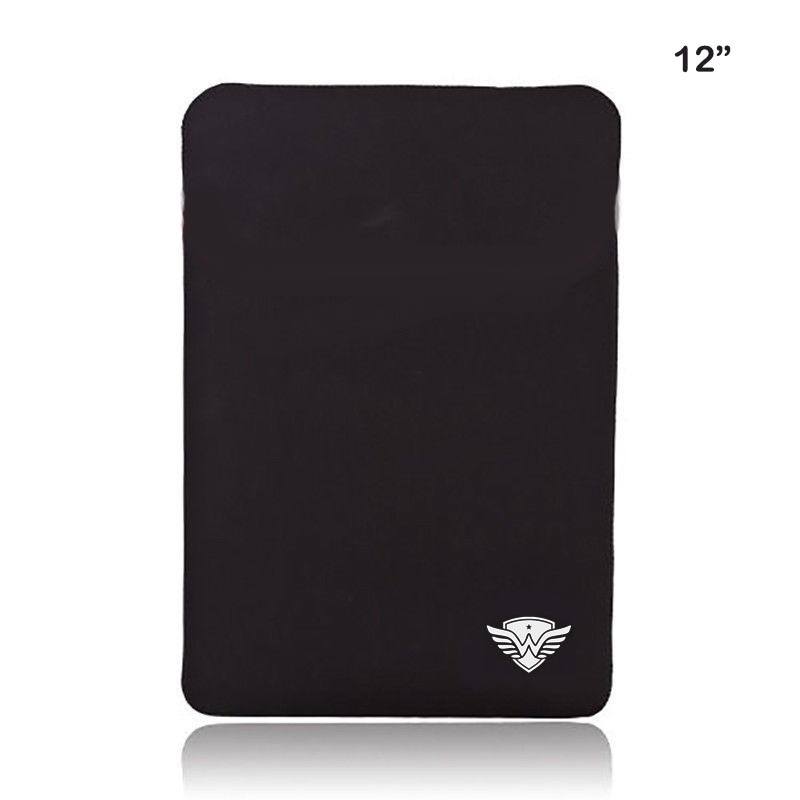
Backpack Insert
Transform any backpack into a shield. This lightweight, discreet insert provides NIJ-IIIA ballistic protection.
View ProductIntegrating Discreet Protection into Your Everyday Life
The evolution of protective apparel means you no longer have to choose between safety and style, or comfort and preparedness. By understanding the innovations in this field and how certified products are designed, you can make informed decisions to enhance your personal security. Discreet protective clothing, like the options from Wonderhoodie, offers a practical and effective way to integrate an additional layer of safety into your daily routine, empowering you and your loved ones to navigate an unpredictable world with greater peace of mind.
Feeling safe isn’t just a wish; it’s a right. In today’s world, it’s natural for personal safety for women to be a top concern, whether you’re heading to class, commuting to work, exploring a new city, or just stepping out for an evening stroll. The thought of feeling vulnerable or unprepared can weigh heavily on our minds. But with so many options out there – from sleek alarms to pepper spray, apps, and even self-defense classes – how do you choose what’s truly right for you?
We understand the concern about making the “right” choice, or even knowing where to start. You’re proactive, you’re cautious, and you want solutions that truly empower you. That’s why we’ve put together this clear, trusted guide. We’re here to cut through the noise, give you the facts, and help you find the tools that genuinely empower you. By the end of this article, you’ll gain clarity on your options, feel more confident in your personal safety strategy, and be equipped to make an informed decision about the best personal safety device for your life.
Understanding Personal Safety: It’s More Than Just a Gadget for Women
Before we dive into the gadgets, let’s talk about the bedrock of personal safety: you. A device, no matter how clever, is an enhancer, not a replacement, for your inherent power and awareness. True personal safety for women begins from within.
Situational Awareness: Your First Line of Defense
Think of situational awareness as your internal radar. It’s about consciously observing your surroundings, identifying potential threats, and recognizing unusual behavior. This isn’t about paranoia, but about being present and mindful. For instance, if you’re walking and spot someone consistently behind you, or notice an unlit area ahead, your awareness kicks in, allowing you to change your route or prepare. Learn more about boosting your situational awareness here.
Trusting Your Gut Instincts
We all have an inner alarm system. That little voice, that prickle on your neck, that uneasy feeling – that’s your intuition. “If it feels off, it IS off. Trust your gut. It’s your most powerful warning system, often picking up subtle cues we consciously miss,” emphasizes Jane Doe, a seasoned self-defense instructor. Learning to listen to and act on these instincts is a critical skill for women’s self defense.
Core Personal Safety Devices: A Comparative Breakdown for Women
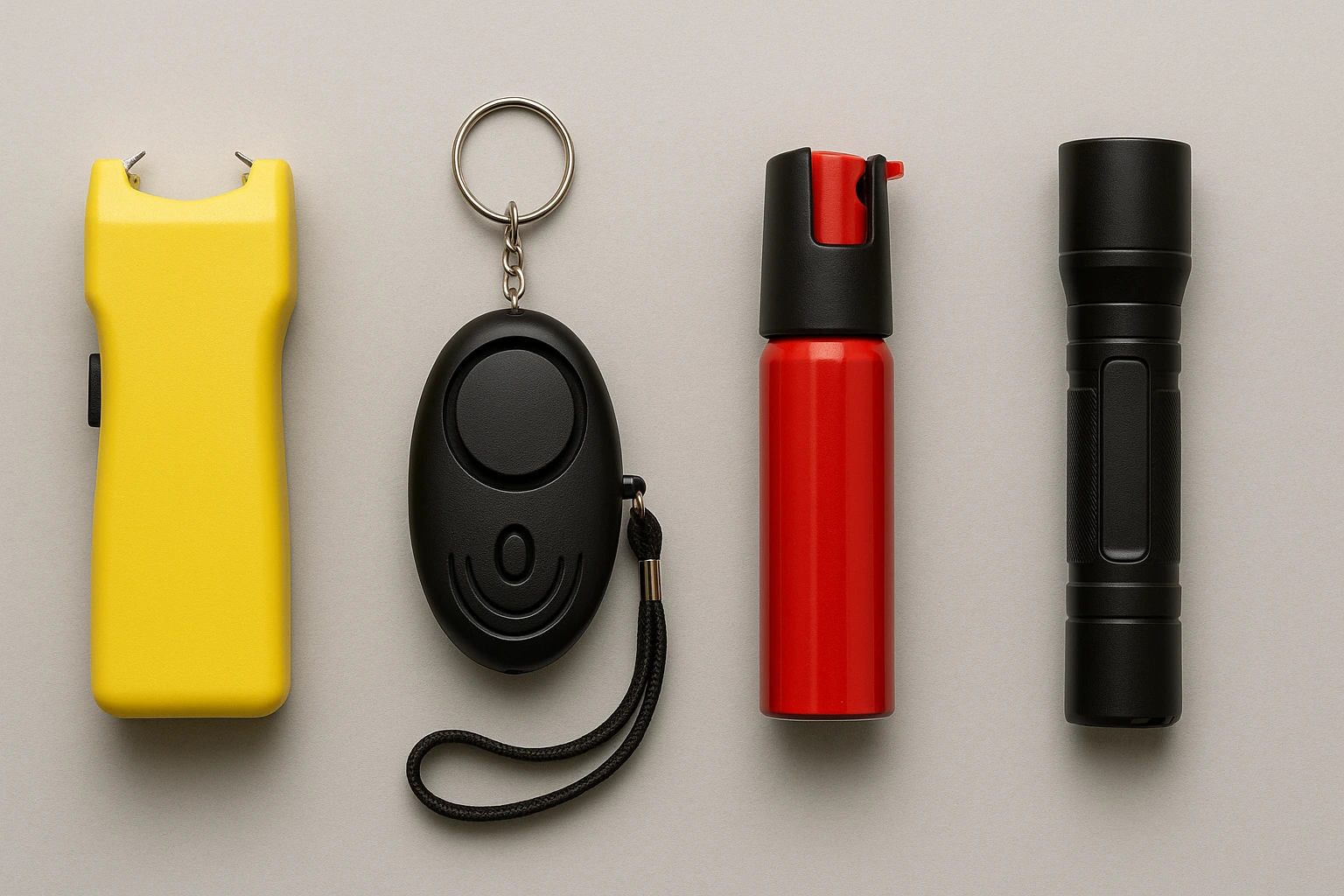
Navigating the world of personal safety tools can feel overwhelming. You’ve heard of personal safety alarms, pepper spray, stun guns, maybe even safety apps. But what’s the real story behind each? Which actually works, and more importantly, which is right for you? Our aim is to provide a clear comparison to aid personal safety for women everywhere.
A. Personal Safety Alarms: The Power of Your Voice Amplified
Imagine having a scream so loud it could stop someone in their tracks and draw attention from blocks away. That’s essentially what a personal safety alarm does. These small, portable devices emit an incredibly piercing sound when activated, designed to startle an attacker and alert anyone nearby to your distress. They are quickly becoming a go-to for personal safety for women.
✅ Pros of Personal Safety Alarms:
- Non-lethal & Generally Legal Everywhere: Unlike other self-defense tools, personal safety alarm legality is widespread; they are legal to carry across nearly all jurisdictions.
- Easy to Use Under Stress: Most have simple activation mechanisms (like a pull-pin), making them intuitive to use even in a panic.
- Effective Deterrent Through Sound: A 130dB alarm is louder than a jet taking off at 100 feet or a rock concert.
- Offers Peace of Mind & Empowers Confidence: Knowing you have a reliable tool can significantly reduce everyday anxiety.
⚠️ Cons of Personal Safety Alarms:
- Relies on attracting attention, so less effective in extremely isolated areas.
- Requires battery maintenance (though many have long battery lives).
B. Pepper Spray / OC Spray: Creating Distance, Gaining Time
Pepper spray is a popular option for those seeking a tool to create distance from an assailant. It’s designed to temporarily incapacitate by irritating the eyes, nose, and throat, offering another layer of personal safety for women.
⚠️ Key Considerations:
- Legality highly varies by state/country. Always check your local laws before carrying.
- Requires direct aim and proper technique
- Risk of blowback: Wind or enclosed spaces can cause the spray to affect you.
- Limited range: Most sprays have a range of 10-15 feet.
C. Tasers & Stun Guns: Direct Contact, Electrical Impact
These devices deliver an electric shock to temporarily incapacitate an attacker, providing another option for women’s self defense.
⚠️ Important Limitations:
- Legality highly varies by state/country; often stricter than pepper spray and sometimes prohibited entirely.
- Requires close physical contact or direct hit with probes.
- Can be expensive and requires training to use effectively.
D. Personal Safety Apps: Your Phone as a Lifeline
In our increasingly connected world, your smartphone can also be a valuable personal safety tool. Many personal safety apps for women offer valuable support through panic buttons, live tracking, and emergency contact features.
E. Self-Defense Skills & Classes: Your Body as a Tool for Empowerment
Beyond carrying a device, developing your own physical and mental self-defense skills is an incredibly empowering step. This is your ultimate personal safety tool, always with you. For women’s self defense, skills are a cornerstone.
🛡️ DEVICES BREAK. SKILLS DON’T.
A device gives you a voice, but training gives you a choice. Don’t just rely on gadgets to save you. Learn the mental and physical skills to be your own first responder.
Confidence comes from competence.
Device Comparison Table
| Device Type | Legality | Ease of Use | Cost (Avg) | Key Benefit |
|---|---|---|---|---|
| Personal Safety Alarms | Legal everywhere | Very easy | $10-30 | Attracts attention |
| Pepper Spray | Legal most places | Easy | $15-40 | Disables attacker |
| Tasers | Restricted some areas | Moderate | $50-400 | Incapacitates |
| Safety Apps | Legal everywhere | Easy | Free-$10/mo | Quick emergency response |
| Self-Defense Skills | Legal everywhere | Moderate-Hard | $50-200/class | Confidence & capability |
Which Device is Right For You? Making an Informed Choice
With so many options available, choosing the right personal safety device might seem overwhelming. However, by understanding your specific needs, lifestyle, and comfort level, you can make a confident decision that truly enhances your personal safety for women.
Let’s recap the key strengths: Personal safety alarms excel at deterrence and drawing attention. Pepper spray and tasers focus on incapacitation and creating distance. Safety apps provide alerts and tracking capabilities. Self-defense skills offer empowerment through physical capability.
🛠️ THE BEST TOOL IS A CALM MIND
The most expensive taser is useless if you freeze. We train the operator, not just the equipment. Learn how to stay calm and effective when the adrenaline dumps.
Join the Mentorship. Master the panic response.
Consider Your Unique Lifestyle
- Solo Runners/Walkers: You need something instantly accessible, lightweight, and loud that won’t impede your movement.
- College Students: Discreetness, legality on campus, and ease of use under stress are key priorities.
- Commuters: Portable, quick access, and non-confrontational tools work best for public transportation and walking.
- Parents: Consider tools that can protect both you and alert others if family members are in danger.
- Workplace/Professional Settings: Discreetness is paramount – you need protection that doesn’t draw unwanted attention.
- Unmatched Legality: Their non-lethal nature means they are generally legal to carry in almost every jurisdiction.
- Ease of Use: Simple pull-pin or button activation means less cognitive load in a high-stress situation.
- Primary Goal of Deterrence & Attention: In most real-world scenarios, preventing an incident or attracting immediate help is the safest outcome.
Ready to Start Your Safety Journey?
🔒 Get Your Relaxweex Personal Safety Alarm NowOur Top Recommendation: The Relaxweex 12 Pcs Personal Safety Alarm
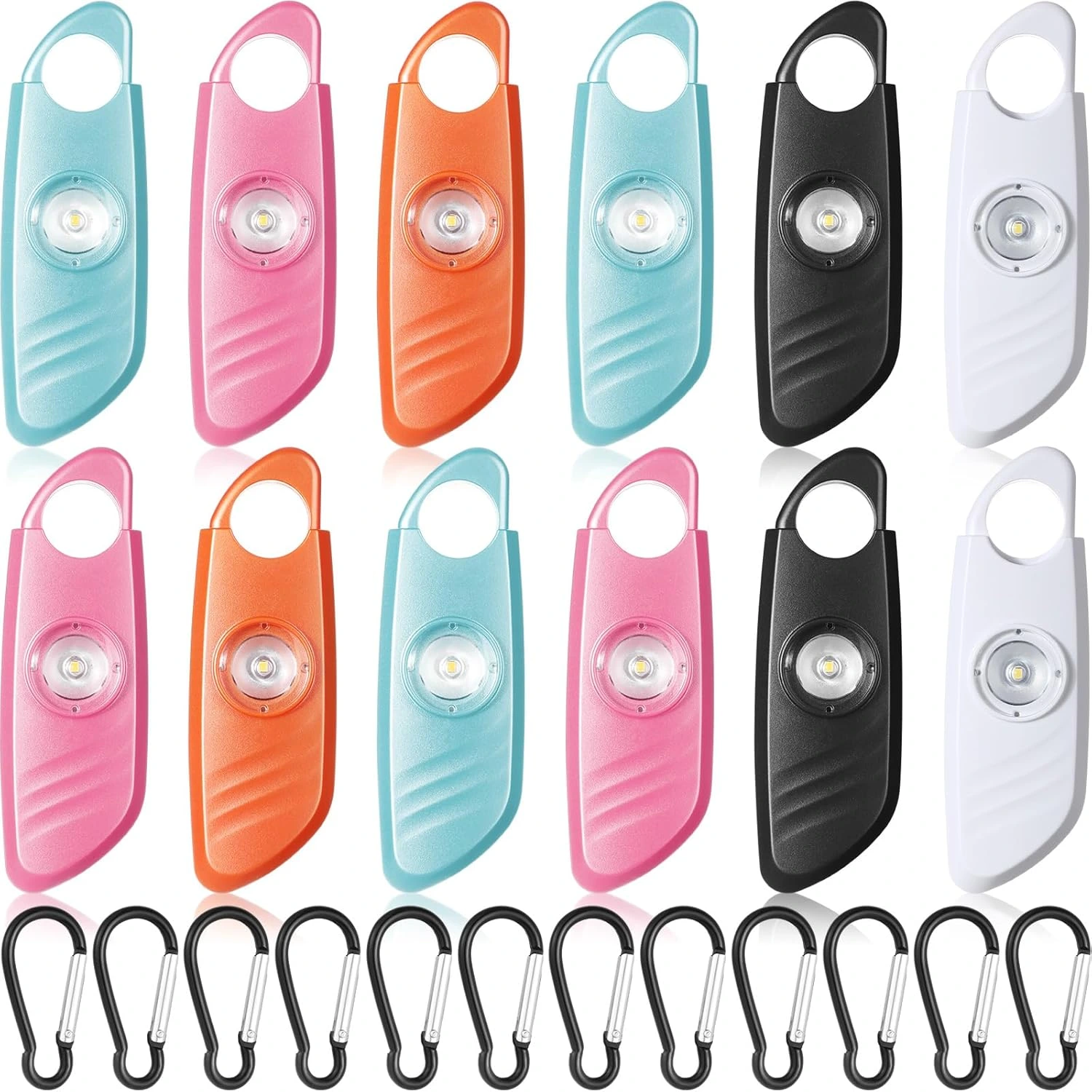
After reviewing the landscape of personal safety devices – weighing the pros and cons, considering real-world effectiveness, and prioritizing the needs of personal safety for women – one personal safety alarm stands out as an exceptional choice.
Introducing the Relaxweex 12 Pcs Personal Safety Alarm for Women with LED Strobe Light.
This isn’t just another gadget; it’s a meticulously designed tool that embodies the core principles of proactive safety and personal empowerment. It directly addresses the common pain points we’ve discussed, offering a blend of effectiveness, user-friendness, and discreet portability that truly sets it apart.
🌟 Why It’s Our Top Pick:
- Blistering Decibel Power: Emitting a staggering 130dB siren, the Relaxweex alarm is louder than a jackhammer or a jet engine from 100 feet.
- Effortless Activation: Simple pull-pin activation. No fumbling with tiny buttons, no complex sequences.
- Discreet & Stylish Design: Compact and lightweight at approximately 2.1 ounces per alarm. It comes in 5 different colors.
- Enhanced Visibility: Each alarm features an intense LED flash for additional visual attention.
- Ready Out-of-the-Box: Each alarm is battery-powered by 3 LR44 batteries (included).
- Value in Numbers: The 12-piece package allows you to equip your entire family and network.
- Peace of Mind, Guaranteed: “I feel so much more confident walking my dog at night knowing I have my Relaxweex alarm on my leash – and I gave one to my daughter for college too,” shares Emily R., a satisfied user.
✨ Special Value: 12-Pack for Ultimate Protection
Protect your entire family and save money with the 12-piece set!
👨👩👧👦 Shop 12-Pack Family Protection SetReady to take control of your safety? Your journey to enhanced safety starts here. The choice is yours, and the power is in your hands.
Final Thoughts: Your Safety, Your Empowerment in the Modern World
Choosing the right personal safety device is a powerful, proactive step in building a life where you feel confident, prepared, and free. It’s about empowering yourself with knowledge and tools, so you can navigate your world with greater peace of mind.
Remember, your personal safety for women is an ongoing journey of awareness and preparedness. Equipping yourself with a reliable tool like the Relaxweex Personal Safety Alarm is a significant stride in that journey, a testament to your commitment to yourself and your well-being. It helps reduce anxiety about crime, fostering a greater sense of personal security benefits.
Every step you take towards preparedness adds to your confidence. Consider the Relaxweex Personal Safety Alarm as your next step towards feeling truly secure.
⚠️ Important Disclaimer
The information provided in this article is for educational and informational purposes only and does not constitute professional security, legal, or medical advice. Self-defense situations are complex and carry inherent risks. Always consult with qualified professionals and understand your local laws regarding self-defense and the use of force. The authors and publishers are not responsible for any actions taken based on the information presented herein.
💼 Affiliate Disclosure
This website participates in various affiliate marketing programs, which means we may get paid commissions on editorially chosen products purchased through our links to retailer sites. This helps support our work and allows us to continue providing valuable content.

Affiliate Disclosure & Legal Disclaimers:
This article contains affiliate links, meaning we may earn a commission if you make a purchase through our links, at no extra cost to you. We only recommend products we genuinely believe in and have thoroughly researched for their effectiveness and value.
Please remember that laws regarding personal safety devices (especially pepper spray, tasers, and stun guns) vary significantly by state, country, and local jurisdiction. It is your sole responsibility to check and understand the laws in your specific location before purchasing, carrying, or using any of these devices. This content is for informational purposes only and does not constitute legal, medical, or psychological advice. No device guarantees 100% safety; these tools are designed to reduce risk, increase chances of escape, and provide empowerment and peace of mind.
Are Self Defense Flashlights Effective? The Definitive Guide for Commercial and Personal Security
Illuminating Your Self-Defense Strategy
In a world where personal security is paramount, many seek reliable, non-lethal tools for self-defense. The tactical flashlight often emerges as a top contender. But beyond its obvious utility, how effective is a “self defense flashlight” as a genuine personal security device? Can a beam of light truly protect you?
This definitive guide dives deep into the capabilities, limitations, and strategic uses of tactical flashlights for self-defense. We’ll explore their multi-faceted roles, from disorienting an attacker with a high lumen beam to serving as an emergency defense tool.
What you’ll learn: We’ll cover essential features, real-world applications, legal considerations for both individuals and organizations, and even delve into maintenance and total cost of ownership. Whether you’re an individual seeking the best self defense flashlight for everyday carry, or you represent an organization looking to equip security personnel, this guide and our detailed self defense flashlight comparison will help you.
Understanding the Effectiveness of Self Defense Flashlights
The idea of using a flashlight for self-defense might seem simple, but its effectiveness comes from dual functionality. Beyond just shining a light, a self defense flashlight serves as both a deterrent and a physical tool.
Not a Magic Bullet, but a Powerful Aid: It’s important to set realistic expectations. A flashlight won’t stop a determined, armed attacker on its own. However, it is an incredibly versatile, non-lethal option that can buy you time to escape, call for help, or gain control of a situation without resorting to lethal force.
⚡ THE HARD TRUTH ABOUT GEAR
A flashlight creates light, but only your mind creates safety. What happens if you drop it? Or the battery dies?
➤ Build The System That Never Runs Out of Batteries
Don’t just buy a tool. Become the operator.
Key Features That Make Flashlights Effective for Self Defense
Not all flashlights are created equal when it comes to self-defense. Specific features turn a simple light source into a valuable safety tool.
Brightness (Lumens) and Beam Type: The Power to Disorient
- Understanding lumen ratings: Lumens measure the total amount of visible light from a source. For self-defense, more lumens generally mean more disorientation. What’s enough for a “high lumen beam”? We recommend at least 300-500 lumens for basic self-defense. For maximum impact, look for 800-1000+ lumens. This intense light can cause temporary blindness and overwhelm an attacker’s vision.
- Beam patterns: Some flashlights have a focused, narrow beam (spotlight), while others offer a wider, flood beam. For self-defense scenarios, a well-balanced beam with a bright hotspot and sufficient spill is often best. This allows you to pinpoint an attacker while also illuminating their immediate surroundings.
- Importance of instant maximum output: When danger strikes, you don’t have time to cycle through modes. A self-defense flashlight should have an “instant-on” feature that immediately blasts light at its highest lumen setting. This allows for quick, decisive action.
Strobe Mode: The Strobe Disorienter Advantage
How Strobe Mode Disrupts Attackers:
- How rapid flashing affects an attacker’s visual processing and balance: The flickering light overloads the optic nerve, making it difficult for an attacker to focus or perceive depth. This can lead to temporary disorientation, dizziness, and even nausea, disrupting their balance and coordination.
- Optimizing strobe frequency for maximum impact: The ideal strobe frequency is usually between 10-20 cycles per second. This range is particularly disruptive to the human brain, causing maximum visual confusion and discomfort.
- “Rechargeable tactical flashlight with strobe mode” as a key feature: This combination ensures you have a powerful, ready-to-go tool. Rechargeable options are convenient and more economical over time, while the strobe mode is crucial for creating a tactical advantage.
Durability and Construction: Built for Impact
- Aircraft-grade aluminum and other robust materials: Look for flashlights made from aerospace-grade aluminum, often anodized for extra hardness. This material is lightweight yet incredibly strong, designed to endure harsh conditions.
- Water and impact resistance ratings (IPX, MIL-STD):
- IPX ratings (e.g., IPX7, IPX8) indicate water resistance. An IPX7 rating means it can be submerged in 1 meter of water for 30 minutes.
- MIL-STD (Military Standard) ratings, like MIL-STD-810G, suggest the flashlight has been tested against drops, vibration, and extreme temperatures. These ratings signal a robust build designed for reliability.
- Ergonomics and grip for effective handling under stress: The flashlight should feel comfortable and secure in your hand, even when wet or sweaty. Features like knurling (textured surface), finger grooves, and a good balance point prevent slipping and allow for a firm grip during use.
Size and Portability: Tailored for Everyday Carry
- “Best self defense flashlight for everyday carry” considerations (compact, lightweight): For daily use, look for compact models that easily fit in a pocket, purse, or on a keychain. They should be lightweight enough not to be cumbersome, encouraging consistent carry.
- “Powerful personal security flashlight for car” options (larger, more robust): For vehicle-based security, you can opt for larger, more robust flashlights. These might offer higher lumen outputs or extended battery life, and can be stored easily in a glove compartment or door panel.
- Clip options and lanyard attachments for quick access: A strong pocket clip allows for easy attachment to clothing or gear, ensuring quick access. Lanyards provide an extra layer of security, preventing accidental drops during high-stress situations.
Battery Life and Type: Reliability When It Counts
- Rechargeable vs. disposable batteries: Pros and cons:
- Rechargeable (e.g., 18650, 21700 Li-ion): More powerful, cost-effective over time, better for high-lumen outputs. Requires a charger.
- Disposable (e.g., AA, AAA, CR123A): Easily replaceable, good for emergency kits where power sources might be scarce. Can be less powerful and more expensive in the long run.
- Runtime on high lumen settings: Check the manufacturer’s specifications for runtime on the highest lumen setting. A good self-defense flashlight should offer at least 1-2 hours of usable light on its brightest mode.
- Battery indicators and charging considerations: Many modern tactical flashlights include battery level indicators so you know when to recharge. For rechargeable models, consider options with built-in USB charging ports for ultimate convenience.
Crenellated Bezel/Strike Bezel: The Impact Weapon Component
⚠️ IMPACT WEAPON CONSIDERATIONS:
- Design and purpose of the aggressive bezel for striking: The crenellated bezel is the jagged, pointed crown around the lens. It’s designed to concentrate force into a small area, making striking more effective and painful.
- Effectiveness as a less-lethal striking tool: While not designed for lethal force, the bezel can inflict pain and create separation. A strike to a pressure point or soft tissue can be enough to stun an attacker, allowing you to escape. It’s a good option for personal security device if needed.
How Tactical and Self Defense Flashlights Deter and Disrupt Threats
The strategic use of a flashlight goes beyond just illuminating a dark path.
Blinding and Disorienting Attackers with Brightness and Strobe Modes
Physiological Impact of High-Lumen Beams:
- Creating a Window of Opportunity: This disorientation is crucial. It buys you precious seconds – a “window of opportunity” – to:
- Escape from the situation.
- Call for help using your phone.
- Take further action, like deploying another self-defense tool or using an evasive maneuver.
- Beyond Vision: The psychological impact of being unexpectedly targeted by intense light: The sudden, overwhelming light can be startling and psychologically unsettling. It puts the attacker on the defensive, making them feel exposed and vulnerable, which can deter them from continuing their assault.
Psychological Deterrence: Projecting Confidence and Control
- Using the flashlight as a visible deterrent: Simply holding a tactical flashlight and shining it around can signal that you are aware of your surroundings and prepared. Most attackers prefer easy targets. A visible personal security device like a robust flashlight suggests you’re not one.
- Commanding presence: Shining the light to assess surroundings and signal awareness: Actively scanning your environment with a bright light projects confidence. It tells potential threats that you are vigilant, capable, and not an easy mark. This can make an attacker think twice before approaching.
Using Flashlights as Impact Weapons: Techniques and Real-World Application
While the light is your primary defense, a tactical flashlight’s robust build means it can also serve as an effective impact weapon.
Proper Grip and Stance: Maximizing Control and Force
- Forward grip: Holding the flashlight with the bezel facing forward, much like a regular grip on a handle. Good for thrusting attacks.
- Reverse grip (or “icepick grip”): Holding the flashlight with the bezel extending from the bottom of your fist. This grip can be very powerful for downward strikes.
- Stable base for striking: Ensure your feet are shoulder-width apart, knees slightly bent, to maintain balance and transfer power effectively.
Target Areas for Disabling or Distracting
Focus on vulnerable points for effective, non-lethal striking. These include:
- The bridge of the nose
- The temples
- The throat (with extreme caution)
- The collarbone
- The sternum
- Knees
- Shins
The goal is to create pain compliance or an escape opportunity, not severe injury.
Integrating with Other Self-Defense Techniques
- Combine light distraction with striking: Blind, then strike.
- Use it in conjunction with grappling: If an attacker gets close, use the flashlight to strike and create space.
- Evasive maneuvers: Disorient with light, then immediately move away from danger. The flashlight becomes an extension of your unarmed self-defense.
Importance of Training and Practice
⚠️ LEGAL AND TRAINING CONSIDERATIONS:
- Understanding the legal implications of using force: Know your local laws regarding self-defense and the use of force, even non-lethal.
- Simulated scenarios and drills for muscle memory: Practice drawing, activating, and striking with your flashlight. The goal is to build muscle memory so you can react instinctively under stress. Practice shining the light at different heights and angles.
🥋 MUSCLE MEMORY ISN’T ENOUGH
You can train to draw a flashlight in 0.5 seconds, but can you spot the threat 5 minutes before it happens? We teach the geometry of awareness that prevents the conflict entirely.
Join the Mentorship. Virtual Strategy + Physical Deployment.
Real-World Case Studies and Law Enforcement Endorsements
The effectiveness of self-defense flashlights isn’t just theory; it’s proven in real-world situations and supported by professionals.
Documented Instances of Successful Defense
While specific names are often withheld for privacy, numerous reports highlight flashlights playing a crucial role:
Real-World Success Stories:
- Scenario 1 (Parking Lot Escape): A woman leaving a late-night shift was approached by an individual in a dark parking lot. She immediately activated her brightest LED self defense flashlight for women on strobe mode, aiming directly at his face. The sudden, intense light caused him to flinch, stumble, and cover his eyes, giving her enough time to run to her car and lock the doors, driving away unharmed.
- Scenario 2 (Home Invasion Deterrent): A homeowner heard suspicious noises downstairs. Grabbing his powerful tactical flashlight, he flipped on the high lumen beam and strobe as he cautiously descended. The intruder, blinded and disoriented by the unexpected light, immediately fled the premises through a back door.
- Scenario 3 (Confrontation De-escalation): A security guard responding to a disturbance used his powerful flashlight to illuminate and identify an agitated individual. The bright light, combined with the guard’s authoritative presence, helped de-escalate the situation by making the individual feel exposed and less likely to continue aggressive behavior.
These anonymized scenarios demonstrate how the light, strobe, or even the mere presence of a robust flashlight can be pivotal.
Perspectives from Police and Security Professionals
Law enforcement officers frequently endorse tactical flashlights for civilians. Officer John Smith (retired, 25 years experience) states, “A good tactical flashlight is an indispensable tool, not just for us, but for anyone looking to enhance their personal safety. It gives you a non-lethal option to assess a threat, create distance, or temporarily incapacitate an aggressor without escalation to lethal force. It’s a proactive security tool.”
Officers routinely use flashlights for:
- Threat assessment: Illuminating dark areas to identify potential dangers.
- Subject control: Using light to gain compliance or to disrupt a suspect’s focus.
- Non-lethal force: As a last resort, using the flashlight as an impact weapon.
How Agencies Utilize Tactical Flashlights Beyond Direct Confrontation
Beyond direct confrontation, agencies use tactical flashlights for:
- Search and rescue: Illuminating vast areas, especially in low-light conditions.
- Signaling: Using specific light patterns to communicate with other units or indicate distress.
- Crowd control: Directing individuals or dispersing groups with focused beams.
- General utility: A reliable light source is essential for everything from inspecting vehicles to navigating complex environments.
Tactical Flashlight vs. Regular Flashlight: Why the Distinction Matters
You might think any flashlight will do, but there’s a significant difference between a tactical flashlight and a regular household flashlight.
Core Differences in Design and Purpose
- Regular Flashlights: Designed for general illumination – finding lost keys, walking the dog, power outages. They prioritize consistent, broad light and often have simple on/off switches.
- Tactical Flashlights: Purpose-built for demanding situations, prioritizing instant high output, durability, and features for self-defense or professional use. They are designed as a personal security device.
Material and Build Quality: Durability for Defense
- Superior materials: Often aircraft-grade aluminum, designed to withstand drops, impacts, and extreme temperatures.
- Robust construction: Sealed O-rings for water resistance, reinforced components, and often a more solid feel.
- Withstanding drops, impacts, and extreme conditions: Unlike flimsy consumer models, tactical lights are built to perform when dropped on concrete or used in harsh weather.
Optimized Features for Security Scenarios
- Instant-on high output: No cycling through low or medium settings – goes straight to maximum brightness.
- Accessible strobe: Often a dedicated button or a quick double-tap for immediate strobe activation.
- Ergonomic design for high-stress situations: Designed to be easily gripped and manipulated even under pressure, often with finger rings or specialized body textures.
Performance Under Stress
- Reliability and consistency when seconds count: Tactical flashlights are engineered to perform consistently when you need them most, minimizing failure points.
- Waterproofing and extreme temperature tolerance: They are designed to work in rain, snow, or extreme heat/cold, ensuring they don’t fail when conditions are challenging.
Choosing the Right Self Defense Flashlight: Recommendations and Comparisons
Selecting the right flashlight depends on your specific needs and how you plan to carry it.
Best Self Defense Flashlight for Everyday Carry (EDC)
Features to prioritize:
- Compactness: Fits easily in a pocket or small bag.
- Ease of concealment: Doesn’t draw unwanted attention.
- Quick access: Can be drawn and activated in seconds.
Examples of popular EDC models often include smaller, single-battery lights (e.g., those using 18650 or CR123A batteries) with strong pocket clips and at least 500-1000 lumens.
Brightest LED Self Defense Flashlight for Women
Considerations for size, ease of use, and personal safety in various environments: While “for women” isn’t a technical category, this often refers to flashlights that are compact, lightweight, easy to operate with one hand, and provide sufficient brightness for a wide range of situations (parking lots, walking alone, etc.).
Emphasis on user-friendly design and powerful illumination: Look for intuitive interfaces, easy-to-press tail-cap switches, and a powerful beam (800+ lumens) for maximum disorienting effect.
Powerful Personal Security Flashlight for Car
Larger, more robust options for vehicle-based security: These can afford to be bigger, offering longer battery life, higher lumen outputs, and often dual-fuel capability (accepting different battery types).
Considerations for emergency kits, battery life, and durability: Ideal for keeping in a glove box or emergency kit, able to withstand temperature fluctuations and offer extended runtime.
Rechargeable Tactical Flashlight with Strobe Mode
Spotlighting models that excel in both features and convenience: Look for models that combine high lumen output (1000+), an easily accessible strobe, and a reliable rechargeable battery system (e.g., USB-C charging). These offer the best balance of power, readiness, and cost-effectiveness.
Comparison Table: Commercial-Grade vs. Consumer-Grade Self-Defense Flashlights
| Feature / Aspect | Commercial-Grade Flashlights | Consumer-Grade Flashlights |
|---|---|---|
| Target User | Law Enforcement, Military, Professional Security, etc. | General Public, Everyday Carry Users |
| Durability | MIL-SPEC rated, aerospace aluminum, extreme impact res. | Often good, but may not withstand extreme abuse |
| Lumen Output | Consistently high (1000+ lumens), regulated output | Varies widely, can be lower or unregulated |
| Features | Advanced modes, weapon mounts, specialized optics, often proprietary batteries | Basic modes, accessible features, standard batteries |
| Reliability | Engineered for mission-critical, consistent performance | Good for general use, but less predictable under stress |
| Cost | Higher upfront investment | Generally more affordable |
| Warranty/Support | Extensive, often lifetime, professional support | Varies, typically limited |
| Compliance | Often designed to specific agency/industry standards | Less focus on professional compliance |
Maintenance, Warranty, and Total Cost of Ownership Considerations
A self-defense flashlight is an investment in your safety. Protecting that investment ensures it works when you need it most.
Essential Maintenance Tips for Longevity
Essential Maintenance Checklist:
- Battery care: Store batteries properly. If using disposables, check expiration dates. For rechargeables, avoid over-discharging or overcharging. Remove batteries if storing the flashlight for a long time.
- O-ring lubrication: Apply a thin layer of silicone grease to O-rings periodically to maintain waterproofing.
- Cleaning procedures: Wipe down the body with a damp cloth. Clean battery contacts with an eraser or cotton swab. Avoid harsh chemicals.
- Ensuring peak performance when you need it most: Regular checks mean your flashlight is always ready. Test it weekly or monthly to ensure it’s functioning correctly.
Understanding Warranty Coverage and What to Look For
Types of warranties (limited, lifetime):
- Limited warranty: Covers defects for a specific period (e.g., 1-5 years).
- Lifetime warranty: Covers manufacturing defects for the product’s lifespan, often excluding batteries and normal wear and tear.
What typical warranties cover and exclude: Most warranties cover defects in materials and workmanship. They typically exclude damage from misuse, unauthorized modifications, or normal battery degradation.
Importance of reputable brands for after-sales support: Stick to well-known brands. They usually offer better customer service, easier warranty claims, and readily available parts or accessories.
Calculating the True Cost of Ownership: Initial vs. Long-Term Value
Beyond the purchase price:
- Initial cost: The price of the flashlight itself.
- Factoring in batteries: If using disposables, calculate the ongoing cost. For rechargeables, factor in the cost of the charger and potential replacement batteries years down the line.
- Potential repairs: While rare with quality lights, consider if parts are available.
Investing in quality for reliability and peace of mind: A cheap flashlight might save you money upfront, but it could fail when your life depends on it. A higher quality, slightly more expensive model often translates to better reliability, durability, and ultimately, greater peace of mind.
Importance of Reliable Performance in Critical Situations
⚠️ RELIABILITY WARNING:
Why cutting corners on TCO can be a dangerous gamble in self-defense: In a self-defense scenario, failure is not an option. A flashlight that flickers, dies, or breaks during an encounter could have severe consequences. This is why investing in a quality, well-maintained personal security device is paramount.
Industry-Specific Use Cases and Customization Options
Self-defense flashlights are not just for individuals; they are crucial tools across various industries.
Security Personnel and Patrols
Essential tools for threat assessment, crowd control, and non-lethal compliance: Guards use them to illuminate dark corners, identify individuals from a distance, and manage crowds. The strobe disorienter can be used to control agitated individuals without physical contact.
Integration with duty belts and gear: Designed with secure clips, holsters, or rings for easy attachment to duty belts, vests, or other tactical gear.
Healthcare and Hospitality Staff
For internal security, navigating dark areas, and emergency response: Nurses, doctors, and hotel staff often work in large buildings with dimly lit areas. A discreet yet powerful flashlight can be a vital personal security device for navigating these spaces, checking on patients/guests, or in emergency evacuations.
Subtle yet effective personal protection: These roles often require a less aggressive appearance. Compact, high-lumen flashlights offer powerful protection without being overtly tactical.
Corporate and Campus Security
Enhancing the safety of premises and personnel: Security teams on corporate campuses or universities use tactical flashlights for patrols, securing buildings, and responding to incidents.
Standardizing equipment for security teams: Many organizations procure uniform flashlights for their security staff, ensuring consistent performance, training, and streamlined maintenance.
Customization for Specific Operational Needs
- Weapon-mounted lights: For law enforcement or authorized personnel, integrating a flashlight directly onto a firearm for hands-free illumination.
- Specialized filters (red/green for night vision): Filters can preserve natural night vision or provide specific light for signaling without revealing position.
- Pressure switches: For weapon-mounted lights, a remote pressure switch allows instant activation without altering grip.
- Engraving and branding for organizational assets: Custom engraving helps with inventory management and deters theft of company property.
Legal and Compliance Considerations for Organizations and Individuals
Understanding the law is critical for responsible ownership and use of any self-defense tool.
Understanding Laws on “Weapons” and “Self-Defense Devices”
⚠️ LEGAL CONSIDERATIONS:
- Varying definitions by jurisdiction: Laws differ significantly. Some jurisdictions might consider a flashlight with a crenellated bezel a “blunt instrument” or “weapon,” especially if used in a way that suggests intent to cause harm.
- “Reasonable force” and the legal framework for self-defense: The principle of “reasonable force” is universal. You can only use the amount of force necessary to stop an imminent threat. Using a flashlight, even as an impact tool, must fall within this framework.
Corporate Policies and Employee Training Requirements
Developing clear guidelines for staff carrying self-defense tools: Organizations must establish policies on what tools employees can carry, where, and when they can be used.
Mandatory training on proper use, limitations, and reporting procedures: Employees must be trained not just on how to use the flashlight, but also on when it’s appropriate, its limitations, and proper reporting if it’s deployed in a defensive situation. This protects both the employee and the organization.
Liability and Responsible Use for Businesses
Protecting the organization from legal challenges related to employee actions: Without clear policies and training, a business could face liability if an employee uses a company-issued device inappropriately.
Ensuring devices are used within ethical and legal boundaries: This includes avoiding harassment, respecting privacy, and ensuring force is only used when legally justified.
Individual Rights and Restrictions by Jurisdiction
State and local laws regarding carrying and using self-defense tools: Research your specific state, county, and city laws. Some places might have restrictions on carrying certain types of “tactical” gear.
Traveling with self-defense flashlights: Be aware of differing laws if you travel with your flashlight, especially across state lines or internationally.
Beyond Self-Defense: Additional Uses of a Tactical Flashlight
The versatility of a tactical flashlight makes it more than just a self-defense tool.
Emergency Preparedness: An Essential Survival Tool
- Power outages: A high-lumen beam can easily illuminate entire rooms.
- Roadside emergencies: Signaling for help, changing a tire in the dark, or illuminating hazards.
- Signaling for help: Using the strobe or specific flash patterns to attract attention.
- Included in bug-out bags and disaster kits: Essential for any emergency scenario.
Everyday Utility: Versatility for Daily Tasks
- Camping, hiking: Navigating trails, setting up camp in the dark.
- Household repairs: Illuminating tight spaces or dark corners during maintenance.
- Navigating dark areas: Safely walking through unlit alleys or parking garages.
- A robust tool for any situation: Its durability means it can withstand drops and bumps, making it a reliable utility light.
Navigation and Search: Professional and Recreational Applications
- For search and rescue teams: Its powerful beam and reliable performance are critical for locating lost individuals.
- Outdoor enthusiasts: Hikers, hunters, and campers rely on tactical flashlights for reliable illumination and navigation.
- Even finding dropped items: Its focused beam can help locate small items in dark, cluttered spaces.
Frequently Asked Questions About Self Defense Flashlights
🔦 FREQUENTLY ASKED QUESTIONS:
Can a flashlight really blind someone?
Yes, temporarily. A high-lumen flashlight, especially one with a strobe feature, can cause temporary night blindness, pupil constriction, and disorientation, effectively “blinding” an attacker for crucial seconds.
Are self-defense flashlights legal everywhere?
Generally, yes. Flashlights are not typically classified as weapons. However, if a flashlight has an aggressively crenellated bezel, some jurisdictions might view it as a “blunt instrument” if intent to use as a weapon is implied. Always check local laws.
What’s the minimum lumen count for effective self-defense?
For basic disorientation, aim for at least 300-500 lumens. For truly effective blinding and disorienting effects, especially in brighter environments, 800-1000+ lumens is recommended.
How often should I practice with my self-defense flashlight?
Regular practice is key. Aim for short, frequent sessions (e.g., 5-10 minutes weekly) to practice drawing, activating, and aiming the light, and familiarizing yourself with its features.
Is a bigger flashlight always better for defense?
Not necessarily. While larger flashlights can offer more lumens and longer battery life, they might be cumbersome for everyday carry. The “best” size is one you will consistently carry and can effectively maneuver.
How do I know if a self-defense flashlight is genuinely “tactical”?
Look for specific features: high lumen output, instant-on function, easily accessible strobe, durable aircraft-grade aluminum construction, water/impact resistance ratings (IPX, MIL-STD), and often a crenellated bezel. A genuine tactical flashlight is built for reliability and high-stress scenarios, not just illumination.
Conclusion: Empowering Your Personal and Commercial Security
We’ve explored the multifaceted effectiveness of self defense flashlights as both a deterrent and a powerful tool. From their capacity to disorient an attacker with a high lumen beam and strobe disorienter, to their utility as an emergency defense tool or an impact weapon, these devices offer significant advantages. Key features like brightness, durability, and a rechargeable tactical flashlight with strobe mode are vital. For everyday carry, or as a powerful personal security flashlight for car, the right choice can make all the difference.
By the end of this comprehensive resource, you’ll have the knowledge to make an informed decision and utilize our ultimate tactical flashlight buying guide to equip yourself or your team with a truly effective tool for personal and commercial security.
Empower yourself by making an informed decision, prioritizing quality and reliability. Invest in a reputable personal security device that suits your needs, and remember that consistent training will maximize its effectiveness. Stay vigilant, stay prepared, and illuminate your path to safety.

⚠️ Important Disclaimer
The information provided in this article is for educational and informational purposes only and does not constitute professional security, legal, or medical advice. Self-defense situations are complex and carry inherent risks. Always consult with qualified professionals and understand your local laws regarding self-defense and the use of force. The Other Way Martial Consulting is not responsible for any actions taken based on the information presented herein.
💼 Affiliate Disclosure
The Other Way Martial Consulting participates in various affiliate marketing programs, which means we may get paid commissions on editorially chosen products purchased through our links to retailer sites. This helps support our work and allows us to continue providing valuable content.
Do Personal Safety Alarms Actually Work? – The Real Data
Picture this: You’re walking to your car after a late dinner with friends. The parking lot is dimly lit, your heels are echoing off the concrete, and suddenly you hear footsteps that aren’t yours. Your heart races. This is exactly when that little device clipped to your keychain – the one your mom insisted you carry – could be the difference between a close call and a nightmare.
But here’s the million-dollar question that keeps popping up in safety forums, college campuses, and worried parent group chats: Do personal safety alarms actually work?
The short answer? Yes, but with some important caveats that nobody talks about. Let’s dive into the real data and cut through the marketing fluff.
The Cold, Hard Stats on Personal Safety
Before we dissect alarm effectiveness, let’s establish why we’re even having this conversation. The numbers are sobering:
- 49% of women feel unsafe walking alone after dark near their homes
- 86% of women aged 18-24 report experiencing sexual harassment in public spaces
- 7 in 10 women in the UK have experienced sexual harassment
- Almost 20 people are physically abused every minute in the U.S.
🔍 DON’T BECOME ANOTHER VICTIM – FIND YOUR SOLUTION
We investigated the most popular personal safety alarms on the market to help you find the solution that could save your life. See which ones actually work when it matters most.
➤ Find Your Personal Safety Solution Here
Real investigations, proven solutions – protect yourself today
These aren’t just statistics – they represent real people making real calculations about their safety every single day. Enter personal safety alarms: tiny devices promising big protection.
How Personal Safety Alarms Actually Work (And Why Attackers Hate Them)
Personal safety alarms are deceptively simple. Most emit ear-piercing sounds between 120-140 decibels when activated – that’s louder than a jet engine at takeoff. To put this in perspective, sustained exposure to sounds over 85 decibels can cause hearing damage. So yes, they’re seriously loud.
The psychology behind their effectiveness is fascinating. Criminal behavior experts note that most attackers prefer easy, silent targets. When a potential victim suddenly becomes a walking fire alarm, three things happen:
- The element of surprise disappears – attackers lose their tactical advantage
- Attention is immediately drawn to the situation
- The fight-or-flight response kicks in – often favoring flight for the attacker
The Real-World Effectiveness Data
Here’s where things get interesting. Research from multiple sources reveals some compelling patterns:
- University of North Carolina study of 422 convicted burglars found that 60% would avoid homes with alarm systems entirely. While this focused on property crime, the deterrent psychology translates to personal safety.
- Healthcare security studies show that personal alarms can reduce assault rates when properly implemented, though effectiveness varies significantly by environment and circumstances.
The catch? Personal alarms aren’t magic shields. Their effectiveness depends heavily on:
- Location (busy street vs. isolated area)
- Time of day (more effective when people are around)
- Type of threat (works better against opportunistic attacks than targeted violence)
- User confidence (you actually have to use it)
When Personal Alarms Work Best
- Urban environments: City dwellers see the highest success rates. The combination of noise pollution making alarms stand out and higher bystander density creates optimal conditions.
- Campus safety: College students report feeling more confident and experiencing fewer unwanted approaches when carrying personal alarms. The psychological deterrent effect appears particularly strong in academic settings.
- Elderly populations: For seniors, personal alarms serve double duty – deterring potential attackers while also summoning help during medical emergencies.
- Commuter situations: Public transportation and parking structures see notable effectiveness, where the confined space amplifies the alarm’s impact.
The Bystander Reality Check
Here’s where we need to get brutally honest: personal alarms rely on bystanders to help. And humans, well, we’re complicated.
Former Army Criminal Investigations agent Sarah Jones puts it bluntly: “People don’t always help, often because they assume someone else will step in.” This phenomenon, known as the bystander effect, can significantly reduce alarm effectiveness.
The solution? Smart alarm users take proactive steps:
- Inform neighbors about their device (“If you hear this sound, I’m in danger – call 911”)
- Make direct eye contact with potential helpers while activating the alarm
- Combine alarms with other safety strategies (never rely on just one tool)
Modern Alarms vs. Traditional Screamers
The personal alarm landscape has evolved dramatically. Traditional “screamers” just made noise and hoped for the best. Today’s smart alarms integrate with smartphone apps, automatically contact emergency services, and share GPS locations with trusted contacts.
App-based alarms like those found in safety applications can silently alert authorities without the attacker knowing help is coming. This addresses one of the biggest criticisms of traditional alarms: that they might escalate a situation if the attacker becomes angry.
The Uncomfortable Truth About Limitations
Let’s address the elephant in the room: personal alarms aren’t foolproof. Several scenarios can reduce their effectiveness:
- Isolated locations: If nobody’s around to hear the alarm, its primary deterrent effect disappears.
- Determined attackers: Someone specifically targeting you might not be deterred by noise.
- Alcohol/drug-impaired attackers: Impairment can reduce the psychological impact of sudden loud noises.
- Indoor/enclosed spaces: Alarms can be muffled or the sound contained.
- User error: Forgetting to carry it, inability to access it quickly, or hesitation to use it.
⚠️ HARD TRUTH: TOOLS CAN BREAK. MINDSETS DON’T.
An alarm battery can die. A mindset is forever. Don’t rely solely on a plastic gadget to save your life. Learn the system that protects you when the tools fail.
The 10-week program that installs the ultimate safety software: Your Brain.
Comparing Your Options: Alarms vs. Other Safety Tools
Personal Alarms vs. Pepper Spray
- Alarms: Legal everywhere, can’t be turned against you, draws attention
- Pepper Spray: More immediate stopping power, but requires aim and can backfire in wind
Personal Alarms vs. Self-Defense Classes
- Alarms: Instant protection, no training required
- Self-defense: Builds confidence and physical skills, but requires ongoing practice
Personal Alarms vs. Smartphone Apps
- Traditional alarms: Work without cell service, instant activation
- Apps: Can contact authorities automatically, provide GPS tracking
The smart money? Layer your protection. Effective personal safety combines multiple tools and strategies.
⚖️ WANT THE COMPLETE BREAKDOWN?
Our detailed comparison analysis includes side-by-side testing results, pros/cons for different lifestyles, and real user feedback.
➤ See Full Comparison & Testing Results
Make the right choice with data-driven insights
Choosing the Right Personal Alarm (The Features That Actually Matter)
Not all personal alarms are created equal. Here’s what security experts recommend:
- Volume: Minimum 120 decibels, ideally 130+ decibels
- Battery life: Look for devices with at least 6-month battery life
- Activation method: Pull-pin systems tend to be more reliable than button-activated
- Durability: Water-resistant and drop-proof designs
- Size: Small enough to carry consistently, large enough to grab quickly
- Additional features: LED lights can be helpful, GPS tracking adds value
📋 READY TO FIND YOUR PERFECT SAFETY ALARM?
We’ve tested and compared the top personal safety alarms across all price ranges and feature sets.
➤ See Our Complete Personal Safety Alarm Comparison Guide
Find out which models performed best in real-world testing
The Psychology of Deterrence (Why Visible Safety Matters)
Here’s something interesting from behavioral research: the mere presence of a visible safety device can deter potential threats. It’s similar to how security camera stickers reduce break-ins even when there’s no actual camera.
Carrying a personal alarm openly (rather than hidden in your bag) may provide deterrent benefits even before activation. It signals that you’re prepared and aware – qualities that make you a less attractive target.
Installation and Usage: Getting It Right
The most effective personal alarm is worthless if you can’t access it quickly. Security professionals recommend:
- Keychain attachment: Most convenient for daily carry
- Lanyard wearing: Provides fastest access but may be grabbed by attacker
- Bag clip: Good compromise between accessibility and concealment
- Multiple devices: Consider having backups in different locations
Practice activation regularly. Muscle memory matters when adrenaline kicks in.
The Economics of Personal Safety
Here’s a refreshing perspective: personal alarms are ridiculously affordable for the protection they potentially provide. Basic models start under $10, while advanced GPS-enabled versions rarely exceed $50.
Compare this to:
- Self-defense classes: $100-300+
- Home security systems: $200-2000+
- Pepper spray: $15-30 (plus replacement costs)
The cost-to-benefit ratio strongly favors personal alarms as a foundational safety tool.
💰 CURIOUS ABOUT THE BEST VALUE OPTIONS?
We’ve broken down the cost-per-feature analysis across three of the most popular brands and models – including budget picks that don’t compromise on safety.
➤ View Our Value Analysis & Comparison
See which budget models offer premium features
Real Stories, Real Results
While we can’t share specific incidents for privacy reasons, security professionals consistently report positive outcomes when personal alarms are used correctly. The common thread? Immediate de-escalation when attackers realize their target isn’t the easy victim they anticipated.
One security consultant noted, “In my experience, the psychological shock of sudden loud noise buys precious seconds – and in dangerous situations, seconds save lives.”
Legal Considerations (The Stuff Nobody Mentions)
Personal safety alarms occupy a unique legal position: they’re legal virtually everywhere. Unlike pepper spray, stun guns, or other self-defense tools, personal alarms face no legal restrictions in the United States. You can carry them on planes, in schools, and across state lines without concern.
This legal simplicity makes them particularly valuable for:
- College students navigating varying campus policies
- Travelers crossing state or international borders
- Professionals working in sensitive environments
- Anyone wanting protection without legal complications
The Technology Evolution
The personal alarm industry isn’t standing still. Recent innovations include:
- Smartphone integration: Many modern devices sync with apps for enhanced functionality
- GPS tracking: Automatic location sharing with emergency contacts
- False alarm prevention: Smart sensors that distinguish between accidental and intentional activation
- Biometric locks: Preventing misuse while ensuring quick access for the owner
Building Your Personal Safety Strategy
Personal alarms work best as part of a comprehensive safety approach. Security experts recommend the PACE method:
- Primary plan (your main safety strategy)
- Alternate plan (backup if primary fails)
- Contingency plan (if first two don’t work)
- Emergency plan (last resort)
Personal alarms can serve multiple roles in this framework, providing both deterrent and summoning capabilities.
🛡️ WANT TO BUILD A COMPLETE PERSONAL SAFETY TOOLKIT?
Our Safety Scout comprehensive guide walks you through creating layered protection strategies that work in real-world situations for YOUR state and lifestyle.
➤ Access Safety Scout Resources
From daily commutes to travel safety – get actionable information
The Bottom Line: Are They Worth It?
After reviewing the research, interviewing security professionals, and examining real-world data, here’s the verdict:
- Personal safety alarms are effective tools when used correctly, but they’re not miracle devices.
- Their greatest strength lies in psychological deterrence and attention-getting capability.
- Their effectiveness increases dramatically in populated areas and decreases in isolated locations.
Most importantly, they’re affordable, legal, and easy to use – making them accessible to virtually anyone concerned about personal safety.
Your Next Steps
If you’re considering a personal safety alarm:
- Choose the right type for your lifestyle and typical environments
- Practice using it until activation becomes automatic
- Inform key people in your life about your device
- Integrate it into a broader safety strategy
- Replace batteries regularly and test functionality
🎯 READY TO TAKE ACTION?
Start with our Personal Safety Alarm Comparison to find the perfect device for your needs, then explore our Safety Scout resources for comprehensive safety planning.
➤ Get Your Personal Safety Alarm Comparison
➤ Access Complete Safety Scout Guide
Build protection that goes beyond just carrying a device
Final Thoughts
Personal safety isn’t about living in fear – it’s about living with confidence. Personal safety alarms offer a simple, affordable way to tilt the odds in your favor. While they’re not perfect solutions, they’re proven tools that have helped countless people stay safe.
In a world where personal safety concerns are unfortunately valid, personal alarms represent a practical, accessible form of protection. Combined with awareness, preparation, and other safety strategies, they can play a valuable role in keeping you safe.
Don’t wait to become a statistic.
Disclaimer: This article provides general information about personal safety alarms and should not be considered professional security advice. Personal safety strategies should be tailored to individual circumstances and local conditions. Always consult with local law enforcement or security professionals for specific safety recommendations.
Affiliate Disclosure: This website may contain affiliate links to personal safety products. We may earn a commission if you make a purchase through these links, at no additional cost to you. Our recommendations are based on research and genuine belief in product effectiveness, not commission potential. We only recommend products we would use ourselves or suggest to family members.




Why Being Ready Matters
People who take the time to build their emergency kits often share how much better they feel. Here are some of the great things they’ve found: