Skip to content

Paradoxical Teaching: The Logic of Confusion

An instructor commands: “Slow down. You are moving too fast.”

This is not a riddle. It is a physiological necessity. In personal safety training, the path to understanding is rarely linear. To learn, one must first be willing to question the instruction. This is the essence of paradoxical teaching—a core methodology in Kyo-Jitsu Ryu designed to dismantle assumptions and reveal the mechanics of conflict.

“The test of a first-rate intelligence is the ability to hold two opposing ideas in mind at the same time and still retain the ability to function.” — F. Scott Fitzgerald

The Utility of Cognitive Dissonance

Cognitive dissonance illustration

Paradoxical teaching utilizes statements that appear self-contradictory to provoke a deeper analysis. When a student is told, “Slow down to get fast,” the conscious mind flags the error. It creates mental friction.

This friction is cognitive dissonance. The brain demands resolution. It forces the student to stop operating on autopilot and analyze the mechanics of efficiency. Frantic movement is slow; deliberate movement is fast. The paradox forces the student to prove the truth to themselves.

“The instructors didn’t just show me what to do. They forced me to understand why it worked.” — M.T., Mentorship Graduate

See the Teaching Methodology →

Common Paradoxes

These are not clever turns of phrase. They are tools to break rigid, linear thinking:

Arm wrestling concept
  • “Strength has nothing to do with power.” We distinguish between muscular output (strength) and biomechanical alignment (power). A smaller individual can generate immense power through structure without possessing superior strength.
  • “Look at nothing and see everything.” Tunnel vision is a liability. By fixating on a threat (e.g., a weapon), you lose context. By softening the gaze (“looking at nothing”), you perceive the entire environment (“seeing everything”).

Why We Don’t Spoon-Feed

Free thinking concept

The objective of Kyo-Jitsu Ryu is not to produce mimics who parrot techniques. The objective is to cultivate independent thinkers capable of making high-consequence decisions under pressure.

Paradoxical teaching bypasses rote memorization. By wrestling with the contradiction, the student internalizes the principle rather than just the technique. They learn the “Why” and the “When,” not just the “How.”

Embrace the Friction

For new students, this method can be disorienting. You may feel the instruction is riddles rather than training.

Confusion is not failure. It is the friction of a new neural pathway forming. It indicates your brain has ceased passive reception and begun active construction. The role of the instructor is not to provide the answer, but to guide the student through the confusion to the conclusion.

Case Study: Effortless Strength

Structural demonstration

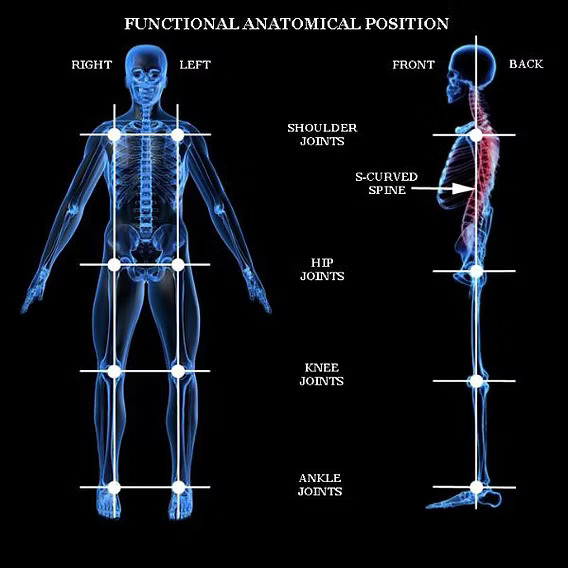
I once instructed a student on structural integrity. I aligned their skeleton and issued a command: “Relax completely, but do not change your position.”

I applied pressure, leaning my full weight against them. Their structure held. There was no muscular strain, only alignment. They were supporting a significant load with zero perceived effort.

I delivered the paradox to lock in the lesson: “Relax until your strength requires no effort.” That student never again confused tension with power.

Exercise: Deconstruct the Statement

This exercise illustrates the core concept. Consider the statement: “To control your opponent, you must first give them control.”

  • Reaction: Logically, this implies surrender. Why does the mind reject it?
  • Analysis: How can you lead momentum if there is no momentum to lead? How do you bait a reaction without offering an opening?
  • Application: Apply this to negotiation. Can you let the other party feel in charge to guide them to your conclusion?

Common Questions

Why not just teach the technique directly?

Direct instruction leads to mimicry. The paradox leads to ownership. In a high-stress environment, you cannot recall a list of steps; you can only rely on internalized principles.

Is confusion necessary?

Yes. Comfort is the enemy of growth. If you understand the concept immediately, you are likely relying on pre-existing assumptions rather than learning a new paradigm.

How does paradoxical teaching apply to physical safety?

Violence is chaotic. A linear mind fails in chaos. A mind trained to resolve paradoxes is adaptable, fluid, and capable of finding order in the chaos.

“I thought I was learning to fight. I was learning to think.”

Personal Safety Mentorship

This methodology is the foundation of our 10-week virtual curriculum.

Next Intake Limited to 10 Students.

Review the Curriculum

Energy State Conversion

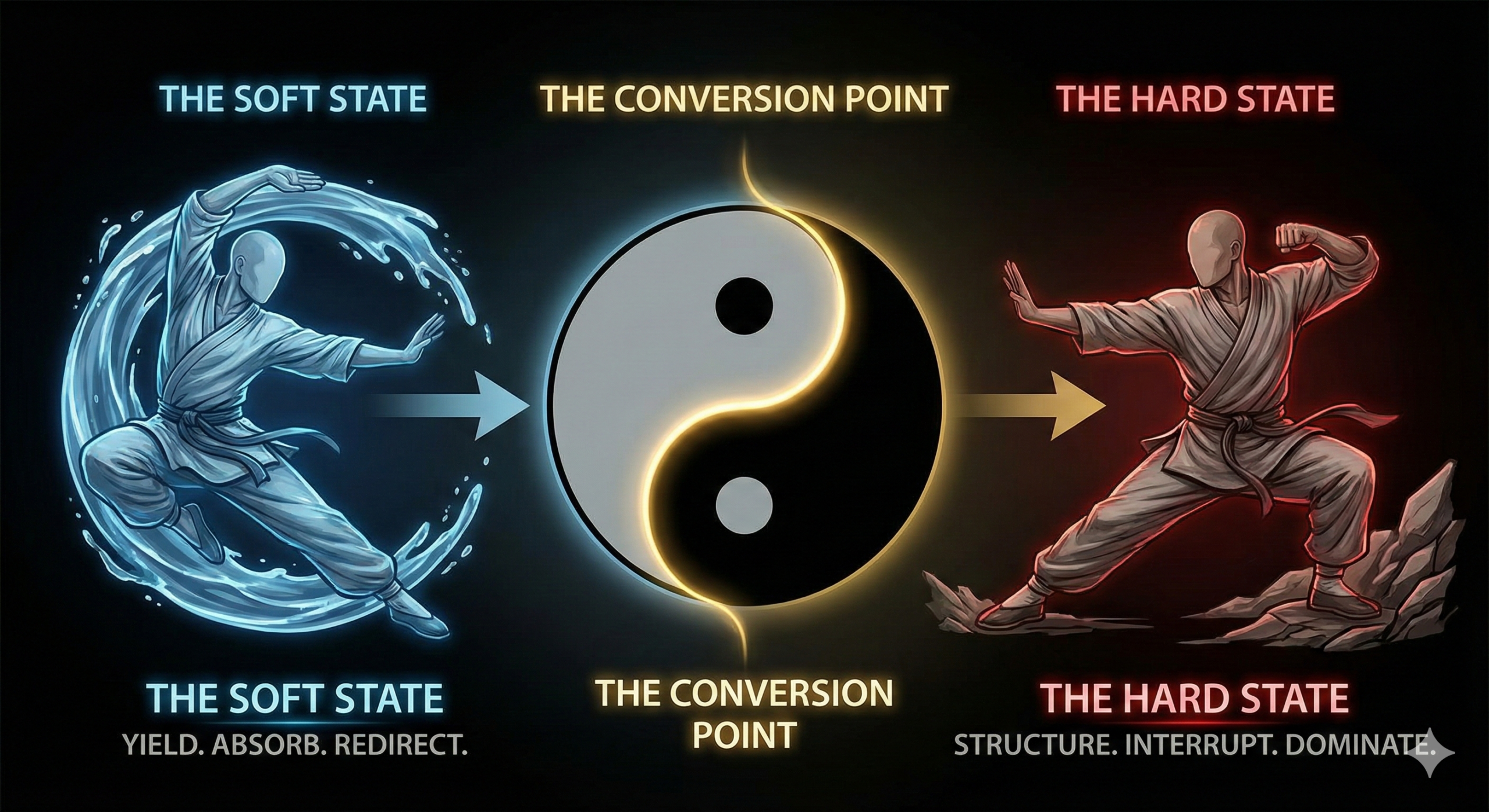
The ability to dynamically adapt to a threat is a hallmark of mastery. At the heart of this adaptability lies Energy State Conversion: the capacity to consciously shift between a passive, yielding state and an active, resistant one.

It is the art of becoming soft to evade an attack, only to become hard in the next moment to intercept and dominate.

“Notice that the stiffest tree is most easily cracked, while the bamboo or willow survives by bending with the wind.”
— Bruce Lee

The Spectrum

conversion point
The Soft State

Yield. Absorb. Redirect.

The Conversion Point

The split-second shift.

The Hard State

Structure. Interrupt. Dominate.

Attribute Soft State (Yielding) Hard State (Structured)
Metaphor Flowing Water Unmovable Rock
Physical Relaxed, mobile, circular Rooted, aligned, direct
Objective Evade, create openings Off-balance, finish
Fluidity is Power “I used to just block everything. Learning to yield first opened up a whole new level of control.” — T.W.

Most practitioners get stuck in one state—either too rigid or too passive. Mastery is the ability to switch instantly. We teach you how to bridge the gap.

Explore The Mentorship

The Art of Transition

Waves on rocks

The genius lies not in the states themselves, but in the instantaneous transition between them. When an attacker commits to a powerful assault, you meet it with soft, yielding energy. In the moment they are over-committed and off-balance, you convert.

Your body becomes rigid structure, transforming their momentum into your advantage.

Practice

The Physical Drill: The Tabletop Switch

Do this right now. Sit at a table or desk and place your forearm flat on the surface.

  • 1. The Dead Hand (Soft): Relax completely. Let the table support 100% of your arm’s weight. It should feel heavy, like a wet towel.
  • 2. The Pulse (Hard): Without lifting your arm, instantly engage your core and triceps to drive your arm through the table. Do not tense your shoulder up; drive structure down. hold for one second.
  • 3. The Drop (Switch): Instantly cut the power. Return to the ‘Dead Hand’ state immediately.

The Goal: Eliminate the ‘ramp up’ time. You are training your nervous system to go from 0% to 100% structure (and back) like a light switch, not a dimmer.

The Goal: Flowing Rock

Once you master the switch, the next evolution is integration. Imagine a state that is simultaneously fluid and stable. You embody both sides of the coin at once—absorbing pressure without losing balance (Rock) and adapting without becoming rigid (Water).

Frequently Asked Questions

  • Is one state better?
    No. Soft is better for receiving; Hard is better for finishing. Effectiveness depends on context.
  • How is this different from blocking?
    Blocking is force-on-force. Conversion is strategic. You use soft energy to create an opening, then hard energy to exploit it.
  • Can I use this in business?
    Absolutely. Listen (yield) to understand. Then propose (structure) your solution decisively.
P.S. Be water when you must. Be rock when you can. The art is knowing which to be when. – Sensei B. Duncan
Next Intake Limited to 10 Students

Personal Safety Mentorship

10-week virtual foundation + 2-day in-person deployment.

Come Join Us

Copyright © 2025 The Other Way Martial Consulting. All rights reserved.

Disclaimer: Educational purposes only. Consult a professional before training.

Affiliate Disclosure: This page contains affiliate links.

Danger Management

When most people think of martial arts, they picture the physical fight. But the core philosophy of Kyo-Jitsu Ryu is about what happens before the first punch is thrown. It is about being smarter, more aware, and more strategic than a potential threat.

“The supreme art of war is to subdue the enemy without fighting.”
— Sun Tzu, The Art of War

Danger Management is a proactive, layered system for personal safety. Think of it as a series of concentric rings of protection, with the physical confrontation at the absolute center. The goal is to solve a problem at the outermost ring possible.

1. Awareness: Your Radar

Personal Radar

Step one is the foundation: being present. Your goal is to know everything happening within a 30-foot sphere around you. Outside that range, you have time. Inside that range, you are in potential danger.

It is about noticing behavior, identifying threats, and recognizing exits before you need them.

Safety is a Design Feature “I realized I was walking through life with my eyes closed. This system turned the lights on.” — J.P.

Most people wait for an emergency to think about safety. We teach you to design your life so emergencies are rare, and your response is ready.

Explore The Mentorship

The Layers of Defense

🚫
2. Avoidance

Cross the street. Leave the party. If you remove yourself, you have won the confrontation before it began.

🗣️
3. De-escalation

The art of verbal defense. Use words and body language to lower the temperature. Empathy and respect can dissolve aggression.

De-escalation
👊
4. Physical Response

The last resort. Use necessary force only to neutralize the immediate threat and create an exit.

🏃
5. Escape

The ultimate goal. Disengage and move to safety. Victory is survival, not domination.

Practice

The Mental Walk-Through

The next time you are in a coffee shop or waiting in line, practice the first two steps:

  • Scan: Who is in your 30-foot sphere? Where are the exits?
  • Identify: Is anyone behaving erratically? Is an argument brewing?
  • Plan: If something happened right now, what is your primary exit route?

This simple habit builds proactive awareness without paranoia.

P.S. The best fight is the one you never have. Your mind is your primary weapon. Keep it sharp. – Sensei B. Duncan
Next Intake Limited to 10 Students

Personal Safety Mentorship

10-week virtual foundation + 2-day in-person deployment.

Come Join Us

Copyright © 2025 The Other Way Martial Consulting. All rights reserved.

Disclaimer: Educational purposes only. Consult a professional before training.

Affiliate Disclosure: This page contains affiliate links.

The Beginner’s Mind (Shoshin)

In the world of martial arts, we often celebrate the expert. We see their confidence and precision as the ultimate goal. Yet, one of the most powerful tools a martial artist can possess is not the expert’s certainty, but the student’s curiosity.

“In the beginner’s mind there are many possibilities, but in the expert’s there are few.”
— Shunryu Suzuki

The Empty Cup

Emptying the cup

Imagine your mind as a teacup. When you begin training, your cup is empty, ready to be filled. But as you gain experience, the cup fills with habits, ego, and assumptions.

If you think, “I already know this throw,” you miss the crucial detail that makes it work against a resisting opponent. Cultivating Shoshin is the art of consciously emptying your cup, regardless of your rank.

The Trap of Expertise “I realized my black belt was actually a barrier. I had stopped listening. This mentorship taught me how to learn again.” — K.R.

Knowledge can become a cage. When you think you know the answer, you stop looking for the solution. We teach you how to maintain the open, agile mind of a beginner while wielding the skills of a master.

Explore The Mentorship

Application

On The Mat

The expert’s mind builds patterns. You assume a technique will work as it always has. You stop seeing the opponent in front of you and start fighting a memory.

The beginner simply observes and reacts. They have no habits to fall back on. Their response is genuine and present.

In Daily Life

How often do we enter a conversation with a spouse or colleague with our minds already made up? We are so full of our own opinions that we fail to listen.

By emptying the cup, we can hear without judgment and connect with people on an authentic level.

Practice

The One-Minute Reset

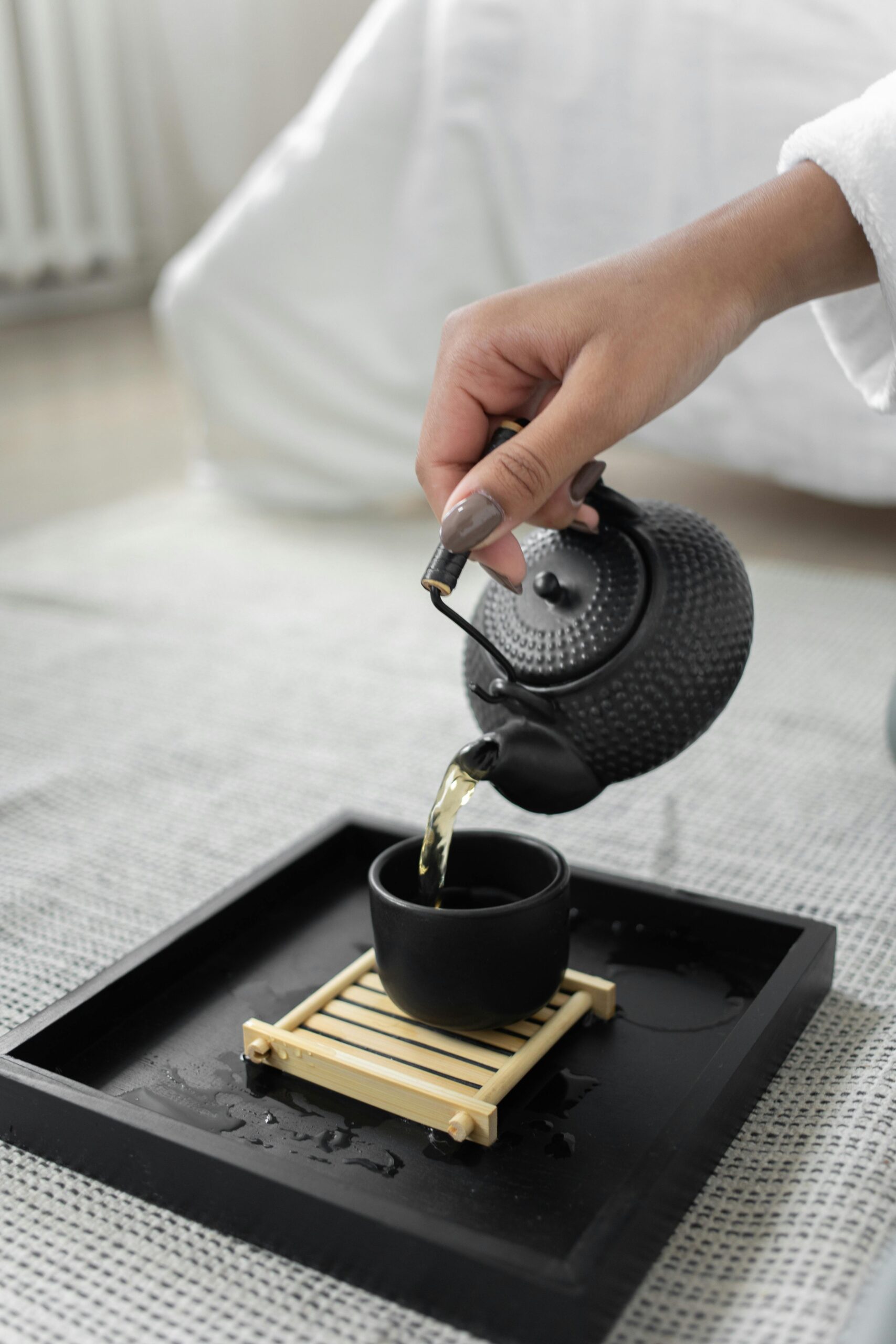
The next time you make a cup of coffee or tea, treat it as if it is the first time you have ever done it.

  • Observe: The texture of the beans or leaves.
  • Listen: The sound of the water pouring.
  • Feel: The warmth of the mug.

This simple act trains the brain to drop assumptions and engage with reality as it is.

The path of the martial artist is one of lifelong learning. The moment we believe we have nothing left to learn is the moment we stop growing.

P.S. The belt around your waist covers only two inches of your ass. You have to cover the rest. Stay humble. – Sensei B. Duncan
Next Intake Limited to 10 Students

Personal Safety Mentorship

10-week virtual foundation + 2-day in-person deployment.

Come Join Us

Copyright © 2025 The Other Way Martial Consulting. All rights reserved.

Disclaimer: Educational purposes only. Consult a professional before training.

Affiliate Disclosure: This page contains affiliate links.

The 6 Words That Sabotage Your Success Mindset

Building a success mindset begins in your mind’s workshop, not its museum. The tools you use determine what you build, and the most fundamental tools you have are your words. They don’t just describe your reality—they create it.

The most dangerous words aren’t curses. They are the common excuses you use every day.

At The Other Way, we have identified six words that act like governors on an engine, capping your power without you even realizing it. These are the invisible scripts that run your life on autopilot. When you are ready to take back the controls, it is time to banish them.

1 Can’t

A period at the end of a sentence that should be a comma. It creates a self-imposed cage. If you say it, you make it true.

The Other Way

“I haven’t done that yet.”
“I am challenged by this.”

2 Hope

Hope is a passenger wishing for a destination. Action is the captain steering toward it. Wishing is not a strategy.

The Other Way

“I am taking action and will see the result.”
“I want this to succeed.”

Upgrade Your Operating System “Changing my language was harder than the physical training, but it yielded 10x the results.” — L.M.

Language is the software of the mind. If your software is buggy, your hardware (actions) will fail. We help you recode the internal dialogue to support, rather than sabotage, your safety.

Explore The Mentorship
3 But

“The Great Eraser.” It signals that you value your excuse more than your goal. “I want to be safe, *but*…” invalidates the desire.

The Other Way

Make two separate, true statements. “I want to be safe. I am also busy.” Now you can solve the problem.

4 If

The language of paralysis. “If” lives in a fantasy world of perfect conditions that never arrive. It is the foundation of anxiety.

The Other Way

“If” hasn’t happened. The present is real. Replace speculation with execution.

5 Try

To “try” is to exist in limbo. It is the performance of effort without commitment to a result. It builds in an excuse for failure.

The Other Way

Do, or do not. Commit to the action or decline it.

6 Because

The rearview mirror of accountability. It focuses on a story behind you instead of the road ahead. Justification is just noise.

The Other Way

Own the result. “I was late.” Accountability lives in the present.

The Challenge

This isn’t about policing your language. It’s about upgrading your mental operating system. In any conflict, a mind built on excuses is a liability. A mind built on direct action is a weapon.

Here is your first step: Choose ONE word from this list. For seven days, remove it from your vocabulary. Treat it as an experiment in personal power.

P.S. Words are the first line of defense. If you cannot control what you say, you cannot control what you do. – Sensei B. Duncan
Next Intake Limited to 10 Students

Personal Safety Mentorship

10-week virtual foundation + 2-day in-person deployment.

Come Join Us

Copyright © 2025 The Other Way Martial Consulting. All rights reserved.

Disclaimer: Educational purposes only. Consult a professional before training.

Affiliate Disclosure: This page contains affiliate links.

Stability in Motion

Most of us view balance as a static state, like standing on one leg. But true safety requires dynamic stability—the ability to maintain your center while the world around you shifts.

We call this “integrated movement.” Your core becomes the engine, and your limbs become tools for precise, effective action. This is the difference between struggling against chaos and moving through it.

A Lesson on the Tuesday Bus

It was a packed Tuesday evening. I was standing near the back, surrounded by tired commuters. The driver was erratic, accelerating and braking in fits.

Then, a car cut us off, and the driver slammed on the brakes. The bus violently lurched forward. Around me, the reaction was immediate: people gasped, locked their knees, and grabbed frantically for support. The energy was pure tension.

In that moment, the instinct is to freeze—to brace against the force. Instead, I exhaled. I softened my knees and let my core absorb the momentum. I didn’t fight the lurch; I rode it, shifting my weight fluidly to keep my center over my feet.

While others were thrown off balance, I simply remained standing. I wasn’t rigid, and I wasn’t fighting. I was stable. That is the victory: finding peace in the middle of chaos.

🚌
The Challenge

Violent external force (Braking) + Instinct to freeze.

🧘
The Shift

Abandon rigid bracing. Soften knees and engage core.

👟
The Integrated Response

Absorption of momentum. Stability maintained without struggle.

Don’t Brace. Adapt. “I used to stiffen up when things went wrong. Learning to move from my core changed how I handle everything, from traffic to arguments.” — D.L.

An attacker—or life itself—looks for a person who is rigid or off-balance. By practicing integrated movement, you are always in a ready state. We teach you how to unlock this fluidity.

Explore The Mentorship

Rigid vs. Fluid Response

Why do we train this? Because bracing for impact is exhausting and ineffective. Compare the two approaches:

Performance Matrix
Energy Expenditure High (Fighting the force) Low (Redirecting)
Reaction Time Delayed (Must reset) Instant (Continuous flow)
Awareness Tunnel Vision Peripheral / Open
Outcome Collision Control

The Three Pillars of Stability

💪

Physical

Generate power from core rotation rather than limb strength. Move as one unit.

🧠

Psychological

Cognitive flexibility. Maintain your objective while adapting your method.

🌱

Philosophical

Find stability within constant change. This is the root of resilience.

Cultivating Stability

The Two-Minute Drill

When standing in line, subtly shift weight from foot to foot. Keep the upper body calm while the core engages.

The One-Sided Challenge

Carry a heavy bag in one hand. Do not lean. Use your core to resist the pull and stay upright.

The Mental Reset

In a stressful moment, physically “check in” with your core. Use physical stability to anchor your mind.

P.S. You are always training. Every bus ride, every heavy grocery bag, and every stressful meeting is an opportunity to practice stability. – Sensei B. Duncan
Next Intake Limited to 10 Students

Personal Safety Mentorship

10-week virtual foundation + 2-day in-person deployment.

Come Join Us

The Unshakeable Balance

When we consider personal safety, we often imagine physical techniques—punches, kicks, and blocks. But the foundation of safety isn’t about what you can do to an attacker; it’s about what you can do within yourself.

The Paradox of Survival

Admiral James Stockdale was the highest-ranking U.S. military officer in the “Hanoi Hilton” prisoner-of-war camp during the Vietnam War. For eight years, he was tortured over twenty times, isolated, and lived without rights, a release date, or even the certainty that he would survive the night.

Later in life, when asked who didn’t make it out of the camp, Stockdale’s answer was immediate: “The optimists.”

He explained: “They were the ones who said, ‘We’re going to be out by Christmas.’ And Christmas would come, and Christmas would go. Then they’d say, ‘We’re going to be out by Easter.’ And Easter would come, and Easter would go. And then Thanksgiving, and then it would be Christmas again. And they died of a broken heart.”

Stockdale survived because he embraced a duality that now bears his name. He retained an unwavering faith that he would prevail in the end, while simultaneously confronting the brutal facts of his current reality.

This is the essence of balance. It is not a passive state of calm. It is the active, disciplined management of opposing forces.

7+ Years as a POW

He survived unimaginable isolation by mastering his internal state.

Two Mindsets, One Outcome

The Unrealistic Optimist

“We’ll be out by Christmas.” When the deadline passed, hope turned to despair. They did not survive.

The Stockdale Realist

“I will prevail, but I face the brutal reality of now.” He balanced faith with the discipline to endure the present.

Balance is Built, Not Found “I thought I was calm until I was tested. The training gave me a structure to hold onto when my nerves failed.” — M.K.

True balance is not a static state of calm. It is a dynamic process of managing opposing forces—hope and reality, fear and discipline. We teach you how to build this structure.

Explore The Mentorship

The Three Pillars of Balance

Developing this resilience is physical, psychological, and philosophical.

🤸

1. Physical Balance

Proprioception

Like a surfer, you do not fight the force; you adjust to maintain your center. This training builds the awareness needed to stay on your feet.

🧠

2. Psychological Balance

Stress Inoculation

The goal is to override the “freeze” instinct with a trained response.

Stimulus Sudden Threat / Fear
The Pause Breath & Assessment
Controlled Response Deliberate Action
⚖️

3. Philosophical Balance

Control vs. Chaos

Separate what you can control from what you cannot. This is the root of stoicism.

✅ Within Control

Breathing, Posture, Awareness, Your Choices

❌ Outside Control

The Aggressor, The Environment, The Outcome

Integrated Safety in Action

The true power of this lesson comes when combined with the system. Here is the flow of handling a verbal threat:

Lesson 1

Self-Control

Regulate emotion.

Lesson 2

Strong Balance

Do not retreat.

Lesson 4

Center Line

Control space.

Outcome

De-escalation

Safe exit created.

P.S. These skills are not just for a fight; they are for life. Building an unshakeable foundation from the inside out allows you to handle pressure anywhere. – Sensei B. Duncan
Next Intake Limited to 10 Students

Personal Safety Mentorship

10-week virtual foundation + 2-day in-person deployment.

Come Join Us

A Whole-Person Approach to Dealing with Bullies

At The Other Way Martial Consulting, we believe that learning how to deal with bullies is about more than just protecting your body. We teach that personal safety is a whole-person concept, involving your physical, psychological, and philosophical well-being. Bullying is a serious problem that attacks all three of these areas. This guide is designed to help you understand different types of harassment and stop bullying, providing you with the tools and coping strategies to protect not just your body, but your mind and spirit as well.

Part I: How to Deal with Bullies by Understanding Their Tactics

Chapter 1: The “Hunter”

The “Hunter” is the classic, power-hungry bully. They are deliberate and enjoy the feeling of dominance. Their bullying is often overt and public. This behavior is known as proactive aggression—a cold, planned action used to gain control. It’s often driven by “Dark Triad” traits. To counter them, you must stand your ground calmly, use repetitive boundary-setting phrases for verbal self-defense, and document everything to create a paper trail for formal help.

🎯
The Hunter

Uses planned, proactive aggression for power and control.

🦁 HUNTERS SEEK VICTIMS, NOT FIGHTS.

A hunter looks for weakness. Documentation is a shield, but confidence is a weapon. In the Mentorship, we teach you how to project the “Hard Target” energy that makes hunters look elsewhere.

➤ Become A Hard Target
🐍
The Ambusher

Uses covert, relational aggression like gossip and exclusion.

Chapter 2: The “Ambusher”

This bully is covert and two-faced, often sabotaging you behind your back. This is called relational aggression, a psychological attack meant to harm friendships. It’s driven by insecurity. To handle this type of bully, bring their actions into the light by asking clarifying questions in public, build your own strong alliances to counter their isolation tactics, and, if you feel safe, confront them directly and privately about their specific behaviors.

Chapter 3: The “Grenade”

The “Grenade” has sudden, unpredictable outbursts of rage. This is reactive aggression, an impulsive, emotional response. This person is often a “bully-victim“—someone who both bullies and is bullied, and who suffers from poor emotional regulation. The best way to deal with this bully is to create distance during an outburst. Do not engage. Later, when they are calm, set firm boundaries about their unacceptable behavior.

💣
The Grenade

Exhibits reactive, explosive aggression due to poor emotional regulation.

🔍
The Critic

Undermines confidence with hyper-criticism and fault-finding.

Chapter 4: The “Critic”

This bully constantly chips away at your confidence by finding fault in everything you do. This is a form of psychological harassment meant to undermine you. It’s often driven by their own deep-seated insecurity. To counter them, use the “Fogging” technique by calmly agreeing with a small part of their criticism. Crucially, ask for specifics in writing (“Could you email me the exact changes you’d like to see?”).

Chapter 5: The “Joker”

The “Joker” uses “humor” as a weapon, saying cruel things and then hiding behind the defense of “I was just kidding!” This gives them plausible deniability. The most effective counter is to not get angry, but to calmly ask them to “Explain the joke.” Forcing them to deconstruct a mean-spirited comment makes them look foolish and exposes their intent.

🃏
The Joker

Uses “humor” as a weapon with plausible deniability.

🥋 WORDS ARE WEAPONS. LEARN TO PARRY.

Asking a Joker to “explain the joke” is a martial art technique applied to conversation. We teach you the specific verbal scripts (Tactical Linguistics) to shut down verbal attacks instantly.

➤ Learn Tactical Linguistics
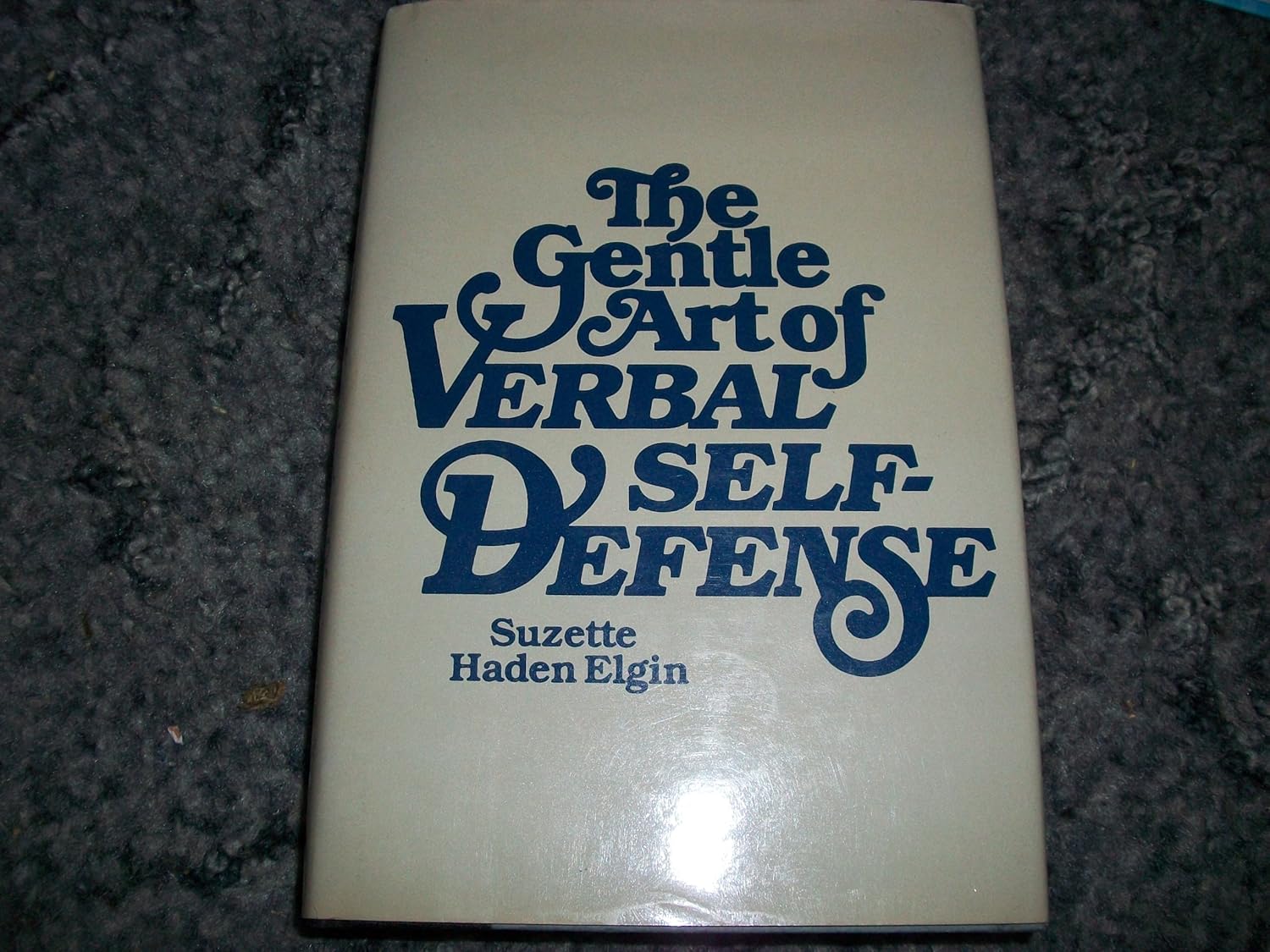
Book cover for The Gentle Art of Verbal Self-Defense.

Master the Art of Verbal Self-Defense

The techniques discussed are powerful tools for reclaiming your psychological space. To dive deeper into mastering communication that protects and empowers you, we highly recommend “The Gentle Art of Verbal Self-Defense” by Suzette Haden Elgin.

Purchase on Amazon

Part II: The Bullying Ecosystem and How to Prevent Bullying

Bullying is rarely just a problem between two people. Effective bullying prevention requires looking at the whole environment—the “ecosystem”—where the harassment occurs. The culture, the leaders, and the bystanders all play a part.

Gender Dynamics in Bullying

Research shows distinct patterns in how different genders tend to employ bullying tactics.

The Bystander’s Role in Bullying

Inaction empowers the bully. This chart shows common reasons bystanders fail to act.

Part III: The Damage, Healing, and a Better Future

The Escalation from Words to Physical Aggression

Bullying is not just “words.” Unchecked psychological abuse is a major red flag for physical violence. Understanding this progression is key to de-escalation and how to stop bullying.

Level 1: Verbal

Intimidation, insults, “jokes.”

Level 2: Threats

Veiled or direct threats to person or property.

Level 3: Physical

Assault, property damage.

True self-defense begins with recognizing and diffusing a threat before it ever becomes a physical confrontation.

The Lasting Scars: The Impact of Bullying

Increased Mental Health Risks for Targets
40%+

of bullied girls show clinical symptoms of PTSD.

2x

higher risk of depression in adulthood for bullied individuals.

Frequently Asked Questions About Dealing with Bullies

1. What’s the difference between bullying and just being mean?

The key differences are repetition and a power imbalance. Being mean might be a one-time rude comment. Bullying is a pattern of behavior that happens over and over again.

2. How do I deal with a bully who is my boss?

Dealing with workplace bullying is difficult. Your safety comes first. Start by documenting everything in detail: dates, times, what was said, and who was there. This creates a record.

3. Why doesn’t just “ignoring the bully” work?

Many bullies are motivated by getting a reaction and demonstrating power. Silence can be seen as weakness or even approval, which can encourage them to continue or even escalate their behavior.

4. I’m a bystander and want to help, but I’m scared. What’s the safest thing to do?

Try one of the “4 D’s”: Distract the situation, Delegate by getting a manager, or Delay by checking in with the person afterward.

5. Can people who bully actually change?

Change is possible, but it requires the person to genuinely want to change. For some, change only happens when they face real consequences for their actions.

Go Beyond Physical Techniques

This post covers the 20% (the types). My 10-Week Personal Safety Mentorship covers the 80%—the mindset, awareness, and de-escalation that prevents the fight from ever happening.

© 2025 The Other Way Martial Consulting. All rights reserved.

Disclaimer: The information provided in this blog post is for educational and informational purposes only and is not intended as a substitute for professional medical, psychological, or legal advice.

Affiliate Disclosure: This post contains affiliate links. If you use these links to buy something, we may earn a commission. Thank you for your support.


You’ve spent decades building the life you love—your home, your routines, your connections. Now, you want to enjoy every moment while staying safe, healthy, and in control. Personal safety for seniors isn’t about admitting weakness or giving up your freedom—it’s about making smart choices that let you live confidently and independently for years to come. Think of these personal safety for seniors strategies as upgrades to your life—like installing a security system or smoke detector—that give you peace of mind while you focus on what matters most.

Whether you’re reading this for yourself or a loved one, you’ll find practical, respectful advice that honors your experience while addressing today’s safety realities. From simple home modifications to protecting yourself from modern scams, we’ll cover everything you need to know.

In this comprehensive guide, you’ll discover:

  • How to transform your home into a safer sanctuary without sacrificing comfort
  • Medical safety strategies that keep you healthy and independent
  • Financial protection tactics against today’s most common scams
  • Confidence-building tips for staying active in your community
  • A special section for family members on how to help respectfully

Let’s get started on securing your independence.

I. Personal Safety for Seniors: Creating a Safe Home Base

Your home should be your sanctuary—these smart upgrades ensure it stays that way.

Every year, one in four seniors experiences a fall. But here’s what’s encouraging: most of these accidents are completely preventable with some simple home modifications. Personal safety for seniors requires understanding that these modifications aren’t signs of getting older—they’re smart upgrades that make your home safer and more comfortable for everyone.

Mastering the Most Critical Zone: Bathroom Safety

Your bathroom is where you’re most vulnerable, but it’s also where small changes make the biggest difference.

Install sturdy grab bars strategically. Place them in and around your shower, bathtub, and next to the toilet. Look for bars that can support at least 250 pounds and have them professionally installed into wall studs, not just drywall. The investment of $200-400 could prevent a fall that costs thousands in medical bills.

Create a non-slip foundation. Use textured, non-slip mats inside your tub or shower, and place absorbent bath mats with rubber backing outside. Replace these regularly—worn mats lose their grip.

Consider a raised toilet seat with handles. This simple addition makes sitting down and standing up much easier and safer. Many models are adjustable and can be removed when guests visit.

Set your water heater to 120°F (49°C). This prevents accidental scalding while still providing hot water for daily needs. As we age, our skin becomes more sensitive to temperature, making this adjustment crucial.

Expert Insight: “The bathroom modifications that provide the most safety bang for your buck are grab bars and non-slip surfaces. These two changes alone can prevent 80% of bathroom falls.” —Dr. Sarah Chen, Occupational Therapist

🛡️ GRAB BARS HELP YOU STAND UP. WE HELP YOU STAND YOUR GROUND.

Physical safety is only half the battle. Mental confidence is the other half. In our Mentorship, we teach you how to maintain your independence and authority in any situation.

➤ Strengthen Your Mindset

Age is just a number. Spirit is everything.

Navigating with Confidence: Hallways, Stairs, and Living Areas

Clear pathways are your highways to independence. Here’s how to keep them safe:

Eliminate the obstacle course. Remove throw rugs, electrical cords, and clutter from walkways. If you love your area rugs, use double-sided tape or rug grippers to secure them firmly to the floor.

Light your way. Ensure every room has bright, even lighting. Install motion-sensor night lights in hallways, bathrooms, and bedrooms. These automatically illuminate your path without fumbling for switches in the dark.

Secure your stairways. Check that all stairways have sturdy handrails on both sides. If your stairs are wooden or tile, apply non-slip treads to prevent slipping. Consider adding extra lighting at the top and bottom of stairwells.

Keep frequently used items within easy reach. Organize your living spaces so you don’t need to stretch, climb, or bend awkwardly to reach everyday items.

The Heart of the Home: Kitchen Safety

Your kitchen is where independence and safety intersect most clearly.

Master fire safety. Keep a modern, easy-to-use fire extinguisher within reach and make sure you know how to use it. The simple acronym is PASS: Pull the pin, Aim at the base of the fire, Squeeze the handle, Sweep side to side.

Consider an automatic stove shut-off device. These innovative devices can detect when you’ve left the stove on and automatically turn it off after a set time. It’s like having a safety net for those busy moments when your mind is elsewhere.

Reorganize for safety. Keep frequently used items on lower shelves to avoid using step stools. Store heavier items at waist level, and keep sharp knives in a knife block or magnetic strip rather than loose in drawers.

Statistic Alert: Home fires cause over $7 billion in property damage annually, with cooking being the leading cause. Simple prevention measures can protect your home and your life.

II. Health is Safety: Managing Your Medical Well-Being

Taking control of your health is one of the most powerful safety measures you can take.

Your health is your foundation for everything else. These strategies help you stay on top of your medical care while avoiding dangerous mistakes.

The “Brown Bag Review”: Your Most Important Annual Check-up

Here’s a simple strategy that could save your life: the brown bag review.

Once a year, gather every medication you take. This includes prescriptions, over-the-counter medications, vitamins, supplements, and herbal remedies. Put them all in a bag.

Take this bag to your doctor or pharmacist. Ask them to review everything for potential dangerous interactions. Many people take medications prescribed by different doctors who may not know about everything else you’re taking.

Why this matters: Adverse drug interactions send over 125,000 Americans to the emergency room each year. Many of these are completely preventable.

Mastering Medication Management

Simple systems prevent dangerous mistakes:

Use a weekly pill organizer. These prevent both missed doses and dangerous double-dosing. Choose one with separate compartments for morning and evening if you take medications twice daily.

Keep an updated medication list on your refrigerator. Include the medication name, dosage, what it’s for, and when you take it. Also list any allergies. This information is crucial for paramedics or emergency room staff.

Set phone alarms for medication times. Most smartphones make this easy, and consistent timing improves medication effectiveness.

Your Emergency Action Plan

Being prepared for emergencies gives you confidence and could save your life.

Program an ICE contact into your phone. ICE stands for “In Case of Emergency.” Most smartphones allow you to add emergency contacts that can be accessed even when the phone is locked. Include the person’s relationship to you.

Create an ICE wallet card. Keep a small card in your wallet with:

  • Emergency contact names and numbers
  • Your medications and dosages
  • Known allergies
  • Your doctor’s name and phone number
  • Any medical conditions

Consider a medical alert system with fall detection. Modern systems aren’t just for falls—they connect you to help 24/7 and often include GPS tracking if you’re away from home. Think of it as a tool for freedom, not limitation.

For Caregivers: When discussing medical alert systems, frame them as “independence insurance.” Say something like: “This would give us both peace of mind and let you stay active in your community knowing help is always available.”

III. Protecting Your Nest Egg: Financial and Digital Security

Scammers prey on kindness and trust. The best defense is awareness and a healthy dose of skepticism.

Seniors lose over $3 billion annually to financial scams. The good news? Most scams follow predictable patterns. Once you know what to look for, you become a very difficult target.

Recognizing and Resisting Common Scams

The Golden Rule of Scam Defense: Scammers always create a sense of urgency. They want you to act immediately, before you have time to think or verify. Your defense? Never act on urgent requests immediately. Always stop, breathe, and verify.

The Grandparent Scam is heartbreakingly common. A scammer calls pretending to be your grandchild in urgent need of money—often claiming to be in jail, in an accident, or stranded somewhere.

Your defense: Hang up and call your grandchild directly on a number you know. Real emergencies can wait five minutes for verification.

The Tech Support Scam involves someone calling to say your computer has a virus and they need remote access to fix it. Microsoft, Apple, and other legitimate companies never call customers about computer problems.

Your defense: Hang up immediately. If you’re concerned about your computer, call the company directly using a number from their official website.

The Government Imposter Scam involves threats from fake IRS agents, Social Security Administration, or Medicare representatives demanding immediate payment.

Your defense: Government agencies communicate by mail first, not with threatening phone calls demanding gift cards or wire transfers.

🧠 SCAMMERS HATE A CLEAR MIND

They rely on confusion, urgency, and fear. We teach “The Audit”—a mental framework to instantly separate fact from manipulation so you never get tricked.

➤ Learn To Audit Your World

Protect your mind, protect your assets.

Smart Digital Habits for Online Safety

Use strong, unique passwords for important accounts. Your banking, email, and social media accounts should each have different passwords. Consider using a password manager to keep track of them safely.

Never click suspicious links in emails. Even if an email looks official, go directly to the website by typing the address into your browser rather than clicking the link in the email.

Review your social media privacy settings. Scammers often research their targets using Facebook and other social media. Limit who can see your posts, and be cautious about sharing travel plans or personal information publicly.

Check your accounts regularly. Review bank and credit card statements monthly. Many people catch fraud early simply by staying aware of their account activity.

Red Flag Warning Signs:

  • URGENCY: “You must act now!”
  • SECRECY: “Don’t tell anyone about this.”
  • UNUSUAL PAYMENT: Requests for gift cards, wire transfers, or cryptocurrency
  • THREATS: “Something bad will happen if you don’t comply.”

IV. Living Life to the Fullest: Safety on the Go

Staying active and engaged is key to a happy life. A few precautions ensure you can do so confidently.

Independence means being able to go where you want, when you want. These strategies help you stay active while staying safe.

Situational Awareness and Preparation

Stay alert and walk with purpose. Confidence is your best protection. Keep your head up, make eye contact with people you pass, and walk like you know exactly where you’re going.

Charge your phone before leaving home. A dead phone battery can turn a minor inconvenience into a serious safety issue. Consider carrying a small portable charger for longer outings.

Share your plans with someone you trust. Let a friend or family member know your general plans and when to expect you back. This isn’t being overly cautious—it’s being smart.

Consider carrying a personal alarm. Small, keychain-sized personal alarms can create a loud noise (120+ decibels) that attracts attention and may deter an attacker. They’re inexpensive and give many people extra confidence.

Creating a “Driving Retirement Plan”

Let’s address the elephant in the room: eventually, most of us will need to stop driving. Planning for this transition ahead of time makes it feel like a choice, not a loss.

Assess your driving honestly and regularly. Are you comfortable driving at night? In heavy traffic? In bad weather? It’s okay to set limits—many people choose to drive only during daylight hours or avoid highways.

Research transportation alternatives before you need them. Look into:

  • Local senior shuttle services
  • Public transportation routes and schedules
  • Ride-sharing apps (many have features specifically for seniors)
  • Taxi services that accept Medicare transportation benefits
  • Community volunteer driver programs

Frame the transition positively. When you do stop driving, you’re not losing independence—you’re gaining freedom from car payments, insurance, gas, and maintenance costs while reducing stress.

For Caregivers: Start the driving conversation early and collaboratively. Say something like: “Let’s research all the transportation options in the area so we know what’s available when the time comes.” This feels like planning together, not taking something away.

V. For Caregivers: A Guide to Helping Respectfully

Your goal is to be a partner, not a parent. Start conversations early and collaboratively.

If you’re reading this section, you care deeply about someone’s safety and independence. The challenge is helping without overstepping, supporting without controlling.

The Foundation: Communication That Preserves Dignity

Use “I” statements instead of “You” statements. Instead of “You need to install grab bars,” try “I worry about bathroom safety for everyone in the family. Could we look at some options together?”

Focus on shared goals. You both want the same thing: for your loved one to be safe and independent for as long as possible. Frame conversations around this shared objective.

Suggest solutions as experiments. Say “Why don’t we try a night light here and see if it helps?” rather than “You need better lighting.” This feels less permanent and threatening.

Timing matters. Don’t bring up safety concerns immediately after a fall or scare. Wait until emotions have settled and you can have a calm, rational discussion.

Making Changes Together

Start with the easiest, least controversial improvements. Maybe it’s better lighting or removing a throw rug. Success with small changes builds trust for bigger conversations.

Shop together. If you’re looking at medical alert systems or bathroom safety equipment, make it a joint research project. Let them be part of the decision-making process.

Respect their timeline. Pushing too hard or too fast often backfires. If they’re not ready for a particular change, revisit it later.

Acknowledge the emotional aspect. Safety modifications can feel like admissions of aging or vulnerability. Validate these feelings while emphasizing that these are smart precautions everyone should take.

When to Seek Professional Help

Consider an occupational therapy evaluation. OTs are experts in home safety assessments and can provide objective, professional recommendations that don’t come from family members.

Know when to involve doctors. If you’re concerned about cognitive changes, medication management, or driving safety, these conversations may need to happen with medical professionals.

Don’t try to handle everything alone. Reach out to local Area Agencies on Aging, senior centers, or support groups for caregivers. You’re not alone in this journey.

Simple Conversation Starter: “I read an interesting article about safety tips for staying independent at home. Would you like to look at it together and see if there’s anything useful for our family?”

Your Safety, Your Independence: Moving Forward

These tips aren’t about limitation—they’re about empowerment. Every grab bar installed, every scam recognized, every emergency plan created is an investment in your continued independence and peace of mind.

Start small. Pick just one or two strategies from this guide to implement this week. Maybe it’s programming an ICE contact in your phone or installing a motion-sensor night light. Small steps lead to big improvements in safety and confidence.

Remember that asking for help is a sign of strength, not weakness. Whether it’s having grab bars professionally installed or asking a family member to help organize medications, getting support allows you to maintain your independence longer.

Stay connected. One of your best safety tools is a strong network of family, friends, and neighbors who care about you. Maintain these relationships—they’re invaluable.

Your independence is worth protecting. These strategies help you do exactly that while continuing to live the rich, full life you’ve earned.

Take Action Today

Share this guide with someone who would find it helpful—whether that’s a friend, family member, or neighbor. Safety strategies work best when entire communities embrace them.

Download our complete Home Safety Checklist for a room-by-room guide you can print and use to evaluate your living space. Get it free at: https://theotherway.biz/complete-personal-safety-guide-gift/

Join the conversation. What’s your best safety tip? Share it in the comments below to help others in our community stay safe and independent.

The Other Way Martial Consulting logo

Go Beyond Physical Techniques

This post covers the 20% (the precautions). My 10-Week Personal Safety Mentorship covers the 80%—the mindset, awareness, and de-escalation that prevents the fight from ever happening.

Medical/Safety Disclaimer: This information is for educational purposes only and does not constitute professional medical, legal, or financial advice. Always consult with qualified healthcare providers, legal professionals, or financial advisors for your specific situation. The safety recommendations provided are general guidelines and may not be suitable for all individuals or circumstances.

Affiliate Disclosure: This article may contain affiliate links to products or services. If you make a purchase through these links, we may receive a small commission at no additional cost to you. We only recommend products we believe may be helpful to our readers. Our editorial content is not influenced by affiliate partnerships, and we maintain editorial independence in all recommendations.



You’ve watched martial artists in movies, competitions, or perhaps in real life, and wondered: What gives them that unshakeable confidence? That almost supernatural ability to remain calm under pressure? That incredible mind-body connection and coordination that seems impossible? The answer isn’t what most people think. It’s not just years of physical training or memorizing techniques. The real secret lies deeper…

🧠 Understanding the Mind-Body Connection: The Foundation of Unbreakable Harmony

At its heart, the mind-body connection is the incredible, two-way street between your thoughts, feelings, and how your body works. It’s not just a fancy idea; it’s a real, powerful link that shapes everything you experience. As pioneer in mind-body medicine, Dr. Herbert Benson, once stated, “The mind-body connection is not a belief; it is a biological fact.” You might also hear it called the mind body link, the mental physical connection, or even the brain body connection.

Think of it like this: your brain is constantly talking to your muscles, organs, and nervous system, telling them what to do. But here’s the key part – your body also sends signals right back to your brain! This constant chatter affects your mood, your thoughts, and your overall health. This is why experts use terms like psychophysiological, meaning your mind (psyche) and body (physiology) are deeply tied together. When they work as one, we call it somatic cognitive unity, showing how your body’s sensations and your mind’s thoughts are perfectly linked.

For example, when you feel stressed, your body might react with tight shoulders, a fast heartbeat, or even an upset stomach. That’s your stress body connection in action. Or, if you’re physically tired, it’s harder to focus or feel happy. This constant inner outer dialogue shows that your emotions, your thoughts, and your physical state are never truly separate. Understanding this how mind affects physical health is the very first step toward a more integrated and powerful way of living. For a deeper dive into this concept, resources like the self-help book ‘Body and Mind in Harmony: T’Ai Chi Ch’uan, an Ancient Chinese Way of Exercise’ provide invaluable insights. This fundamental connection is what makes the journey of a martial artist so effective, transforming the individual from the inside out.

Why This “Integrated Health” Matters: Beyond Just Physical Wellness

Understanding and taking care of this mind-body connection is super important for what we call holistic health and true whole person wellbeing. It means seeing yourself as a complete unit, not just a bunch of separate parts like your arm, your leg, and your brain. When your mind and body work together in harmony, you can unlock incredible strength and potential that you might not even know you have. This leads to what we call systemic health, where all parts of your being are working well.

Think about it: if you’re always worried or stressed, that stress body connection can cause real physical problems like tense muscles, headaches, or even tummy aches. This shows how your emotional wellbeing and physical symptoms are tightly linked. It’s not just “all in your head” when you feel anxious; your body is reacting too. This emotional physical link means that feelings like sadness or anger can actually show up in how your body feels. Ignoring one part can have big effects on the other.

This is why doctors and scientists now use frameworks like the Biopsychosocial Model. This idea says that your health isn’t just about your body (bio), but also your thoughts and feelings (psycho), and how you interact with the world (social). They all play a big role in how healthy you are. When you actively work on your mind body integration, you’re not just feeling better in one spot; you’re building real resilience building through somatic practices. This means your whole self becomes stronger and more able to handle life’s challenges. You learn that by managing your thoughts and emotions, you can actually improve how mind affects physical health, leading to a much richer and more balanced life.

🔓 THE SECRET REVEALED

How Martial Arts Forges an Unbreakable Mind-Body Connection

Unlike passive practices, martial arts offers something extra – a truly unique and dynamic path to forging an unbreakable body-mind connection. It’s not just about sitting still; it’s about active, intense training that forces your mind and body to work as one, even when challenged.

Why Martial Arts Specifically? Differentiating from Other Mind-Body Practices

You might be asking, “Why choose martial arts over other popular mind body practices like yoga or meditation?” It’s a great question, and the answer lies in what makes martial arts truly unique. While yoga and meditation are fantastic for building inner peace and awareness, martial arts brings a distinct, dynamic, and incredibly active approach to forging that mind-body connection.

Martial Arts vs. Other Mind-Body Practices: A Comparison

Feature Other Mind-Body Practices (e.g., Yoga, Meditation) Martial Arts Training
Engagement Style Typically passive observation, internal focus, sustained poses. Active, full-body activation; directing physical self with unwavering mental intent.
Movement Purpose Focus on holding a pose, internal awareness of sensations. Purposeful movement (self-defense, competition), executing perfectly and powerfully.
Dynamic Challenge Often static with internal demands, may not involve external pressure. Dynamic stress, real-time adaptation, reactive decision-making under pressure.

Discipline Meets Physiology: The Synergistic Approach

Martial arts creates an incredible synergy where strict physical demands meet precise mental discipline. This union transforms you from the inside out, building what I call psychophysiology in action – where your mind and body deeply influence each other through specific training.

The Power of Breath and Movement: Your Internal Engine

Every martial art, from Karate to Tai Chi, places huge importance on controlled breathing. You learn to link your breath to your movements. Imagine exhaling forcefully with a punch or inhaling deeply as you prepare for a block. This isn’t just about getting enough air; it’s about using breathwork for emotional regulation and physical calm.

By carefully controlling your breath, you learn to steady your heart rate, manage your energy, and keep your mind clear. This practice deepens the mind body continuum, showing you how simple breath control can directly influence your physical output and mental state. It’s like learning to fine-tune your internal engine, making every action more powerful and focused.

The Inner-Outer Dialogue: Constant Feedback Loops

As you train in martial arts, your body is constantly sending signals back to your brain. You feel the tension in a muscle, the subtle shift in your balance, or the exact angle of your foot during a pivot. This is what we call sensory feedback. Your mind then quickly processes this information, making instant, tiny adjustments to improve your movements.

This constant back-and-forth between your body’s sensations and your mind’s awareness is an inner outer dialogue. It refines your movements, sharpens your senses, and develops what experts call somatic intelligence – your body’s amazing ability to “think” and respond smartly. This deep connection between feeling and knowing is a key part of how mind affects physical health and physical ability.

🧘 CALM BODY, STRATEGIC MIND

Breathing calms the physiology, but only strategy calms the psychology. In the Mentorship, we teach the tactical side of serenity—how to think clearly when your body wants to panic.

➤ Master The Mental Game

Control your mind, control the outcome.

🌟 The Evolution of Connection: From Deliberate Practice to Instinctive Flow

The journey to an unbreakable mind-body connection in martial arts isn’t a sudden event; it’s a gradual, powerful evolution. It begins with careful thought and effort, then blossoms into effortless action, and finally, into a deep, unified sense of self.

Phase Core Characteristic Focus & Goal
Phase 1: Conscious Architect Deliberate, intentional movement; building basic physical vocabulary. Laying physical and mental foundations; mindful attention to mechanics.
Phase 2: Intuitive Warrior Seamless, reactive action; body responds without conscious effort; mental fortitude under pressure. Mastering flow, applying skills instinctively; developing composure in dynamic scenarios.
Phase 3: Embodied Master Mind and body indistinguishable; unified self in a state of holistic presence. Achieving ultimate resilience; extending mastery beyond physical combat to all aspects of life.

Phase 1: The Conscious Architect – Laying Physical & Mental Foundations

When you first step onto the training mat, everything feels new and, honestly, a little awkward. This initial stage of your martial arts journey is all about conscious competence. You’re building the very bedrock of your mind-body connection through careful, deliberate effort.

Intentional Movement: At this point, every single movement you make is intentional and often slow. Your instructor will guide you precisely: “Place your foot here,” “Turn your hip this much,” and “Keep your hand just so.” You’re actively thinking about each small piece of a technique, breaking it down into its simplest components.

Building the Physical Vocabulary: To truly embed these new movements, repetition is key. But it’s not mindless repetition; it’s mindful repetition. You repeat movements, stances, and strikes over and over, always striving for precision. This consistent practice helps to overcome initial awkwardness, build muscle memory, and set correct habits.

Phase 2: The Intuitive Warrior – Mastering Flow and Fortitude

As you continue your martial arts journey, something truly remarkable begins to happen. You move past just thinking about each step, each block, each kick. This is the exciting stage of the Intuitive Warrior, where you begin to master flow and build deep mental toughness.

“Empty your mind, be formless, shapeless – like water.” – Bruce Lee

Seamless Action: Instead of thinking “raise arm, turn hip, step,” your body just moves. This is the transition to instinctive flow. Your muscles remember the patterns, and your body responds almost automatically, guided by your trained mind but without needing to consciously plan every tiny action.

Mental Fortitude Under Pressure: This phase introduces more dynamic and often challenging training elements. You might engage in controlled sparring with a partner, practice complex Kata (pre-arranged forms that mimic combat), or participate in scenario drills. Here, your mind is put to the test.

Phase 3: The Embodied Master – The Unbreakable Self Beyond Combat

After the hard work of Phase 1 and the intuitive flow of Phase 2, something truly profound happens. This is the stage of Embodied Mastery, where the lines between your mind and body almost disappear. You reach a state where they are indistinguishable – working as one, perfectly aligned, creating a truly unified self.

“The ultimate aim of karate lies not in victory or defeat, but in the perfection of the character of its participants.” – Gichin Funakoshi

🥋 MASTERY ISN’T JUST FOR THE DOJO

The “unbreakable self” you build in training must protect you in the parking lot, the office, and your home. We teach you how to apply this focus to your daily safety.

➤ Apply Mastery To Real Life

Join the Mentorship. Live Unafraid.

🎁 The Incredible Benefits Beyond Combat

The rewards of cultivating this unbreakable mind-body connection stretch far beyond physical combat. This is why martial artists seem to excel in all areas of life:

🧠 Enhanced Mental Clarity

  • Laser Focus: The ability to concentrate deeply on tasks, cutting through distractions and staying on point. To amplify this mental strength and maintain laser focus, consider incorporating tools like positive affirmation software into your routine.
  • Clearer Decision-Making: Thinking calmly and strategically, even under pressure
  • Effective Stress Management: A remarkable capacity to manage the stress body connection
  • Enhanced Problem-Solving: The ability to see challenges from different angles

❤️ Greater Emotional Resilience

  • Greater Composure: Staying calm and centered in stressful situations
  • Increased Patience: Developing the ability to persevere through difficulties
  • Stronger Self-Control: Mastering your impulses and reactions
  • Emotional Regulation: A deep understanding of how emotions manifest in the body

🌟 Real-World Application

  • Enhanced Professional Performance: Improved productivity and leadership qualities
  • Improved Personal Relationships: Calmer responses and greater empathy
  • Stress Management: Better managing the demands of modern life
  • Holistic Approach to Health: Understanding that well-being connects thoughts, feelings, and physical state

🛠️ Your Toolkit for Mastery: Practical Techniques

Mindful Breathing: The Foundation of Controlled Action

Deep Breathing for Focus and Energy Management

This controlled breathwork for emotional regulation and physical calm helps you center yourself, channel energy, and improve your mental physical connection. It’s like learning to fine-tune your internal engine.

Synchronizing Breath with Movement: Power in Every Action

You learn to link your breath directly to your physical movements. This synchronization of breath with movement creates powerful rhythm, generates more power, enhances fluidity, and deepens mind body integration.

Visualization: Rehearsing Success Internally

Imagining Techniques Before Execution

When you vividly imagine yourself performing a technique, your brain actually fires the same neural pathways as if you were doing it for real. This “mental rehearsal” effectively “programs” your body for success, demonstrating the power of positive thinking on health and physical ability. Regularly using positive affirmation software can further reinforce this mental preparedness.

Sensory Feedback and Body Awareness: Tuning In

This focused attention on connecting thoughts feelings and physical sensations allows you to understand your body on a much deeper level. It’s a continuous inner outer dialogue where your physical sensations provide direct feedback to your mind, developing your somatic intelligence.

❓ Frequently Asked Questions About the Mind-Body Connection in Martial Arts

What is the mind-body connection in simple terms?

The mind-body connection refers to the constant, two-way communication between your thoughts, emotions, and physical health. It means your mental state can influence your body’s functions, and your physical state can impact your mood and thoughts. It’s a holistic view of how your entire being is interconnected.

How is martial arts different from other mind-body practices like yoga or meditation?

While practices like yoga and meditation are excellent for inner peace and body awareness, martial arts adds a unique, dynamic element: active, often high-intensity engagement under pressure. It demands constant, full-body activation with conscious intent, purposeful movement for real-world application, and dynamic challenges that force real-time adaptation and problem-solving. It’s an active integration of mind and body, not just passive observation.

How long does it take to develop a strong mind-body connection in martial arts?

Developing a strong mind-body connection in martial arts is a progressive journey, not an overnight achievement. It begins from day one with conscious effort (Phase 1), moves into more intuitive action (Phase 2) over months to a few years of consistent practice, and culminates in embodied mastery (Phase 3) which can take many years or even a lifetime of dedication. Consistent, mindful practice is key to deepening the connection over time.

Are there any benefits beyond physical combat?

Absolutely! The benefits of cultivating an unbreakable mind-body connection through martial arts extend far beyond self-defense. They include enhanced mental clarity (improved focus, decision-making, stress management), greater emotional resilience (composure, patience, self-control), and broad real-world applications such as improved professional performance, healthier personal relationships, and overall better stress management and holistic well-being.

🥋 Forge Your Unbreakable Self

You’ve now journeyed through the powerful secret behind a martial artist’s unbreakable spirit and incredible abilities: the profound mind-body connection. This isn’t just a concept; it’s a living, breathing link that martial arts helps you build, refine, and master.

We’ve explored how this connection evolves through distinct phases: from the conscious competence of a beginner carefully learning every move, to the intuitive action of a developing warrior whose body responds seamlessly, and finally to the embodied mastery where mind and body are truly one unified force.

What makes martial arts truly unique in fostering this link is its active, demanding nature. Unlike many other mind body practices, it forces you to integrate your thoughts and actions under real-world pressure. Through disciplined training, focused breathing, and keen body awareness, you learn to manage challenges, overcome frustration, and build true resilience through somatic practices.

The rewards of this journey stretch far beyond physical combat. Cultivating an unbreakable mind-body connection translates directly into a more focused mind, better emotional control, and enhanced clarity in every part of your life. You’ll gain a deeper understanding of how mind affects physical health, manage stress more effectively, and boost your overall whole person wellbeing.

If you’re looking for a path that promises not just physical fitness but true mental strength and emotional balance, martial arts offers a proven roadmap. For more in-depth exploration of the mind body connection, resources like the Mind Body Connection self-help book ‘Body and Mind in Harmony: T’Ai Chi Ch’uan, an Ancient Chinese Way of Exercise’ can be invaluable.

It’s a journey of continuous self-discovery and empowerment, where you don’t just learn techniques, but truly forge an unbreakable self. Are you ready to begin your journey to profound whole person wellbeing with The Other Way and unlock your full potential?

Go Beyond Physical Techniques

This post covers the 20% (the internal state). My 10-Week Personal Safety Mentorship covers the 80%—the mindset, awareness, and de-escalation that prevents the fight from ever happening.

The Other Way Martial Consulting logo

Affiliate Disclosure:

This post contains affiliate links, meaning we may earn a commission if you make a purchase through these links, at no extra cost to you.

Disclaimer:

The information in this article is for educational purposes only and is not a substitute for professional, in-person self-defense instruction. Self-defense training involves inherent risks; always consult qualified instructors and prioritize your personal sa

A man stands at a gas station at dusk, leaning with his back against a black car and his hand raised in a stop gesture. A fuel hose creates a physical barrier between him and another man approaching in the background. The man at the car looks away from the approaching figure, demonstrating calm awareness and control of the environment.

How Your Mind is Used Against You: 4 Simple Fixes

Aggressors use social pressure and confusion to control their targets. Learn how to make yourself structurally unavailable and break their script using 4 simple methods that require minimal effort in the moment.

A woman stands centered and calm in a bright room, looking directly forward with sharp focus. Around her, people are blurred in motion, representing a busy and confusing environment. Her stillness shows internal control and a clear grasp of her own reality while the world around her moves out of focus.

Am I Being Gaslit? The 3-Step Plan to Reclaim Your Reality

Gaslighting is an attempt to control your life by invalidating your reality. If you rely on someone else's truth to feel safe, you have lost control. At The Other Way, our philosophy is simple: If you do not control yourself, someone else will. This guide gives you a three-step plan to trust your own facts, stop the debate, and reclaim your reality. You are the final authority on your own experience. If you wait for agreement, they are still in control.

A man in a dark suit steps through an industrial door into a large, dimly lit concrete parking structure. He looks back over his shoulder with a sharp, alert expression, scanning the dark environment behind him.

Lingering Awareness: How to Be Safe After the Encounter Ends

Dropping your guard after a success is a strategic mistake. Discover how to maintain awareness and bridge the gap between actions to ensure your safety.

A delivery man in a white shirt and tan apron stands on a sunlit wooden dock, holding two bags of food. Behind him, a teenager in a grey hoodie reaches for a bag. A multi-passenger boat docks in the background on a lake surrounded by trees.

The Identity Bridge: Handling Rough Situations Caused By Someone Else

When aggression hits, most people either fight or fold. True control comes from a third option. By using the Identity Bridge, you can redirect momentum and offer others a path back to their better selves. Learn how to remain rooted when the world tries to move you.

A delivery man in a white shirt and tan apron stands on a sunlit wooden dock, holding two bags of food. Behind him, a teenager in a grey hoodie reaches for a bag. A multi-passenger boat docks in the background on a lake surrounded by trees.

Ask Sensei: How to Handle Aggressive People and Stay in Control

Most people react to aggression with more anger, but there is a better way. By labeling the behavior instead of the person and providing an exit, you can manage a situation without fighting. Learn how to stay steady and maintain your sovereignty even when things get tense.

A woman sitting at a table looking overwhelmed with her hand on her forehead, while multiple hands reach toward her in demanding gestures, representing the mental load of the politeness penalty and the pressure of setting boundaries.

Why do I feel like a bad person when I set boundaries?

Educational purposes only. This column provides advice on mindset and is not a substitute for professional medical services. Sensei Duncan, Every time I try to say no to someone—even when it is for something I really cannot do—I spend the next three hours feeling like a terrible person. It feels like I am physically hurting… 

A woman in a denim jacket holding her hand up in a firm stop gesture to refuse a document, illustrating the act of setting boundaries and overcoming the politeness penalty to reclaim social sovereignty.

The Politeness Penalty: Why You Feel Guilty Saying No

For many, the simple act of declining a request or setting a boundary feels like a moral failure. Research shows that 70% of individuals admit to ignoring red flags or personal discomfort specifically to avoid being rude. This article explains how to move from a state of social reactivity to one of personal sovereignty using the Voice Victory and biological resets. Stop paying the politeness penalty and protect your agency with logic and precision.

A man in a dark office stares at a glowing computer screen in shock with his hand over his mouth. A large, luminous spiral swirls in the background to illustrate the mental pressure of a loop and the importance of learning to stop worst-case thinking.

I Sent a Private Email to My Boss. Now What? | Ask Sensei

The panic you feel after a professional mistake is painful, but it is not a disaster yet. Learn how to break the mental loop, trust the evidence, and apply the Rule of One to handle the situation with your composure intact.

Close-up of a person shouting with hands on their temples while a chaotic white spiral swirls in a dark background.

How to Stop Worst-Case Thinking and Protect Your Brain

A mental spiral is not a rehearsal; it is a distraction that pulls you away from reality. Spiraling starts when you treat an unverified thought as fact. Your brain is using a poor security strategy, burning resources instead of solving problems. To stop the spin, you must move from thinking to doing by investigating data and setting a hard boundary on what you process.