Skip to content
Internal Strategy Protocol

The Sovereignty of No

“A boundary is not a wall built to keep people out. It is a fence that defines where your responsibility ends and theirs begins.”

The Reality

The Mistake of the Open Gate

Many believe that being “good” means being infinitely accessible. We leave the gate to our time, energy, and emotional space wide open.

This isn’t kindness; it is being porous. When you lack definition, people don’t know where they stand. The result is a slow-acting poison: resentment.

Resource Stress Test

State: Leaking energy to external demands.

Why the Old Maps Fail You

Reframe the boundary from an act of aggression to a gift of clarity.

The Misconception

“Saying No is an attack.”

Tap to Reveal

The Reality

“Saying No is a definition.”

Tap to Reveal

Sovereignty as a Shield

Personal safety isn’t found in a taser or a spray; it is found in the solidity of your presence.

I. Early Warning

The Tripwire

Setting a firm limit forces others to reveal their character early. Predators hate clarity.

II. Ego Removal

The Slick Surface

Aggressors use your pride to pull you into a fight. Without an ego to grab, you become “slick.”

III. Deterrence

The Solid Intent

Predators seek the “Open Gate.” A person with clear intent is a high-effort, low-reward target.

IV. Prevention

Zero Blow-back

Saying “no” early prevents the slow friction that leads to messy, high-stress legal or moral fallout.

Methods of Effortless Implementation

Sovereignty doesn’t require aggression. Use these three low-friction methods.

1. The Gracious Bypass

State your capacity plainly without sounding weak.

“I appreciate the offer, but I don’t have the space for this right now.”

2. The Strategic Delay

Remove the pressure of the moment to respond from center.

“Let me check my schedule. I only commit when I can follow through.”

3. The Simple Limit

Stating the limit without the “why” stops the negotiation.

“I’m not available for that. Thank you for understanding.”

The Least-Effort Path to Peace

“A ‘Soft Yes’ avoids the moment but pays for it with months of resentment.”

Relationship Stability Trajectory

Soft Yes
Clean No

Moving On Without Weight

Sovereignty is internal mastery. When you say no, do it with a quiet heart. You don’t need to justify your existence.

“Your victory isn’t in winning an argument; it’s in maintaining your space.”

Sovereignty Checklist

1

Gift of Clarity

Stop the “maybe” cycle. Clear communication is the highest form of courtesy you can offer another human being.

2

Prevent Moral Blow-back

Protect your future self from the explosive resentment that follows forced compliance.

3

Maintain Internal Peace

If your core is compromised, you lose wisdom. A defined boundary is the prerequisite for peace.

This is just one thread.

The logic of the “No” is part of a larger, simpler way to live without being a target. Explore our full philosophy of safety.

Explore the Philosophy

Safety is a perishable asset. Begin your overhaul today.

© 2026 THE OTHER WAY

Personal Sovereignty Through Effortless Logic

The Mental Shield

Stop Being a Target and Start Becoming Unshakable

Most people are easily manipulated because they provide a clear target: their ego. When you allow your sense of self to be defined by others, you hand them a weapon to use against you. Real sovereignty comes from insulating your core—building a mental shield that allows you to engage with conflict without absorbing the damage. You don’t need a thicker skin; you need to move the target.

The Ego-Target

The need for approval makes you visible and vulnerable. If someone can hurt your feelings, they can control your actions. By defending your ego, you remain a stationary target for bullies and manipulators.

The Invisible Shield

When you remove the need for approval, the target disappears. You become a “ghost” in the conflict. You are fully present, but there is nothing for their aggression to latch onto or damage.

The Strategic Shift: High-stakes conflict isn’t won by hitting harder; it’s won by being impossible to hit. By insulating your inner space, you create a buffer where their pressure stops being an attack and starts being just data.

Are you ready to stop being pushed around and reclaim your personal sovereignty?

Apply for Mentorship

Step 1: Insulating the Inner Space

Defined Boundaries

You cannot protect what you haven’t defined. Establish where “you” end and the “world” begins. If someone’s opinion enters your inner space, it’s because your insulation is thin.

Quick Tip: Imagine a clear glass wall between you and the aggressor. You see the data (their words), but the force stays on their side.
Ego Removal

Aggression requires fuel. When you stop defending your “self-image,” you stop providing that fuel. If they can’t make you defensive, they have lost their leverage.

Quick Tip: When attacked, ask yourself: “What are they trying to hit?” If it’s your pride, just step aside and let the pride go.
Majestic willow on a stormy peak
“The storm only breaks what resists it. To be unshakeable, be like the space the storm passes through.”

Step 2: High-Stakes Engagement

The Boardroom Bully

Imagine a leader using shame or volume to dominate a meeting. Most people shrink or fight back—both are reactions that feed the bully. Instead, maintain your structure and ask for facts.

Conflict Example: If they say “This is a failure!”, respond calmly with: “Which specific metrics are we looking at to adjust the strategy?” You’ve shifted from ego to data.
The Manipulative Relative

Family dynamics often use guilt as a hook. They try to pull you into their emotional storm. By staying rooted, you allow them to have their storm without it becoming yours.

Conflict Example: When they use guilt, don’t explain or justify. Just acknowledge their feeling: “I understand you feel that way,” and maintain your boundary.

Don’t just survive conflict—learn to navigate it with effortless power.

Apply for Mentorship
“Real power is the ability to remain at peace in the center of the storm. Not because the storm isn’t dangerous, but because your roots are too deep for it to matter.”

“I faced a high-stakes investigation where I was being scapegoated. By removing my ego from the equation and focusing solely on the data, I was able to dismantle the accusations without ever breaking my calm. It was the most powerful I’ve ever felt.” — S. Rodriguez, Executive Director

Common Questions

Does the mental shield make me cold or uncaring?

Not at all. In fact, it allows you to be more compassionate because you aren’t constantly in a state of self-defense. You can see people clearly—even their flaws—without being wounded by them. It is clarity, not coldness.

How do I build this shield in real-time during a fight?

Focus on your physical weight and your breath. When the heat rises, feel your feet on the ground. This pulls you out of the emotional “top-heavy” reaction and puts you back in your core. Silence is your best tool—it gives you space to insulate before you speak.

What if someone is physically aggressive?

The same logic applies: boundaries and structure. However, the mental shield ensures you don’t freeze. Panic is the enemy of safety. By staying calm, you maintain the ability to move, exit, or protect yourself effectively. Courtesy is control, even in danger.

Is this ‘shield’ just a way of hiding?

No. Hiding is moving away from the world in fear. The mental shield is about moving into the world with sovereignty. You aren’t avoiding conflict; you are engaging with it on your own terms, refusing to be defined or diminished by it.

What is the ultimate goal of this practice?

The goal is personal sovereignty. You want to reach a point where your internal state is entirely your own. Whether people are shouting or clapping, your roots stay in the same place. That is the definition of freedom.

Reclaim Your Sovereignty

This mentorship is for those who are done with being victims of manipulation and aggression. We teach the internal mechanics that make you impossible to push over.

Apply for Mentorship
The Shifting of the Root is the map; the mentorship is the guide.

The Cost of Caring: Ending Social Over-Extension

Stop Losing Your Energy to Drama That Isn’t Yours

Learn how Strategic Insulation can help you gain professional autonomy by stopping social over-extension and reclaiming your own time and energy. We often feel tired because we care too much about other people’s problems. We think we are being helpful, but we are actually just leaking our own power. When you stop trying to fix everything for everyone else, you can finally focus on what matters to you.

The Distractions

This is the noise, the drama, and the tasks that aren’t your job. It’s when you reach too far to help people who won’t help themselves, leaving you empty.

The Real Priorities

This is your actual work, your health, your family, and your peace of mind. This is the solid ground you need to protect to stay independent.

Strategic Insulation is not about being cold or mean. It’s about staying strong on the inside so you can choose when to help and when to stay focused on your own path.

Ready to take your freedom back?

Apply for Mentorship

Step I: Looking Inward

Stay Rooted

Before you can stop people from pulling you around, you have to know where you stand.

Simple Lesson: Think of yourself like a strong tree. The wind of other people’s drama might shake your leaves, but your trunk stays still and solid.
Notice the Leak

Learn to feel when you are getting too involved in something that isn’t your business.

Simple Lesson: When your heart starts beating fast because of someone else’s mistake, stop. Remind yourself that this is their problem to solve, not yours.
“Real strength isn’t about carrying everyone else’s weight; it’s about knowing what is actually yours to carry.”
Resilience at the storm's edge

The Willow: Moving with the wind, but staying in place.

Step II: Taking Action

Let Pressure Pass

Instead of trying to catch every problem thrown at you, let them sail past.

Simple Lesson: When someone tries to dump their stress on you, listen but don’t take it. Say something like, “That sounds tough. What are you going to do?”
Take Your Space Back

You don’t need to make a big announcement. Just quietly stop giving away your time.

Simple Lesson: Don’t answer texts or emails right away. By slowing down, you teach people that you aren’t always available to fix their lives.

Don’t let drama run your life. Master your space.

Apply for Mentorship

“I used to try to fix everything for everyone at work. I was always stressed. Once I learned to stay in my own space, I finally had the energy to get my own work done.”

— Sarah J., Project Leader

Common Questions

“Is this being mean to people?”

No. Being mean is taking things from others. Taking care of yourself is just making sure you have enough energy to live your own life.

“What if my friends or coworkers get mad?”

They might be upset because they’re losing a “free” helper. Their anger shows that they were using you, which is why you need this boundary.

“How do I start without a big fight?”

You don’t need to argue. Just quietly do less. Like water finding its own level, just move to where you feel peaceful and stay there.

Protect Your Peace

Our mentorship helps you build the habits you need to stop being the target for everyone else’s mess. If you are ready to be in charge of your own life, we can help.

Apply for Mentorship Now
Social Over-Extension is the map; the mentorship is the guide.

You Are Tired Because You Are Absorbing Everything.

The Problem: The Competence Trap

You have good ideas, but they get ignored. You have ambition, but you feel blocked by people who are less competent than you. You go home exhausted—not because of the work you did, but because of the emotional and logistical labor of managing the people around you.

If you are the “fixer” in your office or your family, you have become a structural necessity for other people’s chaos. Your competence is actually being used against you.

You feel stuck because you are playing by a set of rules—honesty, diligence, empathy—that the people around you are breaking but expect YOU to follow. You are trying to maintain the integrity of the system all by yourself.

You think if you are just patient enough, smart enough, mean enough, or nice enough, things will change.

They won’t.

  • Being Nice just signals that they can continue their behavior without consequence.
  • Being Mean just makes you exhausted from constantly fighting.
  • Being Patient just wastes the time you can never get back.
  • Giving Up just removes their competition. You lose your motivation to make your mark on the world, which serves them perfectly.

Whether they take your credit, grind you down, or make you quit, the result for them is the same: They own the space.

The problem isn’t that you aren’t trying hard enough. The problem is that you are trying to solve a physics problem with personality. It doesn’t matter if you are a “saint” or a “savage”—if your structure is weak, you will eventually collapse under the weight of other people’s chaos.

The Solution: Strategic Detachment

Right now, when someone pushes you—emotionally, verbally, or professionally—you absorb it. You take the stress, you fix their mistakes, and you swallow your frustration to keep the peace. You are acting as a shock absorber for everyone else’s bad behavior.

The Third Option

You don’t have to fight them (which is exhausting), and you don’t have to submit to them (which is soul-crushing). You can Insulate yourself.

You can be UNTOUCHED BY THEM.

Kyo-Jitsu Ryu teaches you how to position yourself—physically and mentally—so that when someone tries to dump their stress on you, it slides right off. You don’t have to change them. You CAN’T change them. You just have to stop catching what they are throwing. THAT you CAN do.

SPECTRUM OF RESPONSE ANALYSIS REF: KJR-NAV-02
Metric Passive
(The Doormat)
Aggressive
(The Hammer)
Middle Way
(The Ghost)
Strategy AppeaseSubmit to pressure DominanceFight the pressure InsulationDeflect the pressure
Physics Absorb ForceInternal Damage Oppose ForceCollision Damage Void ForceZero Contact
Energy Cost Soul-Crushing Exhausting Sustainable
Outcome Resentment Conflict Autonomy

The Result

You don’t need to become aggressive to do this. You don’t need to change who you are. You just need to learn the mechanics of Autonomy:

  • The ability to say “No” without explaining yourself.
  • The ability to watch someone get angry without getting scared.
  • The ability to protect your time and energy as fiercely as you protect your bank account.

You are already doing the hard work—you are just doing it in a way that hurts you. You can keep absorbing the hits hoping they stop, or you can learn how to let them pass you by.

Frequently Asked Questions

Q: “I am the ‘Fixer’ at work/home. If I stop absorbing the chaos, won’t everything just fall apart?”

A: It might, but that isn’t your fault; it is the system’s failure. Right now, by fixing everything, you are hiding the cracks in the foundation. As long as you function as the “human glue,” the people around you never have to learn, grow, or take responsibility. Stepping back doesn’t mean you want them to fail; it means you are no longer willing to kill yourself to help them pretend they are succeeding.

Q: “Is ‘Insulating Myself’ just a fancy way of saying I should be cold or selfish?”

A: Not at all. Think of an airplane oxygen mask. You cannot help anyone if you pass out from lack of air. Insulation is simply putting your mask on first. By protecting your energy, you actually become more effective because you are operating from a place of stability rather than exhaustion. You remain kind, but you stop being a doormat.

Q: “I’ve always been the ‘Strong One.’ People rely on me. Won’t they be angry if I change the rules?”

A: Yes, they probably will be. When you stop being a shock absorber, the people who were throwing the shocks will feel the impact for the first time. They will likely accuse you of “changing” or “being difficult.” This is a predictable reaction to losing their free ride. Stand your ground. Their anger is not a sign that you are doing something wrong; it is proof that your boundaries are finally working.

Q: “I feel like I have a target on my back. Why does this keep happening to me?”

A: It happens because you are competent, and predators (or lazy people) seek out competence to carry their load. They don’t target you because you are weak; they target you because you are capable. The Kyo-Jitsu Ryu system teaches you how to hide that “handle” so they can’t grab onto you, allowing you to use your competence for your own life, not theirs.

SYSTEM OVERRIDE: INITIATE PROTOCOL

The stress stops the moment you decide you are done carrying it.

You don’t need more patience. You need a new strategy.

Kyo-Jitsu Ryu is like building an electric fence. When the predators show up, you can rest while they shock themselves trying to get to you. It works the same way whether you are protecting your body on the street or your peace of mind at the office.

If you are logical enough to realize that Maintenance is cheaper than Repair, you are ready for this system. The fence requires work to build, but you only have to build it once.

Stop Absorbing. Start Building.

About the Strategist

Sensei Duncan is the founder of The Other Way. He developed Kyo-Jitsu Ryu for people who are too valuable to be getting into street fights. He doesn’t teach you how to hurt people; he teaches you how to build a life that others cannot disturb.

Don’t Argue with the Storm

We are problem solvers. Whether handling complex clients, critical patients, or high-stakes projects, we are often tasked with navigating unpredictable behavior in our professional lives, but we rarely apply that same rigorous logic to our personal safety.

It is a jarring transition. You leave a meeting where you are the expert, and suddenly you are on a platform feeling exposed and unsure. That disorientation isn’t weakness; it’s the friction of switching worlds.

We are trained to diagnose and fix problems. When we see a breakdown, we correct it. But there is one scenario where this “Fixer Mindset” becomes dangerous: The Erratic Variable.

You know this scenario. You are on the subway, and someone is screaming at the ceiling. Or you are walking downtown, and you encounter someone in a drug-induced psychosis or a severe mental health crisis.

Your instinct might be to “reason” with them, to offer help, or to verbally de-escalate. Your instinct to fix isn’t wrong; it comes from a desire for order. But applying order to chaos is like trying to catch smoke with a net. It doesn’t work, and the failure to catch it creates panic.

The Skill: Walking Between the Raindrops

In Kyo-Jitsu Ryu, we teach a core skill for safety on public transit and city streets. We call it “Walking Between the Raindrops.”

Imagine a rainstorm. The Fighter tries to punch the raindrops (exhausting, impossible). The Victim stands still and gets soaked (freezing). The Navigator walks between them.

This isn’t about stopping the rain. You cannot fix the person screaming on the platform. It is about having such high-resolution Situational Awareness that you can see the empty spaces between the problems and step there. You get to your destination dry, not because you controlled the weather, but because you controlled your path.

INTERACTION PROTOCOLS REF: KJR-NAV-04
Parameter The Fixer (High Risk) The Navigator (Safe)
Goal Resolve the Conflict Preserve Autonomy
Engagement Verbal / Eye Contact Zero Contact / Flow
Physics Blocking the Current Walking Between Raindrops
Outcome Entanglement Strategic Insulation

Your Logic is a Tool, Not a Shield.

Knowing how to code won’t help you on the subway. Knowing how to navigate human behavior will. Update your operating system.

View the Mentorship Curriculum “I used to try to talk my way out of everything. Learning to just ‘flow’ past danger was the biggest relief of my life.” — Mark T., Software Architect

The Navigation Protocol

So, how do we apply this? When dealing with aggressive panhandlers or erratic behavior, we use a 3-step navigation protocol designed to keep you safe without escalation.

1. The Radar Scan (Early Detection)

Most people walk looking at their phones (The “Goldfish Bowl”). This guarantees you won’t see the storm until you are wet.
The Protocol: Keep your head up. Identify the “loud” energy from 50 feet away. If you see someone screaming on the subway platform, do not stand next to them. Move to the next car before the doors close. Distance is your primary shield.

2. The Faraday Cage (Signal Blocking)

Erratic individuals are often looking for a “hook”—eye contact or a verbal response—to ground their chaos. If you look at them or say “Sorry, I don’t have cash,” you have completed the circuit. You are now part of their storm.

The Protocol: Become a “Faraday Cage.” Block the signal. But be careful—actively ignoring someone (stiff neck, staring at the floor) is also a signal. They can feel your intent. It says, “I am afraid of you.”

Instead, treat them like the ghost. Act as if they are unseen and unheard. If you must look in their direction, treat them like any other piece of scenery—a street sign or a trash can. Give them zero emotional weight. If you provide no surface for their aggression to stick to, it will slide off.

Case Study: The Bar Slide

I once found myself alone at a bar after a rough day, just wanting a quiet glass of wine. A man nearby tried to engage. I didn’t want to talk, so I simply… didn’t. I didn’t tense up. I didn’t glare. I just stayed in my own world.

He pushed harder, moving to sit next to me. The bartender noticed and moved closer to the phone, sensing the escalation. Then, the man decided to escalate physically—he slid his beer across the bar directly in front of me.

This was the moment of truth.

A “Fighter” would have shouted. A “Victim” would have flinched. instead, I caught the sliding beer mid-motion, picked it up, and set it firmly back in front of him. I never looked at him. I never stopped drinking my wine.

He left. As I walked out later, the bartender just shook his head and whispered, “Amazing.”

It wasn’t magic. It was total commitment to the boundary. By refusing to acknowledge his attempt to disrupt my peace, I rendered his aggression useless.

Sometimes, you just want to be left alone. You have every right to feel that way and to ensure you get it.

3. The Trajectory Change (Flow)

If the storm blocks your path, do not stop and wait. Water does not stop when it hits a rock; it flows around it.
The Protocol: Smoothly alter your path to create a wide arc around the individual. Do not make a sharp, fearful turn (that signals prey). Make a wide, deliberate curve. Keep moving. Your momentum is your safety.

4. The Boredom Shield (Starving the Fire)

This is an advanced tactic, but highly effective. Nothing pushes an erratic person away faster than your genuine boredom with their behavior.

The Protocol: Aggressors feed on reaction—fear, anger, or confusion. These are high-energy states. “Boredom” is a low-energy state. It signals supreme confidence. By projecting that you are unimpressed and uninterested, you starve them of the attention they are seeking. It has two critical effects:

  • Internal: It keeps your heart rate low and your mind clear, leaving you ready to move instantly if needed.
  • External: It creates an “Attention Firewall.” You are not engaging, but you are not empty. You are actively filtering their signal out. Because they cannot breach your firewall to get a reaction, they are forced to move on to an easier network.

Conclusion: The Right to Move On

You have a fundamental right to navigate your world freely. You are not obligated to fix everyone you meet. You are not obligated to be an audience for someone’s crisis.

By refusing to engage with the chaos, you are not being cold. You are being safe. You are preserving your energy for the things you can actually control.

Frequently Asked Questions

Q: What if I ignore them, but they push the issue and follow me?

A: This is the most common fear. If the “Storm” follows you, you must shift from Navigation to Evasion. Do not stop. Do not turn around to argue. Increase your pace without running (running triggers a chase instinct). Move immediately toward “High Friction” areas—a store with security, a crowded ticket booth, or a group of people. Chaos hates friction; it prefers isolation. By moving into a structured, witnessed space, you make yourself “too expensive” to follow.

Case Study: The Subway Pivot

A student of mine was once followed off a subway car by a “strange-acting” individual. The initial “Navigation” (ignoring) hadn’t worked; the person locked on.

My student didn’t panic. They didn’t run. Instead, they walked calmly but purposefully straight to the ticket booth—a “High Friction” area with a police officer nearby. They leaned against the booth, using the excuse of adjusting a shoe to ground themselves physically.

Then, the tactic flipped.

Once in a secure position, my student switched from “Strategic Ignoring” to “Pointed Staring.” They looked directly at the follower with a flat, bored expression that said, “Okay, I see you. What’s next?”

By giving the predator too much attention (the wrong kind—cold, unafraid scrutiny) while standing next to authority, the dynamic broke. The follower became uncomfortable and left quickly. The student went home unmolested.

Q: What if I’m targeted through no action of my own? I didn’t look at them!

A: It is critical to understand that you are not “targeted” in the personal sense; you are simply the nearest object in their weather system. Unpredictable behavior (drug-induced or otherwise) is rarely about you. It is about their internal hallucination or rage looking for an external outlet. Do not take it personally. Do not waste energy analyzing “Why me?” Accept that the storm is here, and execute your exit protocol immediately.

Q: Isn’t it rude to just walk away when someone is talking to me?

A: Social etiquette applies to social contracts. When someone is screaming at the air or aggressively demanding money, they have already broken the social contract. You are under no obligation to be polite to a threat. Your primary duty is to your own safety, not their feelings. Give yourself permission to be “rude” if it keeps you safe.

THE UPGRADE: HARDWARE VS. SOFTWARE

Don’t just bookmark this. Test it in the field.

You are brilliant at solving problems when you are sitting at a desk. That is your Software. But when a stranger screams at you on the subway, your Hardware (your nervous system) crashes. It triggers a spike in heart rate and locks your muscles. That spike is just your body dumping fuel into the engine for a fight you don’t want to have. It feels like fear, but it’s actually readiness. It’s not a character flaw; it’s just physics and biology.

You cannot run high-level logic on crashed hardware. You don’t need more theory; you need Stress Inoculation. Here is your mission for tomorrow:

  1. The Scan: Identify 3 “Raindrops” (erratic variables) from 50 feet away before they get close.
  2. The Regulation: If you feel your pulse rise, take one breath. 4 seconds in, 4 seconds out. Prove to yourself that you control the throttle.
  3. The Space: Find the empty pocket in the crowd and move there before you need to.

Stop leaving your safety to chance. It’s time to update your infrastructure.

Upgrade Your Infrastructure: Join the Mentorship
P.S. You have the right to be wrong. You have the right to change your mind. Safety is the foundation of that freedom.


The Art of the Velvet Rope: Safety Without the Scene

Most professionals I work with—engineers, project managers, consultants—operate under a specific anxiety. They are competent people who can solve complex problems, but they are terrified of “The Scenario.”

The Scenario isn’t a fistfight. It’s the moment a conversation turns hostile, or a stranger gets too close, and they freeze. They struggle because they do not know how to set boundaries without being aggressive. They are trapped in a dilemma: “I want to be safe, but I am terrified of looking like a jerk.”

We often confuse safety with aggression. We think the only way to stop a threat is to puff up our chest, shout, and dominate the space. And since you—the Reluctant Pragmatist—value dignity and logic, the idea of causing a scene feels like a failure.

This creates the Dignity Trap. You don’t want to be a bully, so you swing to the other extreme and become a doormat. You let people interrupt you, encroach on your time, or vent their emotional chaos onto you because you are trying to be “nice.”

But in Kyo-Jitsu Ryu, we distinguish between being Nice and being Kind.

  • Nice is trying to please everyone to avoid discomfort.
  • Kind is being clear.

Stop Guessing. Start Designing.

You don’t need to learn how to fight in a cage. You need a blueprint for navigating the world on your own terms.

View the Mentorship Curriculum “I didn’t need to learn to punch; I needed permission to have boundaries. The relief was immediate.” — Sarah J.

The Concept: Architecture vs. Muscle

If you treat safety as a fight, you will always be exhausted. Instead, think like an architect.

Consider the difference between a Stone Wall and a Velvet Rope.

A Stone Wall is aggressive. It blocks the view. It challenges people to climb it, graffiti it, or smash it. It requires constant maintenance and guarding. It signals, “I am afraid of you, so I am hiding.”

A Velvet Rope is different. It is elegant. It is minimal. It doesn’t block the view, but it clearly defines where the “Public Zone” ends and the “VIP Zone” begins. It signals, “I respect you, but this space is reserved.”

You don’t need to be a bouncer to be safe. You need to be an Architect. You need to define the space so clearly that conflict resolves itself outside your perimeter, not inside.

PROTOCOL COMPARISON REF: KJR-SEC-09
Metric / Parameter The Stone Wall (Aggressive) The Velvet Rope (Assertive)
Energy Cost HIGH (Active Guarding) LOW (Static Design)
Signal Sent “I am afraid of you.” “This space is reserved.”
Opponent Reaction Challenge / Recoil Observation / Bypass
Sustainability Low (High Burnout Risk) High (Indefinite)
Social Perception Unstable / “Jerk” Professional / “Pro”

The Physics of Push-Back

Why does aggression fail? It comes down to simple physics.

According to Newton’s Third Law, for every action, there is an equal and opposite reaction.

When you scream “Back off!” or “Shut up!”, you are applying force. The other person’s ego must push back to save face. You have just poured gasoline on the spark. You have turned a nuisance into a duel.

A Velvet Rope doesn’t push; it just is. It is a static boundary. By removing the “push,” you remove the fuel for their reaction. You deny them the friction they need to start a fire.

The Protocol: Constructing Your Rope

How do we build this in real life? We move away from the binary of Fight or Flight and use the following protocol to set boundaries without being aggressive.

1. The Internal Audit (Define the Line)

You cannot enforce a property line you haven’t surveyed. Before you walk into a meeting, a family holiday, or a transit station, you must know what your “Non-Negotiables” are.

Is it your personal space? Is it the volume of voice you will tolerate? Is it a specific topic? If you wait until you are emotional to decide where the line is, it’s too late. The rope must be up before the guests arrive.

2. The Soft Wedge (Verbal Separation)

When someone bumps into your boundary, do not shove them back. Instead, place a “Soft Wedge” between their behavior and your reaction. Separate the person from the action.

The Aggressive Way: “You are being rude!”
(This attacks the person and invites a counter-attack.)

The Velvet Rope Way: “I cannot continue this conversation while voices are raised. Let’s take a break and come back in ten minutes.”
(This defines a condition. You aren’t fighting them; you are simply stating the rules of entry.)

3. No Recoil (Stand Your Ground)

This is where most empathetic people fail. After they set the boundary, they feel guilty. They apologize. They take a half-step back.

Do not do this.

If you apologize for your boundary, you destroy it. You teach the other person that your limits are negotiable. Once the rope is clipped into place, stand still. Do not explain. Do not justify. Silence is the lock on the gate.

The Strategic Win

The goal of the Velvet Rope isn’t to dominate the other person or “win” the argument. The goal is Strategic Insulation.

By setting clear, polite, and firm limits, you allow the “cold wind” of the world to blow past you without changing your internal temperature. You remain the architect of your environment, not the victim of it.

Is Your Safety Designed or Accidental?

Most people leave their safety to chance. We teach you how to engineer it. Join the next intake of the Personal Safety Mentorship and regain your agency.

Secure Your Place

Limited Intake to ensure quality mentorship.

P.S. You have the right to be wrong. You have the right to change your mind. Safety is the foundation of that freedom.

The Politeness Trap: Overriding Social Conditioning

Why “Nice” is a Security Flaw

The Politeness Trap is a hesitation loop where social conditioning overrides your intuition. It occurs when you prioritize manners over your own safety signals, often because you fear being perceived as rude.

We are trained to hold doors, answer questions, and smile when approached. In a professional setting, these are assets. In an uncontrolled environment, they are vulnerabilities. Aggressors rely on these social scripts to get close to you. To be safe, you must be willing to break the script.

Safety often requires a moment of calculated rudeness.

The Cost of Compliance

The Imbalance of Risk

Why do we ignore that knot in our stomach—what Gavin de Becker calls The Gift of Fear? Because our brains are wired for social belonging.

We consciously choose to avoid the immediate social discomfort of an awkward interaction, ignoring the potential physical cost of a safety breach. To escape the politeness trap, you must re-weight this calculation: Your safety is worth the awkwardness.

Fig 1. The dangerous imbalance between social pressure and actual safety.

🚫 Permission to Be Unavailable

You do not owe a stranger your time or attention. In the Mentorship, we teach you how to project a “Hard Target” presence that deters interaction without saying a word.

“I realized my ‘niceness’ was actually fear. Learning to say ‘No’ without explaining myself changed everything.” — Michael K., Project Manager Establish Your Boundaries

Why Logic Fails Under Pressure

The Cognitive Loop

When you freeze, it isn’t because you are weak. It is because your brain is running a cognitive conflict between “Survival” and “Social Protocol.”

While you stand there debating whether it is polite to walk away while someone is talking, the gap closes. This analysis paralysis is the mechanism of the politeness trap. The solution is to decide beforehand that your personal space is non-negotiable.

The 3 D’s of Interaction

You need a simple operating system for unwanted approaches. Use this framework to filter interactions quickly.

1. Deflect

The Professional Pivot

Acknowledge the presence but deny the engagement. Keep moving.

Script: “Can’t stop right now.”
(Don’t slow down. Don’t make eye contact.)

2. Depart

Create Distance

If the person ignores your deflection, your internal alarm should ring. Change your path.

Action: Cross the street or enter a business.
(Distance buys you time to think.)

3. Demand

The Hard Stop

If they pursue, courtesy is over. Drop the social mask and issue a command.

Script: “BACK OFF.”
(Low tone, loud volume, hand up.)

Recognizing the Setup

The “Compliance Test”

Manipulators often use small requests—asking for the time, directions, or help with a dropped item—to test your boundaries. This is a common form of social engineering designed to lower your defenses.

If you stop, you pass their test. The goal isn’t the time or the directions; the goal is to stop your movement and close the distance. Do not let a stranger control your timeline.

Fig 3. Maintain a flat emotional baseline, regardless of their pressure.

🗣️ Tone is a Weapon

Most people signal uncertainty when they speak under stress. We coach you on vocal tonality so your words carry weight and authority, stopping conflict before it starts.

“The Broken Record technique is simple, but it works. It stops the negotiation instantly.” — David L., Broker Master Verbal De-escalation

The Operating System for Safety

  • 1. Trust the Data: Your intuition is processing environmental cues faster than your logic. If it feels off, it is off.
  • 2. No Obligation: You are not required to engage just because someone speaks to you.
  • 3. Don’t Anchor: Never stop moving for a stranger in an uncontrolled space.
  • 4. Create Space: Distance is your primary asset. Maintain it.
  • 5. Drop the Mask: If you feel threatened, stop smiling. A neutral face signals awareness.
  • 6. Don’t Explain: “No” is a complete sentence. Explanations are invitations to argue.
  • 7. Hold the Line: If they push back, repeat your boundary. Do not negotiate.

Common Questions

Isn’t it rude to just walk away?

“Rude” is a social label. Safety is a survival priority. Avoiding the politeness trap might feel uncomfortable, but prioritizing your well-being isn’t wrong. A respectful person will accept your lack of engagement; a manipulator will try to make you feel guilty for it.

What if I’m wrong and they actually needed help?

You are not the only resource in the world. If someone truly needs help, they can ask someone else or find a police officer. By refusing to engage, you aren’t harming them; you are simply maintaining your own security protocol. If you are genuinely concerned, call for help from a safe distance.

Does this apply to people I know?

Yes. Boundaries are universal. While you might not physically run away from a pushy coworker or acquaintance, the principle of the “Soft No” and the “Broken Record” is the most efficient way to protect your time and energy without drama.

From Anxiety to Autonomy

Knowing these concepts is the first step. Applying them when your heart is racing is the real skill. Escaping the politeness trap requires permission—permission you give yourself to put your own safety first.

When you stop worrying about being “nice,” you gain the freedom to be safe. That is true autonomy.

Rewire Your Default Response

You can’t think your way out of a freeze response; you have to train out of it. This article gives you the logic, but the Mentorship builds the reflex. Learn to project the kind of quiet authority that stops aggression before it begins, turning your boundaries into an unshakeable instinct.

*Next Intake Limited to 10 Students to ensure quality instruction.

P.S. You can’t control every person who walks through your door, but you can control the room they walk into. Start there.

© 2025 The Other Way Martial Consulting. All rights reserved.

Disclaimer: The information provided in this blog post is for educational purposes only. Consult with a security professional for specific threat assessments.

Affiliate Disclosure: This post contains affiliate links. If you use these links to buy something, we may earn a commission. Thank you for your support.

×

Unlock The Protocol

Where should we send the file?

Your information is secure.

The Strategic Mindset: Finding Your Way to Safety

Beyond “Fight, Flight, Freeze, or Fawn”

The Strategy Gap

First, conflict triggers a natural reaction. We know it as the “fight, flight, freeze, or fawn” response. This is instinct. However, instinct is not strategy. Therefore, Kyo-Jitsu Ryu offers The Other Way.

Conflict is a strategy problem, not a brawl. Consequently, you must not meet force with force. That is a Destructive Mentality. Instead, think like a consultant. Be calm. Be efficient. Focus only on finding your way to safety.

Core Strategic Concepts

Kyo (The Weakness) / Jitsu (The Strength)

For example, think about mechanics. An attacker’s push is their strength (Jitsu). But that push creates a gap (Kyo). So, move out of the way. Let their strength become a weakness. Read more about our core principles here.

Mobile Stability

Basically, this is the principle of readiness. Stay balanced. Stay grounded. Furthermore, be ready to move. You are never stuck. You are always ready to negotiate your way to safety.

Part 1: The Physical Game

The Common Reaction: The Sledgehammer

Initially, your gut tells you to tense up. You want to strike hard. However, this tires you out. Also, it makes you predictable. You lose balance. As a result, you act like a battering ram: high force, low control.

The Strategic Response: The Tuning Fork

In contrast, do not oppose force. Use precision to break their structure. When an attacker grabs you, they commit to that action. Therefore, allow that commitment. Then strike the exposed target to break their focus. The grip releases because they feel new pain, not because you pulled away.

🚫 Stop Fighting Force With Force

Trying to overpower an attacker is a gamble. However, redirecting their energy is a science. In the Mentorship, we teach you the physics of “Mobile Stability” and finding your way to safety efficiently.

“I stopped trying to out-muscle people and started out-thinking them. It changed everything.” — Michael K., Student Learn The Physics

Part 2: The Mental Game

The Strategic Response: The Cognitive Pause

First, keep control. Force the attacker to think. For instance, use a Verbal Strike. Ask a calm, odd question like, “Are you okay?” This breaks their script. Consequently, it creates a Cognitive Pause. It shifts their brain from “attack” to “think.” This buys you time to escape.

The Common Reaction: The Panic Button

Unfortunately, untrained minds panic. You join the attacker’s drama. You yell or argue. Thus, this confirms their power. It locks you into a victim role. You get tunnel vision. Finally, you lose the ability to think your way to safety.

🧠 Hack The Attacker’s Mind

A fight is psychological. Therefore, by disrupting their OODA Loop (Observe-Orient-Decide-Act), we teach you the verbal techniques that freeze an aggressor in their tracks.

“The ‘Cognitive Pause’ technique de-escalated a road rage incident instantly. I was home safe in 5 minutes.” — David L., Broker Master Verbal Defense

Part 3: The Life Game

The Fighter vs. The Strategist

The Fighter wants to win the battle. But this escalates conflict. It risks legal trouble. On the other hand, the Strategist has one goal: ensure safety.

Use the scalpel, not the sledgehammer. This aligns with Passive Resistance. Moreover, it protects you legally and ethically. Remember: Success is not winning a fight. Success is navigating your way to safety unharmed.

A calm, confident man stands completely still in the middle of a motion-blurred urban street at twilight, sharply in focus while crowds rush past him, symbolizing clarity and control—your way to safety.

The Goal is Peace

We do not train to fight. Rather, we train so we never have to fight on the enemy’s terms. Peace is internal. Maintaining that peace is the ultimate efficiency.

Frequently Asked Questions

Is passive resistance safe against violence?

Yes. It isn’t about doing nothing. Instead, it is about doing the smart thing. Refuse to meet force with force. Create openings (Kyo). Thus, you find your way to safety faster than a brawl.

Do I need to be fit or strong?

No. The system relies on leverage and mechanics. Therefore, it does not need brute strength. It is effective for people of all ages.

How is this different from MMA?

MMA focuses on “winning the fight.” However, Kyo-Jitsu Ryu focuses on “surviving the encounter.” We prioritize de-escalation. Ultimately, we focus on your way to safety.

Go Beyond The Concepts

This guide covers the 20% (the theory). However, my 10-Week Personal Safety Mentorship covers the 80%. We cover practical application, nervous system regulation, and the drills that make these strategies second nature.

*Next Intake Limited to 10 Students to ensure personalized instruction.

P.S. You do not need more muscle. Instead, you need more strategy. The principles are the map; the mentorship is the guide.

© 2025 The Other Way Martial Consulting. All rights reserved.

Disclaimer: The information provided in this blog post is for educational purposes only. Consult with a security professional for specific threat assessments.

The Safe Open House Protocol

Control The Environment, Control The Outcome

As a real estate professional, your focus is on connection and service. But hospitality without boundaries is vulnerability. An open house is the definition of an “unpredictable situation”—you are in an unfamiliar space, inviting the general public inside, often while alone.

This isn’t about paranoia. It is about preparation. Holding a safe open house is a professional process—a series of small, smart habits that grant you complete control over your environment.

Phase 1: Preparation & Staging

The Setup: The Foundation of a Safe Open House

Your safety plan starts before you unlock the front door. Arrive with intention. Walk the property with a safety mindset, not just a sales mindset.

  • Park for Exit: Park on the street, never in the driveway where you can be blocked in. Ensure a clear path to leave.
  • The Safety Buddy: Inform a colleague or partner of your schedule. Send a “Start” text upon arrival and a “Safe/Concluded” text upon departure.
  • Stage for Safety: Unlock interior deadbolts to ensure escape routes are effortless. Remove hazards (valuables, prescription drugs, potential blunt weapons).
  • Digital Perimeter: Use a digital sign-in app. This creates a record of entry and filters out those unwilling to identify themselves.
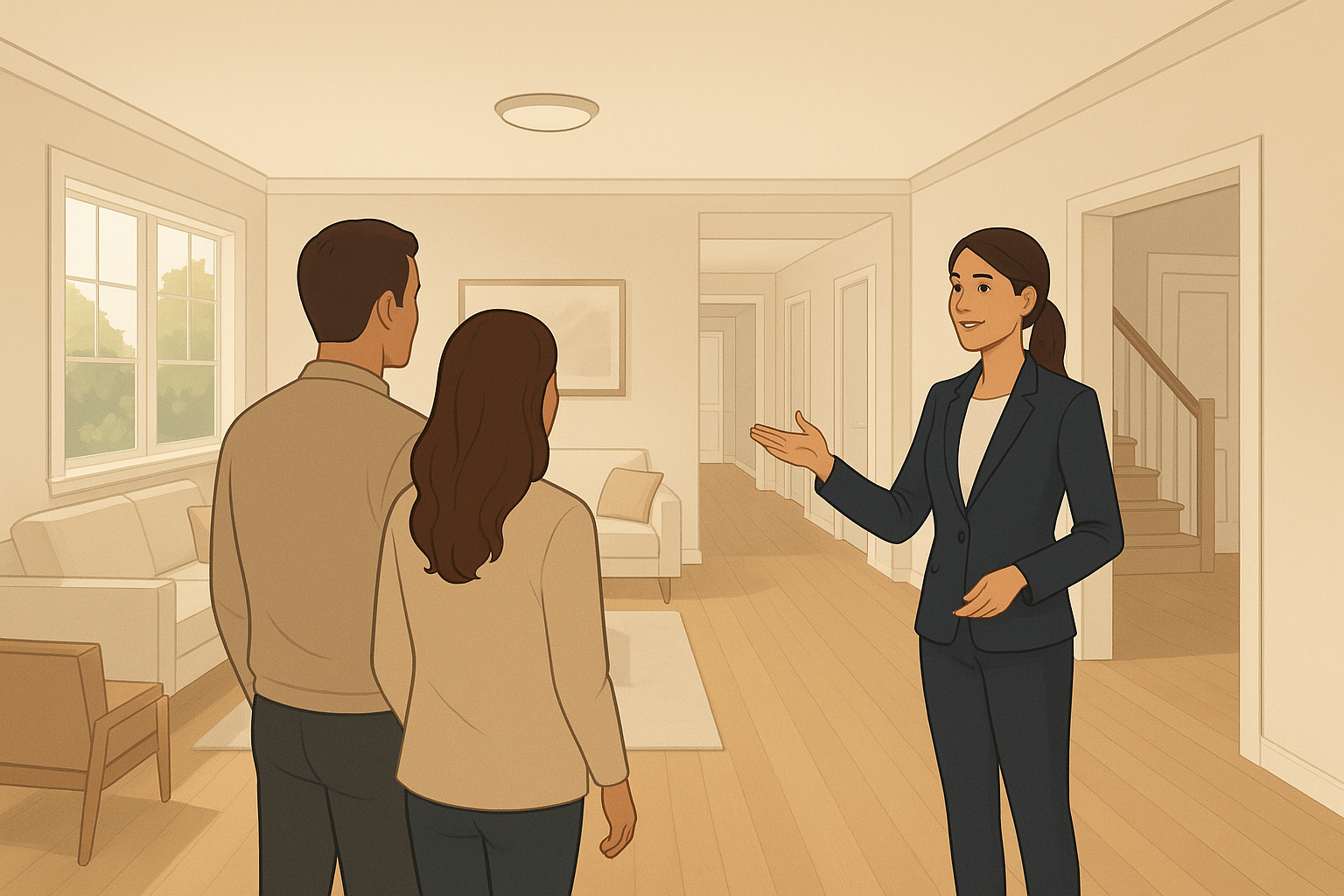
Real Estate Agent Preparing for Open House
🧠 The Mindset Shift

You are not just a host; you are the site manager. When you control the space, you project a confidence that naturally deters boundary-pushing.

🚫 “Polite” Can Be Dangerous

We are taught that boundaries are rude. In the Mentorship, we re-train your nervous system to prioritize your safety over social comfort without losing your professionalism.

“I used to be afraid of offending clients. Now I know my confidence actually makes them trust me more.” — Jessica R., Realtor Build Your Boundaries

Phase 2: Awareness & Positioning

Agent guiding guests safely
🧠 The Positioning Rule

Never let yourself be trapped. Your best position is near the front entry or a central living area with clear visibility and at least two escape paths.

Managing the Flow

Physical positioning and mental presence are your most powerful tools during the event.

  • Guide, Don’t Follow: Control the flow. Stand back, gesture, and say, “The master bedroom is just down the hall to your left.” Let them walk ahead of you. Keep them in your line of sight; never let them get between you and your exit.
  • Be Present: Keep your head up, not buried in your phone. Make direct eye contact with every entrant. This projects calm authority and signals you are aware.
  • Trust Your Internal Alarm: If a person feels “off,” do not brush it aside as being judgmental. That is your internal risk assessment working. Maintain distance.

🗣️ Verbal De-Escalation

What do you say when someone crosses a line? We don’t rely on rigid scripts because every situation is different. Instead, we give you the tools to stay calm enough to adapt when under pressure.

“The training gave me the tools I didn’t know I needed until I was in a weird situation. I was able to adapt instantly.” — David L., Broker Master Verbal Defense

Phase 3: The “Closed” Sign

Secure and Exit

The event isn’t over until you are safely in your locked car and on your way home. This transition moment is often where vulnerability is highest.

  • Full-Clear Sweep: Before locking the front door, check all rooms, closets, and patios. Announce yourself: “The open house is now over, I’m locking up!” Never assume you are alone.
  • Purposeful Exit: Walk to your car with keys in hand and head up. Get in, lock doors immediately, and drive off. Do not sit in the driveway checking emails.
  • Close the Loop: Send that final text to your safety buddy: “All clear and heading home.”
Agent leaving safely
🧠 The Transition

Complacency hits hardest at the end of the day. Maintain your “Condition Yellow” (relaxed alert) until you have completely left the site.

From Checklist to Confidence

A checklist manages the environment. However, running a truly safe open house requires more than a list; it requires unshakeable confidence that comes when these actions become second nature.

When you are prepared, you can handle an agitated client or an aggressive stranger with the same professional calm you use to negotiate a contract. Safety is not a gadget; it is a design feature of your professional practice.

Go Beyond The Checklist

This article covers the 20% (the procedure). My 10-Week Personal Safety Mentorship covers the 80%—the intuition, the verbal defense, and the physical capability to ensure you never feel powerless in an empty house again.

*Next Intake Limited to 10 Students to ensure quality instruction.

P.S. You do not need more fear. You need more structure. The checklist is the map; the mentorship is the guide.

© 2025 The Other Way Martial Consulting. All rights reserved.

Disclaimer: The information provided in this blog post is for educational purposes only. Consult with a security professional for specific threat assessments.

Affiliate Disclosure: This post contains affiliate links. If you use these links to buy something, we may earn a commission. Thank you for your support.

The Kyo-Jitsu Ryu Method

The Hidden Lesson in The Obvious

This is not a typical “workout.” This is a lesson in control. We teach a foundational set of martial arts exercises from our complete personal safety system, designed to master your body and mind by understanding the “obvious” movement (Jitsu) and the “hidden” lesson (Kyo).

Part I: The Critical Concept

It’s Not About Reps. It’s About Time.

Most people train to move fast. But you cannot move fast accurately until you can move slow perfectly. We use the 5/0/5 Tempo: 5 seconds down, 0 seconds rest, 5 seconds up. A single set of 5 reps creates 50 seconds of continuous Time Under Tension (TUT).

Part II: The Foundational Exercises

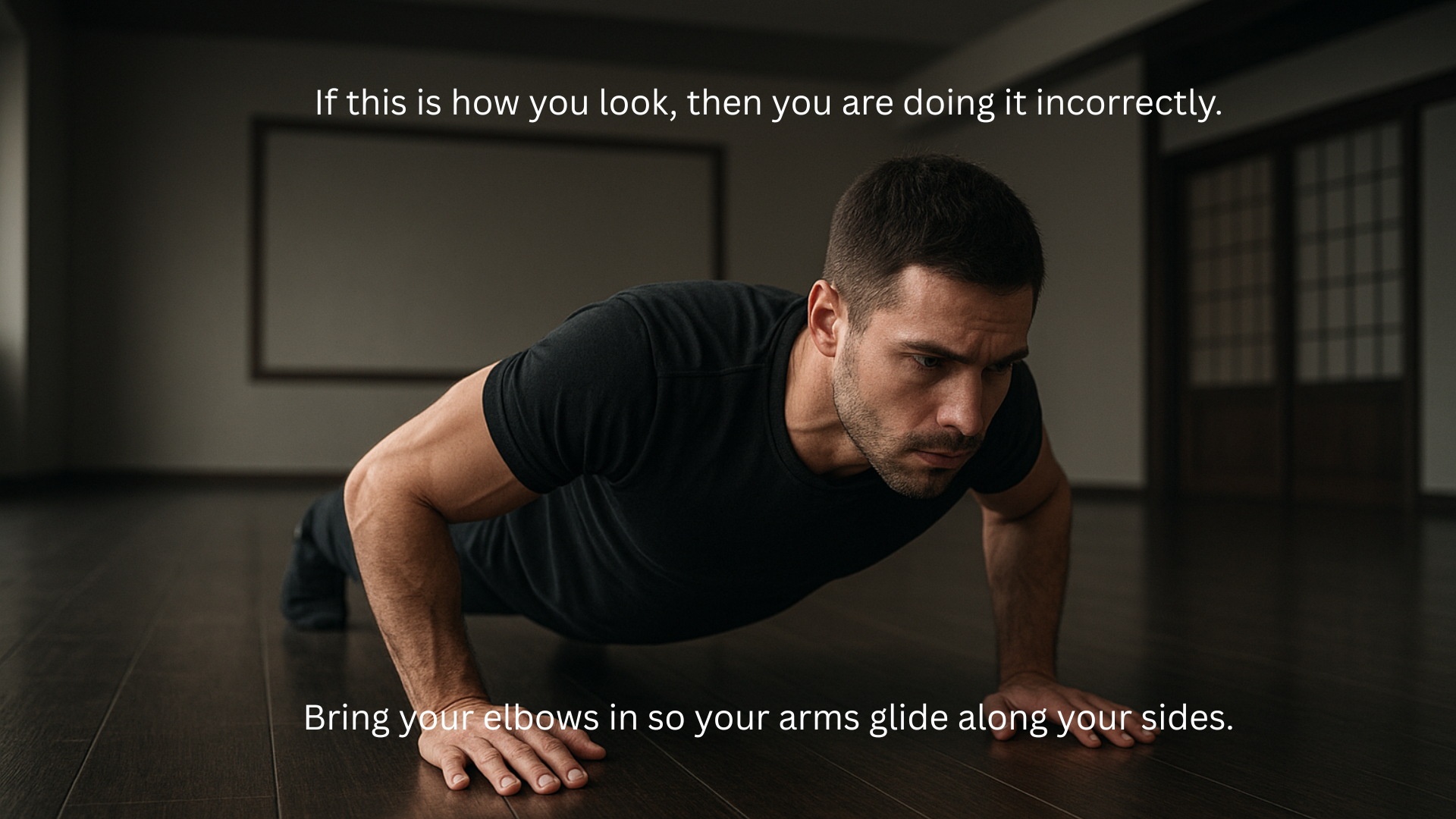
1. The Push-Up (Foundation)

The Action (Jitsu):

  • Start in a “plank” position, hands directly under shoulders.
  • Turn hands slightly so elbows slide along your body (not flared out).
  • Tempo: 5 seconds down until chest is 1/4 inch from floor.
  • Tempo: 5 seconds up to near-extension (do not lock out).
  • Reps: 5 total.
Proper Push-up Form
🧠 The Lesson (Kyo)

This is a lesson in differential relaxation. Most people tense their whole body. Consciously relax your Achilles tendons and glutes. Feel your body shift. Find your “root” by relaxing the muscles you don’t need to isolate the ones you do.

😰 Struggling With The “Shake”?

That shaking is your nervous system panic response. In the Mentorship, we teach you how to override this panic to stay calm under pressure.

“I thought I was fit until I tried the 5-second tempo. It changed everything.” — Mark T., Student Begin Your Training

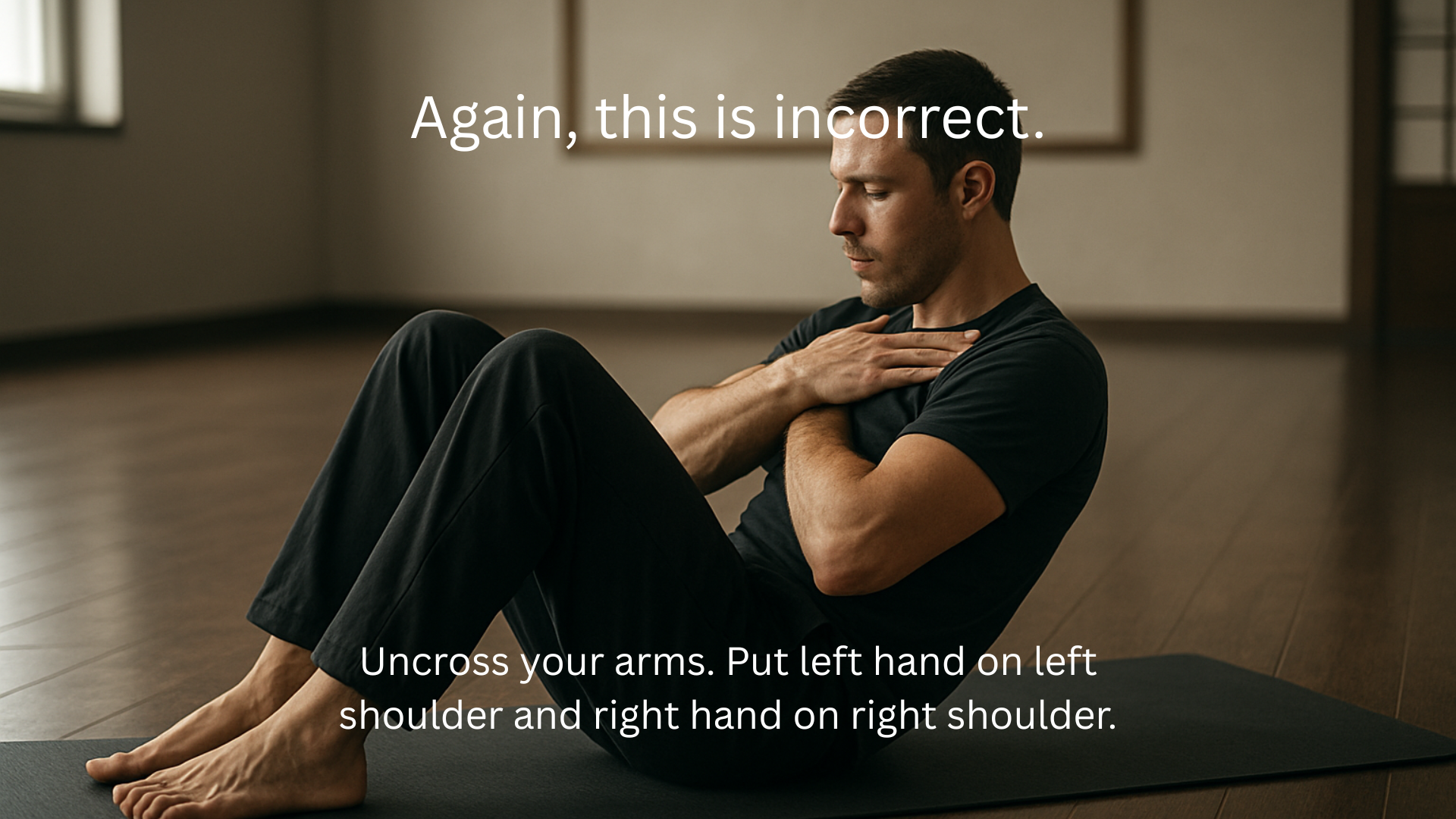
2. The Sit-Up (Center)

The Action (Jitsu):

  • Lay on your back, knees bent. NO foot support.
  • Place left hand on left shoulder, right on right (do NOT cross arms).
  • Tempo: 5 seconds up. Roll your spine like a wheel, lifting one vertebrae at a time. Do not hinge with a straight back.
  • Tempo: 5 seconds down, uncurling spine to floor.
  • Reps: 10 total.
Proper Sit-up Form
🧠 The Lesson (Kyo)

If you flail, you’ve failed. Without foot support, the only way to sit up is to relax your lower body. Your legs become the counterbalance. This teaches you to be “hard” in your center (Hara) and “soft” in your limbs.

💨 Breathe Under Fire

The sit-up forces diaphragmatic breathing. We take this further in our advanced “Breath Control for Combat” module.

“Learning to breathe through the stress grounded me in ways gym reps never did.” — Sarah J., Graduate Master Your Breath

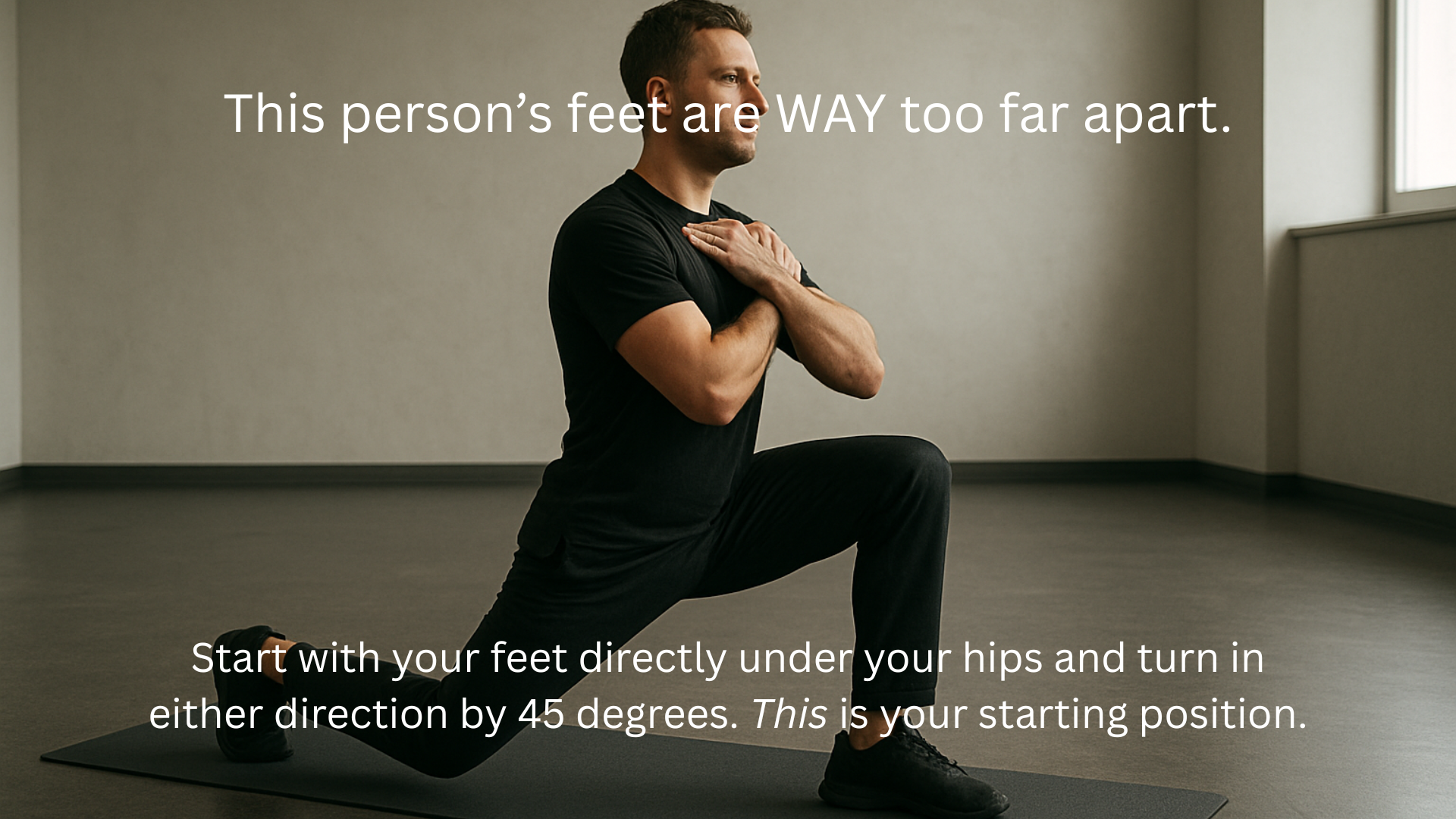
3. The Split Squat (Stance)

The Action (Jitsu):

  • Stand feet hip-width apart. Pivot 45 degrees, one foot forward, one back.
  • Maintain lateral hip-width for balance.
  • Tempo: 5 seconds down, lowering vertically like an elevator.
  • Tempo: 5 seconds up to starting stance.
  • Reps: 5 per leg.
Proper Split Squat Form
🧠 The Lesson (Kyo)

You are fatigued. This is the point. Can you maintain perfect, slow control and balance while under duress? The slow descent teaches you to “sink your weight.” The ascent teaches you to “drive from the earth.”

Part III: The Path of Progression

The path to mastery in these martial arts exercises is not through doing more. It is through doing it better. Once you can complete your reps with perfect form at the 5/0/5 tempo, you simply slow down.

5/0/5 10/0/10 15/0/15

Part IV: Why This Works (Expert Analysis)

This isn’t just theory. It’s a synthesis of biomechanics, psychology, and tactical training.

🩹 Physical Therapist

Eliminates momentum and places high load on tendons and ligaments, creating an “Injury Prevention” effect known as bulletproofing.

🧠 Psychologist

Forces regulation of the “panic response.” By moving slowly under stress, you train the brain to remain calm in chaos.

⏱️ Professional Trainer

Utilizes Time Under Tension (TUT). 50 seconds of continuous load builds extreme muscular endurance.

🥋 Martial Artist

Teaches the three pillars of combat structure: Root (Ground connection), Hara (Center), and Dachi (Stance).

Part V: Tools to Measure Mastery

You do not need tools for this practice. However, these tools provide honest feedback on your structure and balance.

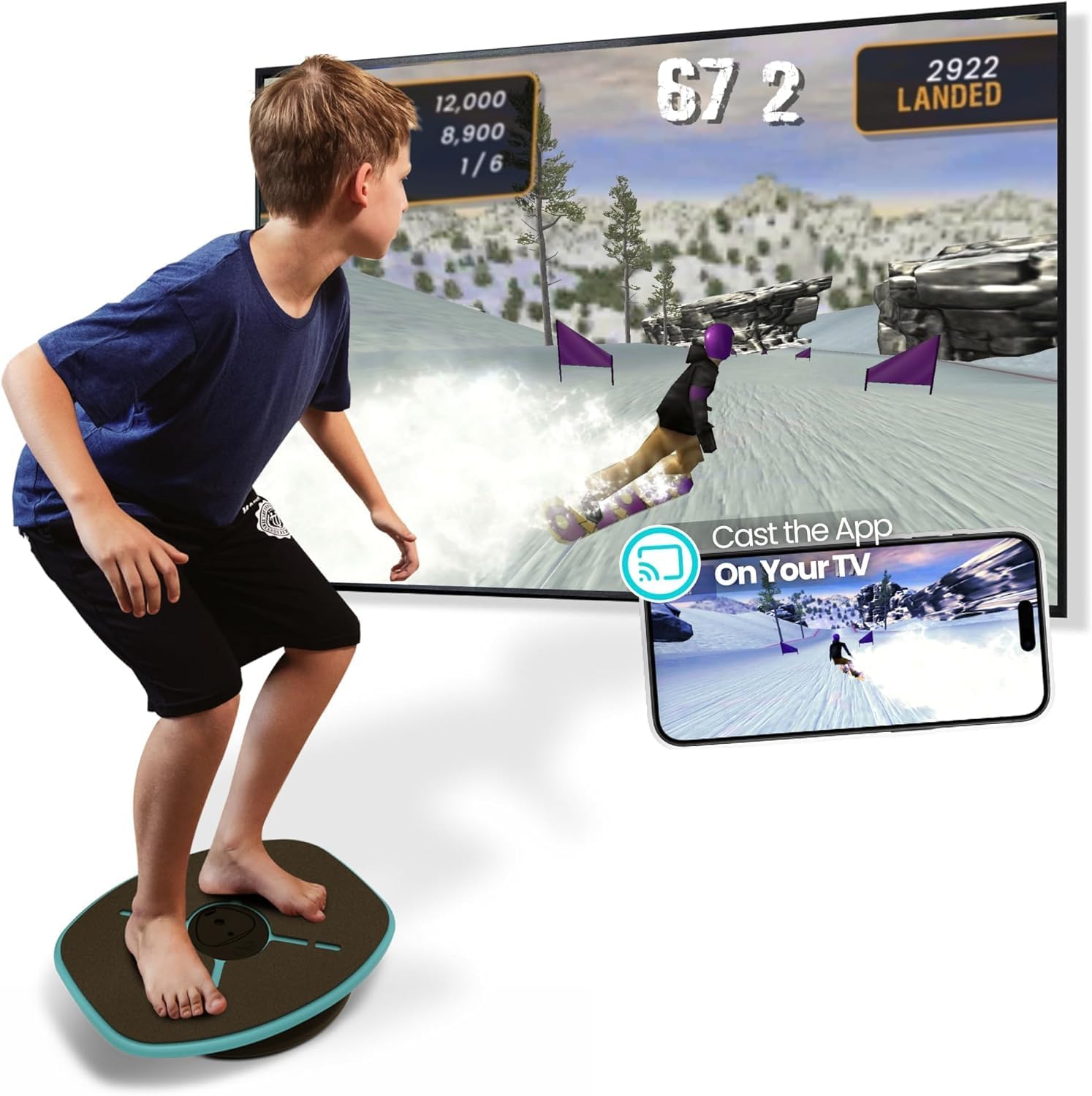
Wobble Board
The Wobble Board

Tests your “root.” Can you maintain structure when the ground is chaotic?

View Wobble Board
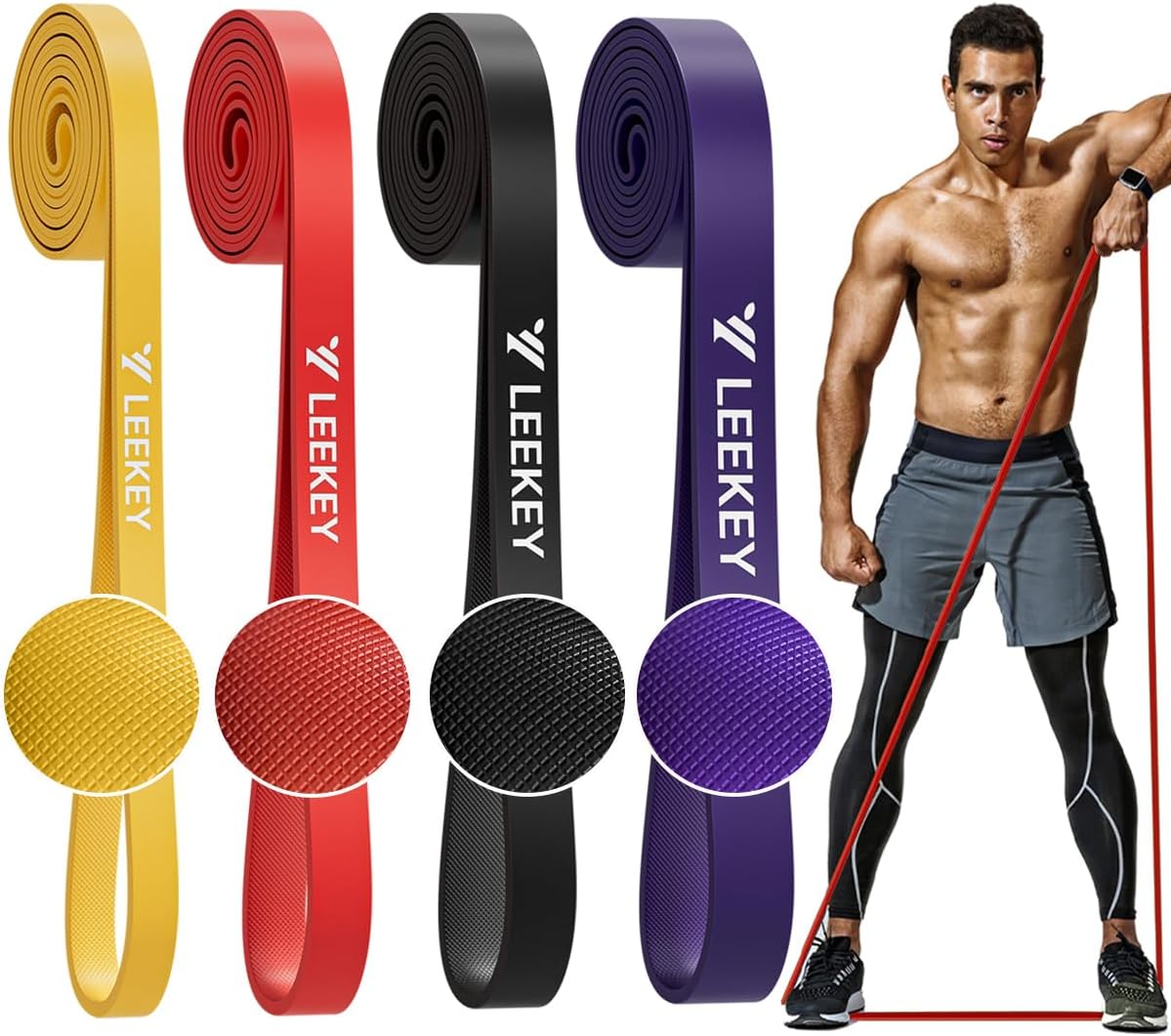
Resistance Bands
Resistance Bands

Tests your control. Can you maintain the 10-second tempo against active resistance?

View Band Set

Frequently Asked Questions

1. Why only 5 reps?

You are confusing “reps” with “work.” At a 5/0/5 tempo, one set takes 50 seconds. This is significantly more time under tension than 20 fast push-ups.

2. My feet lift off on the sit-up. What’s wrong?

You are engaging your hip flexors and legs too much. Relax your lower body and use your legs as dead weight to counterbalance your torso.

3. I’m shaking uncontrollably. Is that bad?

No. That is your nervous system building new pathways. Embrace the shake; it is the feeling of weakness leaving the body.

Go Beyond Physical Techniques

This post covers the 20% (the mechanics). My 10-Week Personal Safety Mentorship covers the 80%—the mindset, awareness, and de-escalation that prevents the fight from ever happening.

*Next Intake Limited to 10 Students to ensure quality instruction.

P.S. You do not need more information. You need more structure. The exercises are the map; the mentorship is the guide.

© 2025 The Other Way Martial Consulting. All rights reserved.

Disclaimer: The information provided in this blog post is for educational purposes only. Consult with a physician before starting any exercise program.

Affiliate Disclosure: This post contains affiliate links. If you use these links to buy something, we may earn a commission. Thank you for your support.

A man stands at a gas station at dusk, leaning with his back against a black car and his hand raised in a stop gesture. A fuel hose creates a physical barrier between him and another man approaching in the background. The man at the car looks away from the approaching figure, demonstrating calm awareness and control of the environment.

How Your Mind is Used Against You: 4 Simple Fixes

Aggressors use social pressure and confusion to control their targets. Learn how to make yourself structurally unavailable and break their script using 4 simple methods that require minimal effort in the moment.

A woman stands centered and calm in a bright room, looking directly forward with sharp focus. Around her, people are blurred in motion, representing a busy and confusing environment. Her stillness shows internal control and a clear grasp of her own reality while the world around her moves out of focus.

Am I Being Gaslit? The 3-Step Plan to Reclaim Your Reality

Gaslighting is an attempt to control your life by invalidating your reality. If you rely on someone else's truth to feel safe, you have lost control. At The Other Way, our philosophy is simple: If you do not control yourself, someone else will. This guide gives you a three-step plan to trust your own facts, stop the debate, and reclaim your reality. You are the final authority on your own experience. If you wait for agreement, they are still in control.

A man in a dark suit steps through an industrial door into a large, dimly lit concrete parking structure. He looks back over his shoulder with a sharp, alert expression, scanning the dark environment behind him.

Lingering Awareness: How to Be Safe After the Encounter Ends

Dropping your guard after a success is a strategic mistake. Discover how to maintain awareness and bridge the gap between actions to ensure your safety.

A delivery man in a white shirt and tan apron stands on a sunlit wooden dock, holding two bags of food. Behind him, a teenager in a grey hoodie reaches for a bag. A multi-passenger boat docks in the background on a lake surrounded by trees.

The Identity Bridge: Handling Rough Situations Caused By Someone Else

When aggression hits, most people either fight or fold. True control comes from a third option. By using the Identity Bridge, you can redirect momentum and offer others a path back to their better selves. Learn how to remain rooted when the world tries to move you.

A delivery man in a white shirt and tan apron stands on a sunlit wooden dock, holding two bags of food. Behind him, a teenager in a grey hoodie reaches for a bag. A multi-passenger boat docks in the background on a lake surrounded by trees.

Ask Sensei: How to Handle Aggressive People and Stay in Control

Most people react to aggression with more anger, but there is a better way. By labeling the behavior instead of the person and providing an exit, you can manage a situation without fighting. Learn how to stay steady and maintain your sovereignty even when things get tense.

A woman sitting at a table looking overwhelmed with her hand on her forehead, while multiple hands reach toward her in demanding gestures, representing the mental load of the politeness penalty and the pressure of setting boundaries.

Why do I feel like a bad person when I set boundaries?

Educational purposes only. This column provides advice on mindset and is not a substitute for professional medical services. Sensei Duncan, Every time I try to say no to someone—even when it is for something I really cannot do—I spend the next three hours feeling like a terrible person. It feels like I am physically hurting… 

A woman in a denim jacket holding her hand up in a firm stop gesture to refuse a document, illustrating the act of setting boundaries and overcoming the politeness penalty to reclaim social sovereignty.

The Politeness Penalty: Why You Feel Guilty Saying No

For many, the simple act of declining a request or setting a boundary feels like a moral failure. Research shows that 70% of individuals admit to ignoring red flags or personal discomfort specifically to avoid being rude. This article explains how to move from a state of social reactivity to one of personal sovereignty using the Voice Victory and biological resets. Stop paying the politeness penalty and protect your agency with logic and precision.

A man in a dark office stares at a glowing computer screen in shock with his hand over his mouth. A large, luminous spiral swirls in the background to illustrate the mental pressure of a loop and the importance of learning to stop worst-case thinking.

I Sent a Private Email to My Boss. Now What? | Ask Sensei

The panic you feel after a professional mistake is painful, but it is not a disaster yet. Learn how to break the mental loop, trust the evidence, and apply the Rule of One to handle the situation with your composure intact.

Close-up of a person shouting with hands on their temples while a chaotic white spiral swirls in a dark background.

How to Stop Worst-Case Thinking and Protect Your Brain

A mental spiral is not a rehearsal; it is a distraction that pulls you away from reality. Spiraling starts when you treat an unverified thought as fact. Your brain is using a poor security strategy, burning resources instead of solving problems. To stop the spin, you must move from thinking to doing by investigating data and setting a hard boundary on what you process.